
 #01
#01Vídeos
IA explicada em vídeos curtos
Uma ideia por vídeo, em linguagem simples. Cada um leva ao capítulo do nosso curso gratuito que explica tudo passo a passo.
Comece aqui AI 101
- #01
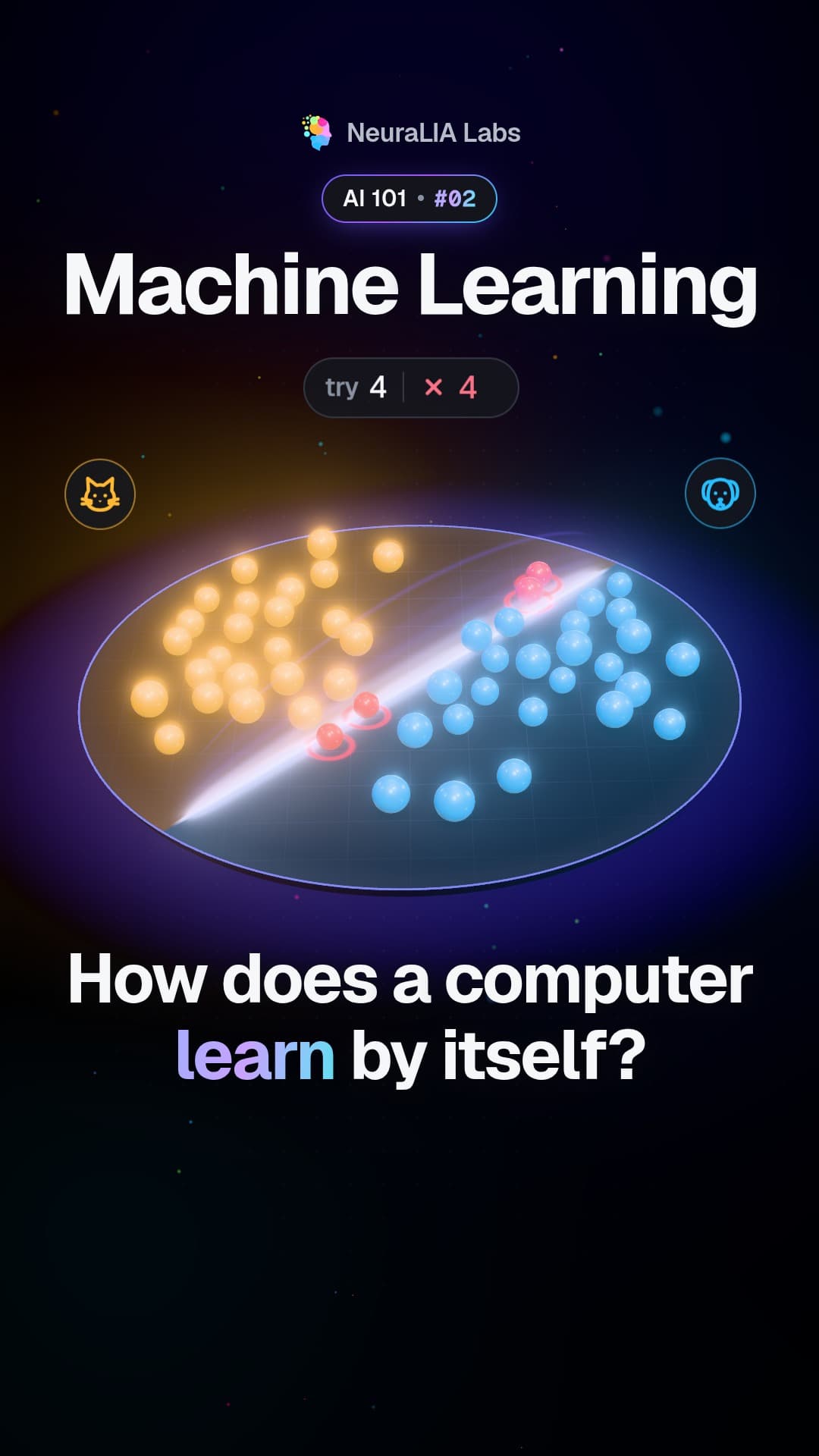 #02
#02Machine learning: how a computer draws its own dividing line
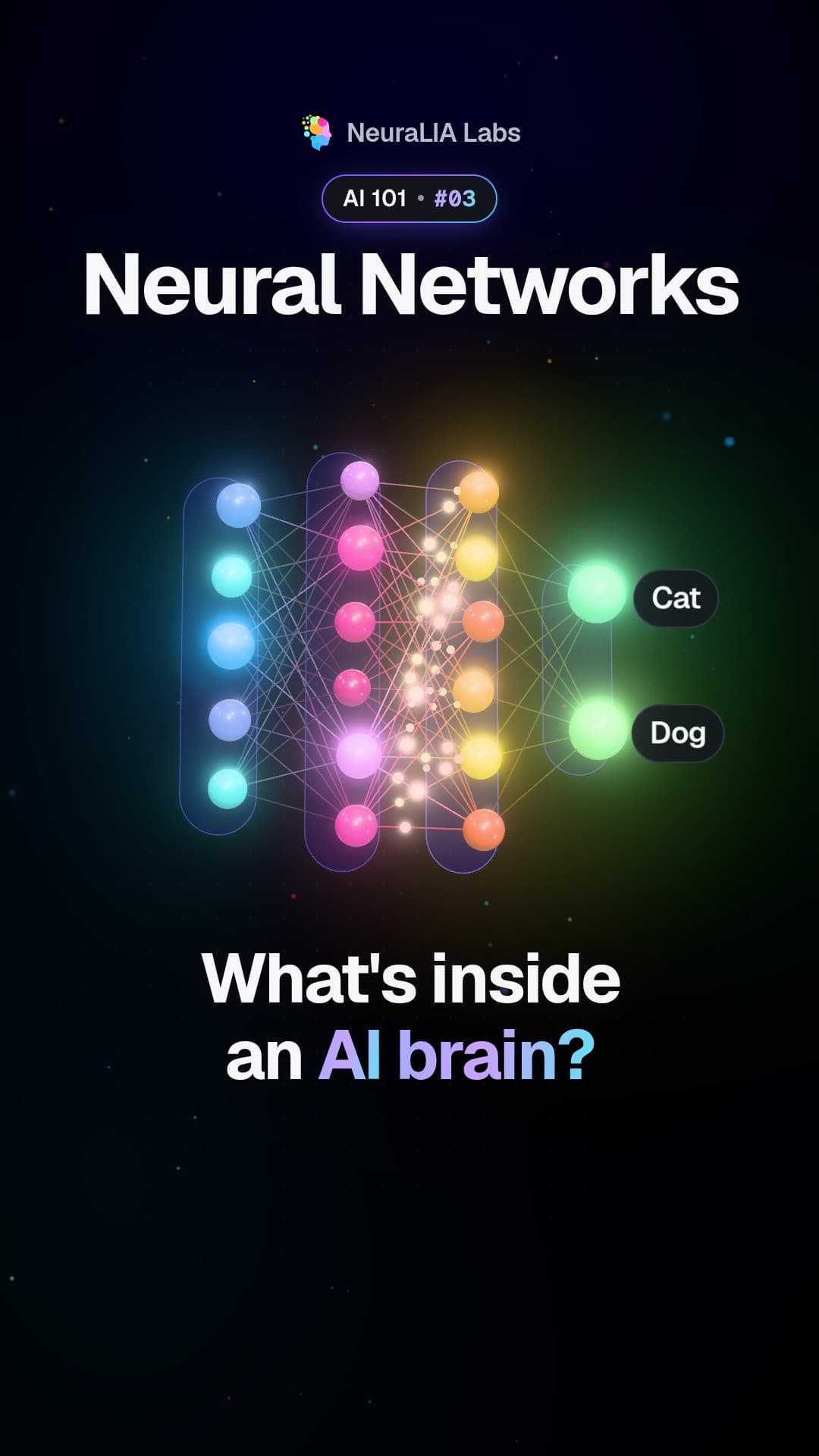 #03
#03Neural networks: layers of tiny calculators passing signals on
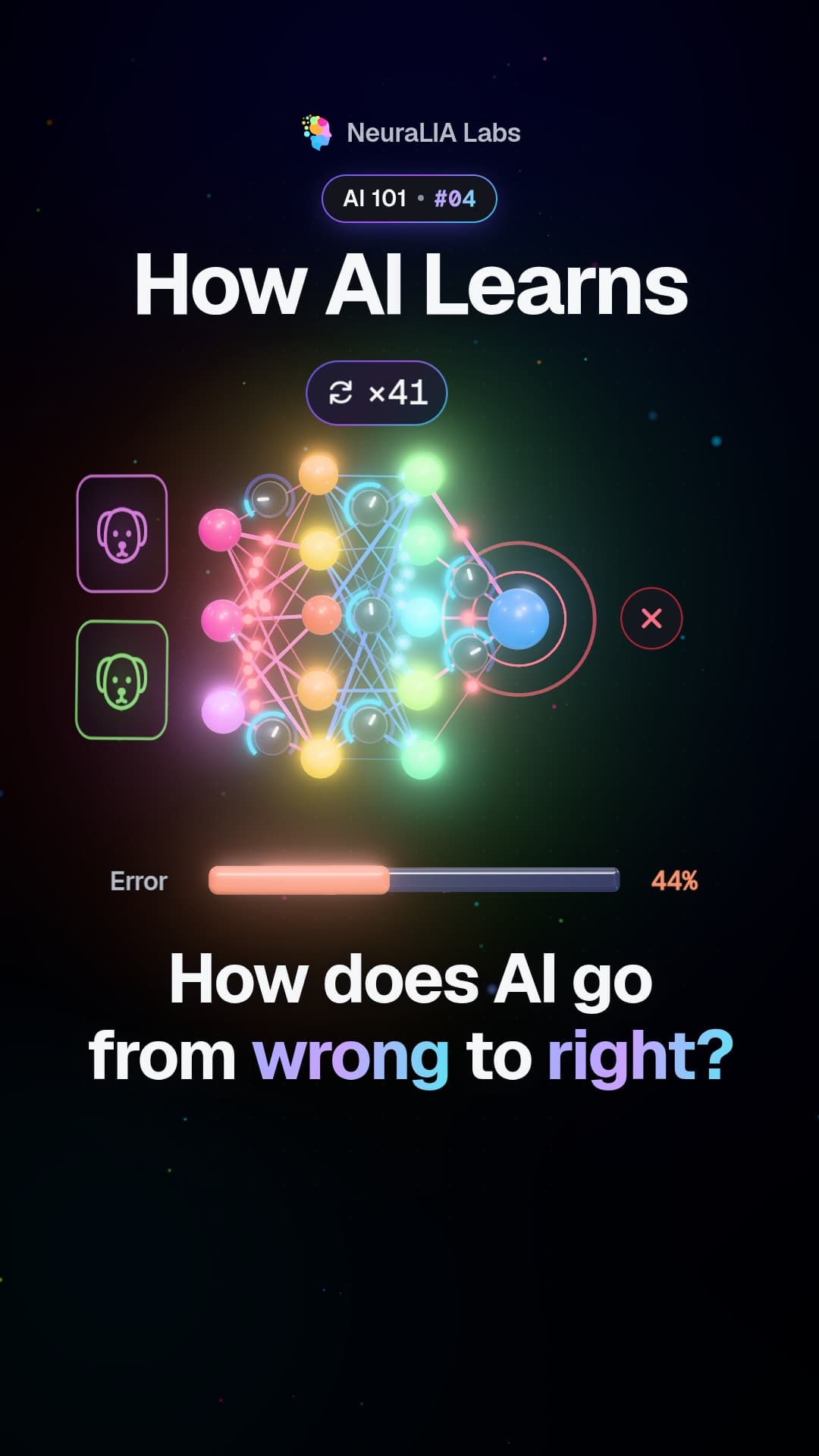 #04
#04How AI learns: guess, measure the error, nudge, repeat
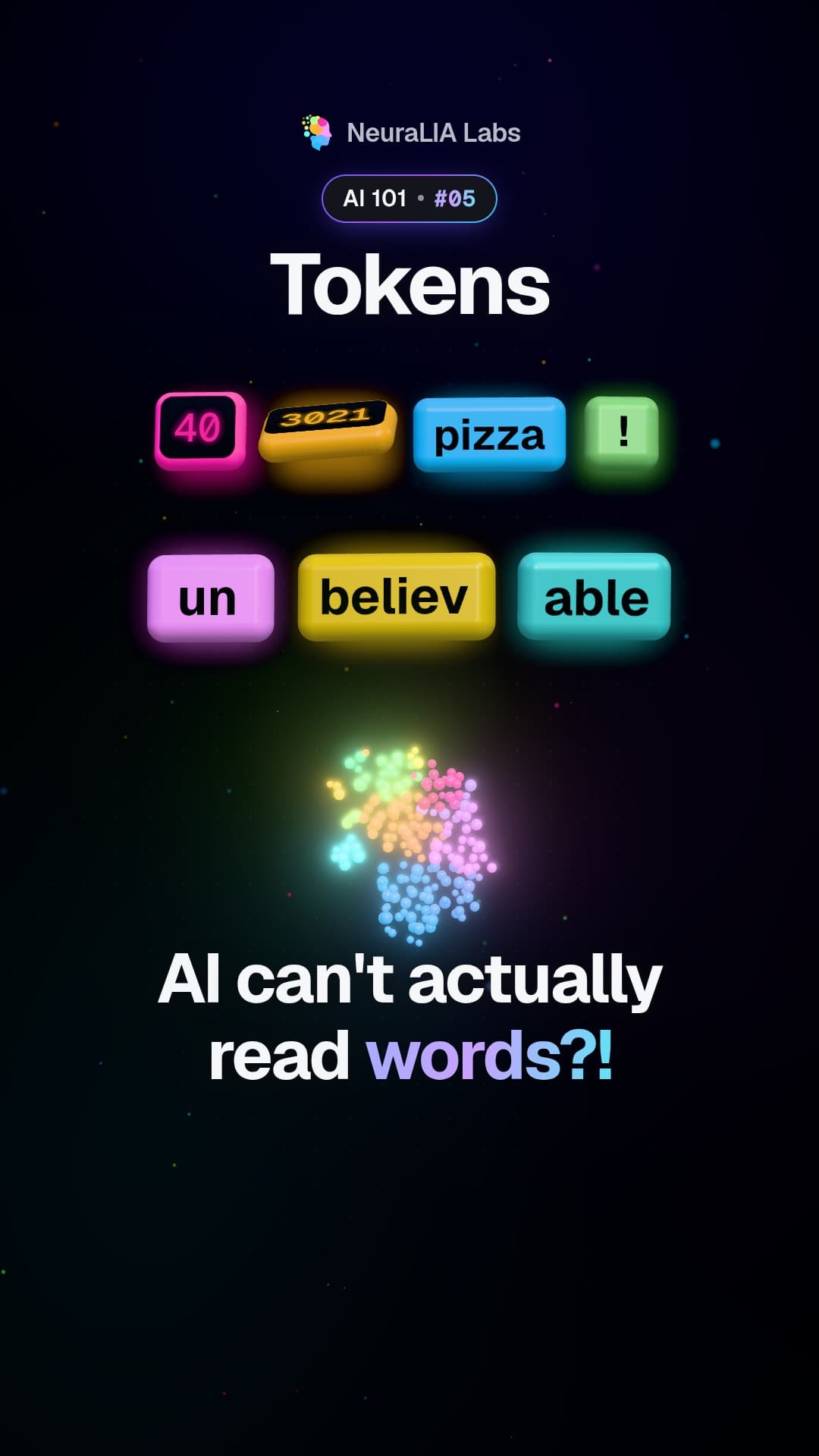 #05
#05Tokens: how AI chops your words into numbered pieces
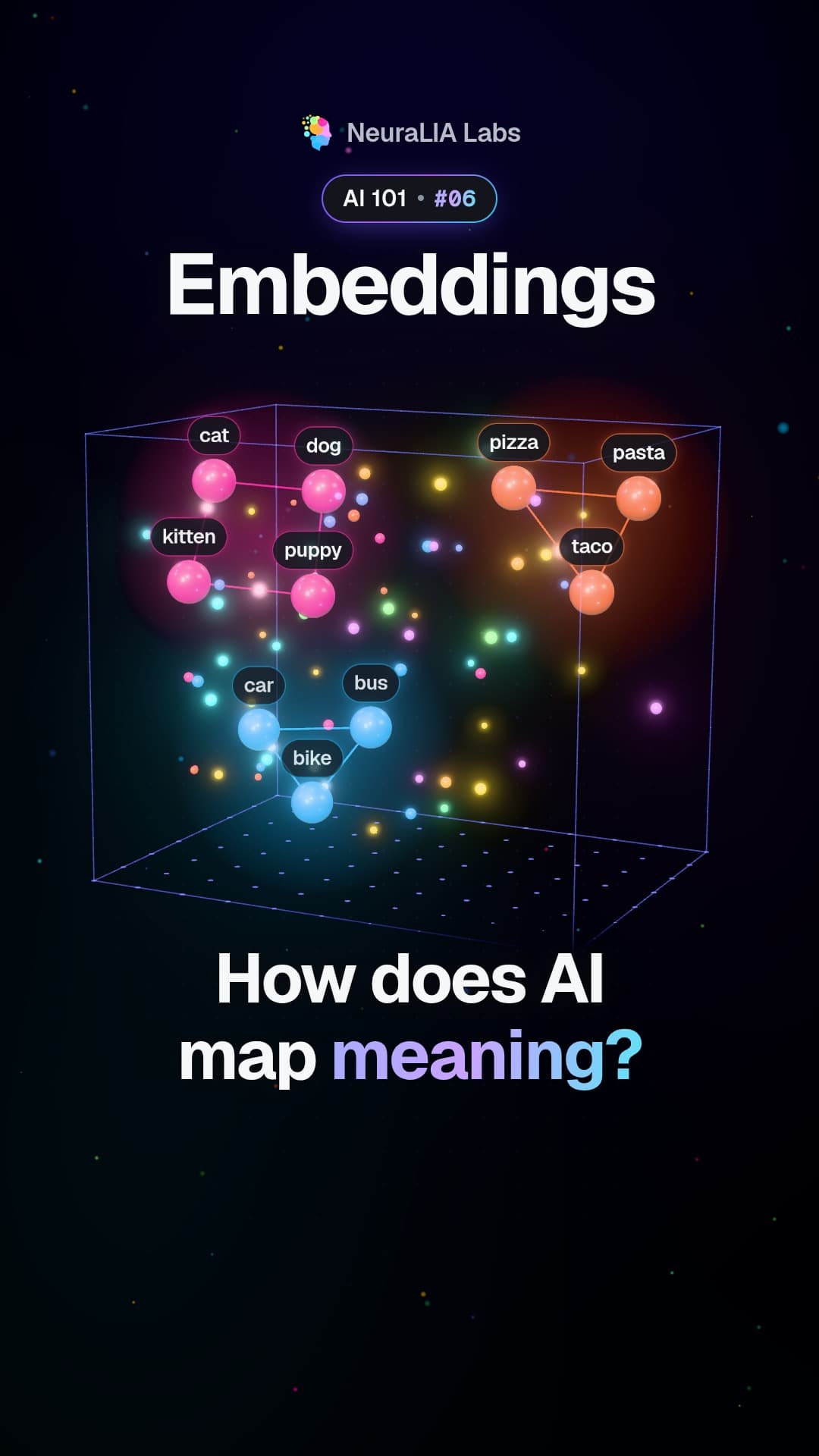 #06
#06Embeddings: why a puppy lands closer to a dog than to a pizza
Mais recentes
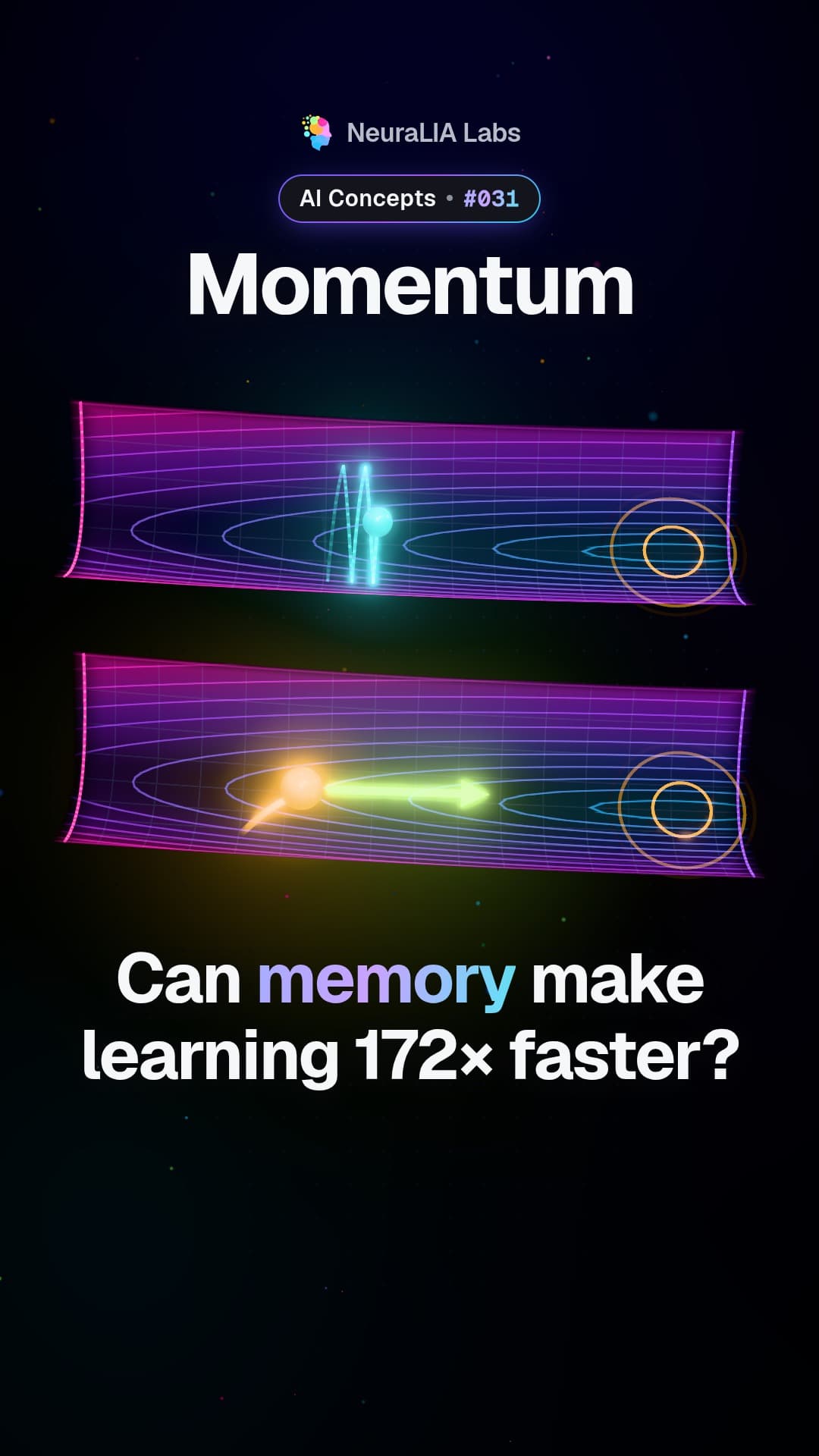 #031
#031Momentum: how remembering past steps stops AI training zigzagging
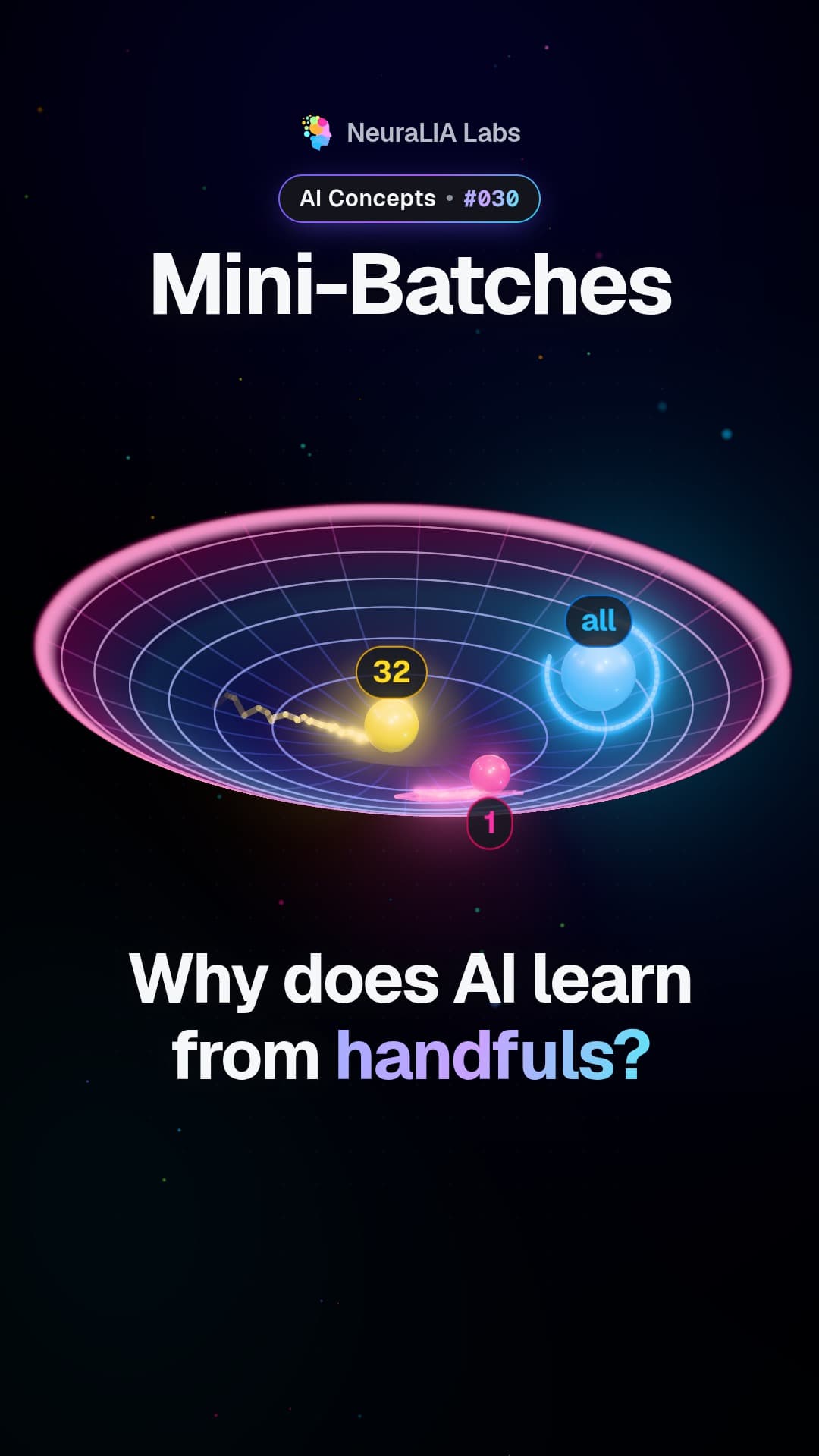 #030
#030Mini-batches: why AI learns faster from a random handful of data
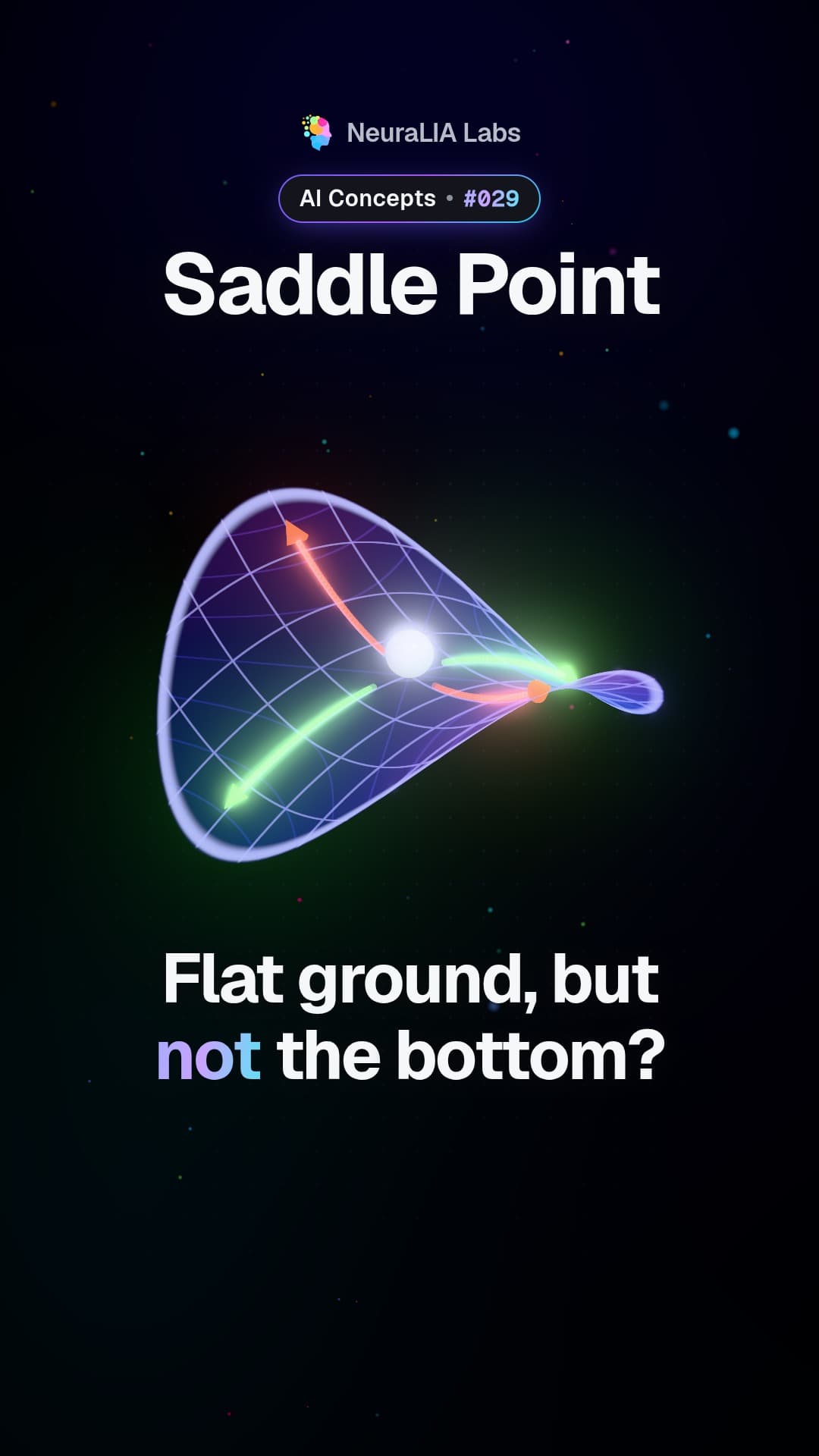 #029
#029Saddle points: where AI training looks stuck but has a way down
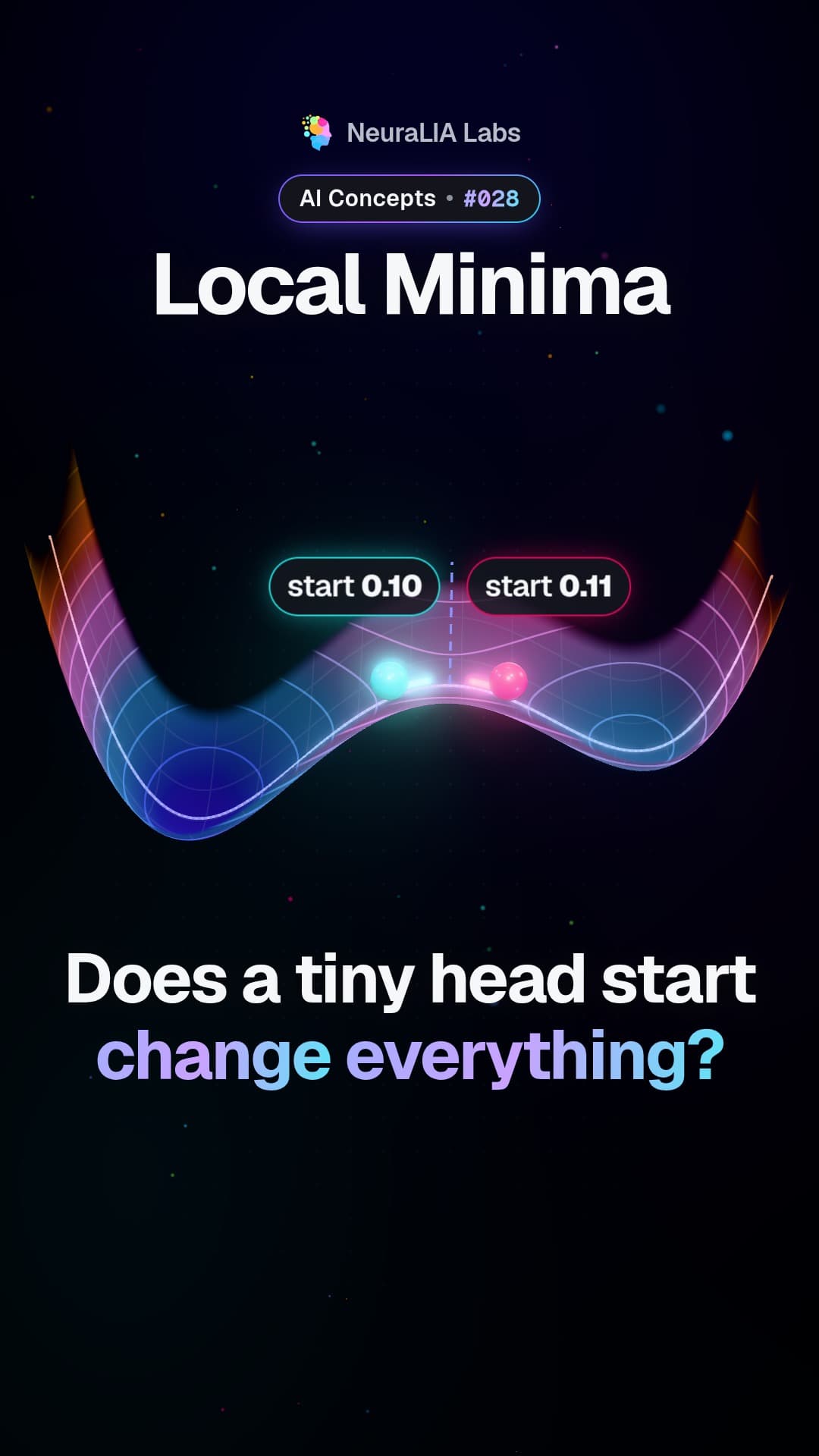 #028
#028Local minima: why AI training can settle for second best
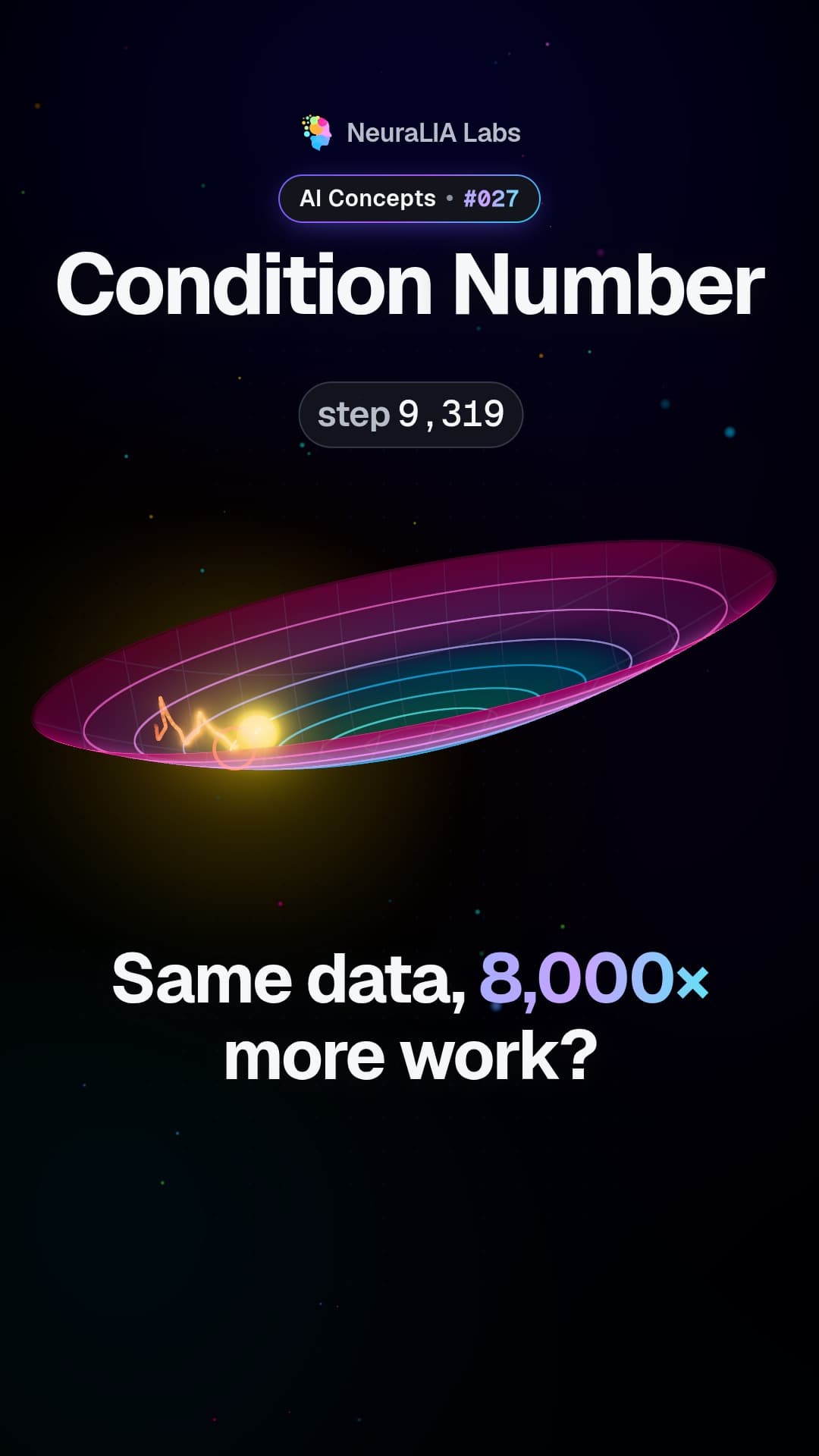 #027
#027Condition number: why a stretched valley makes AI training crawl
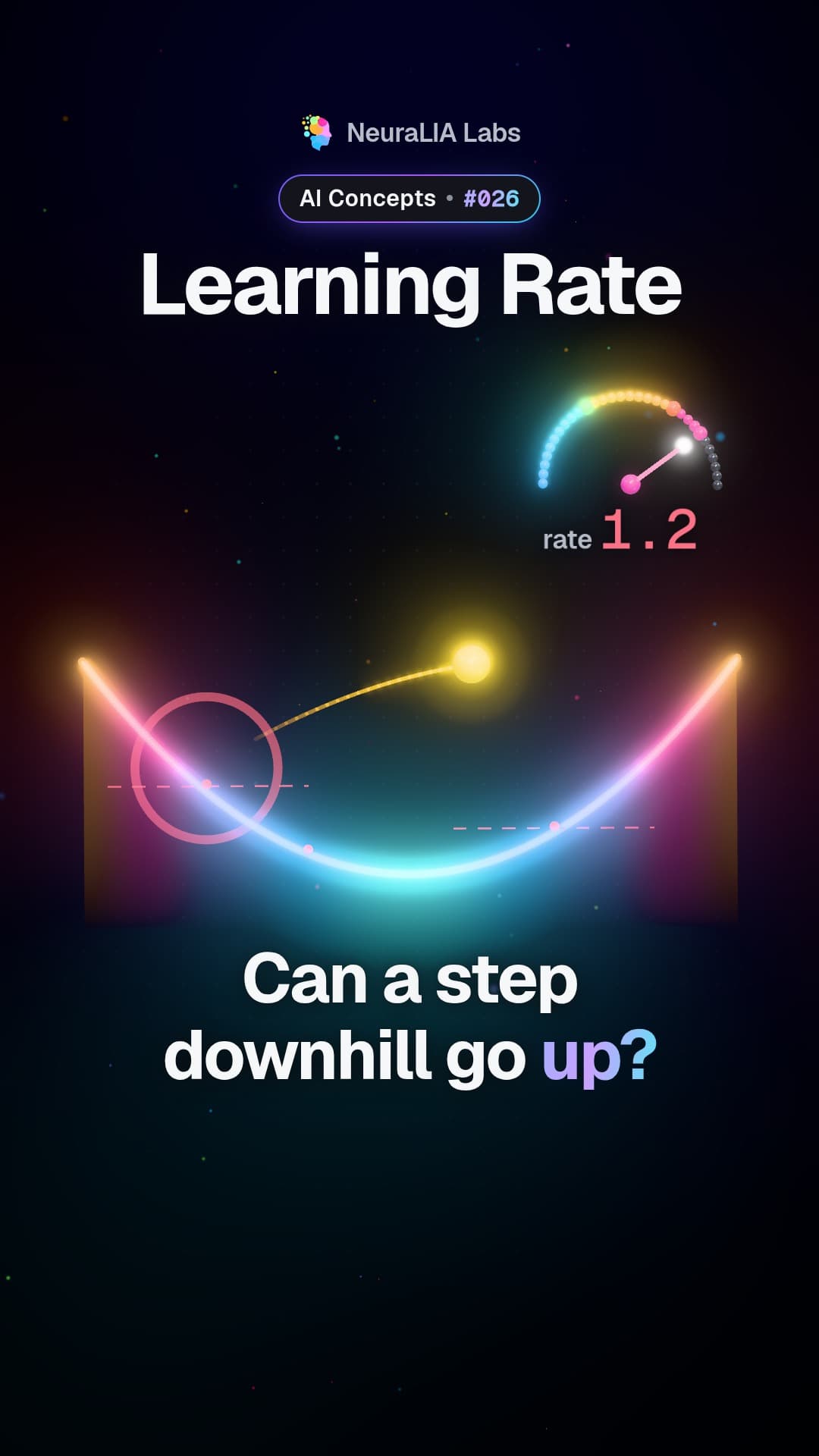 #026
#026Learning rate: the step size with a ceiling you can calculate
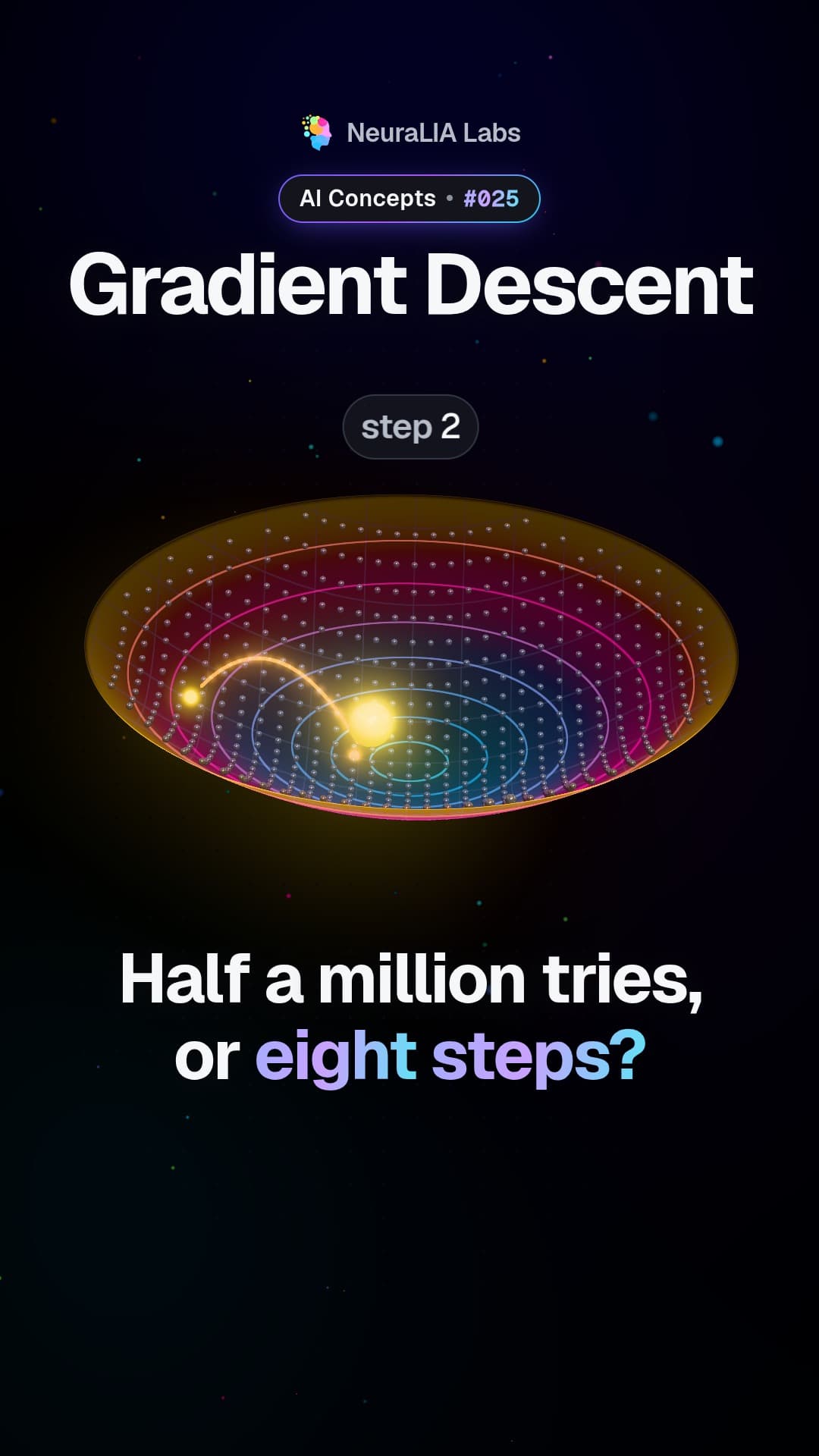 #025
#025Gradient descent: how AI finds its way downhill in small steps
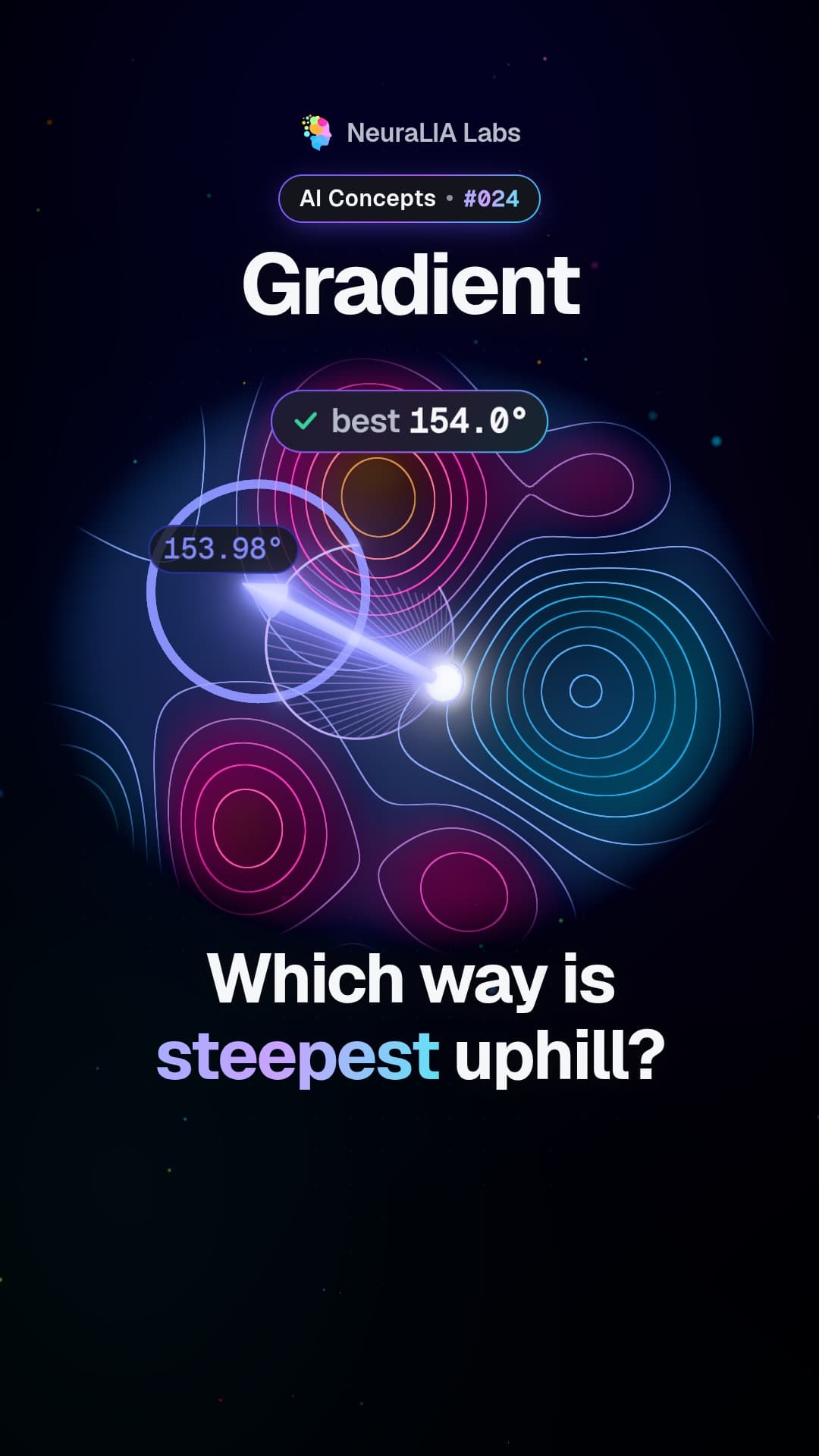 #024
#024Gradient: the arrow that points uphill, and why AI walks the other way
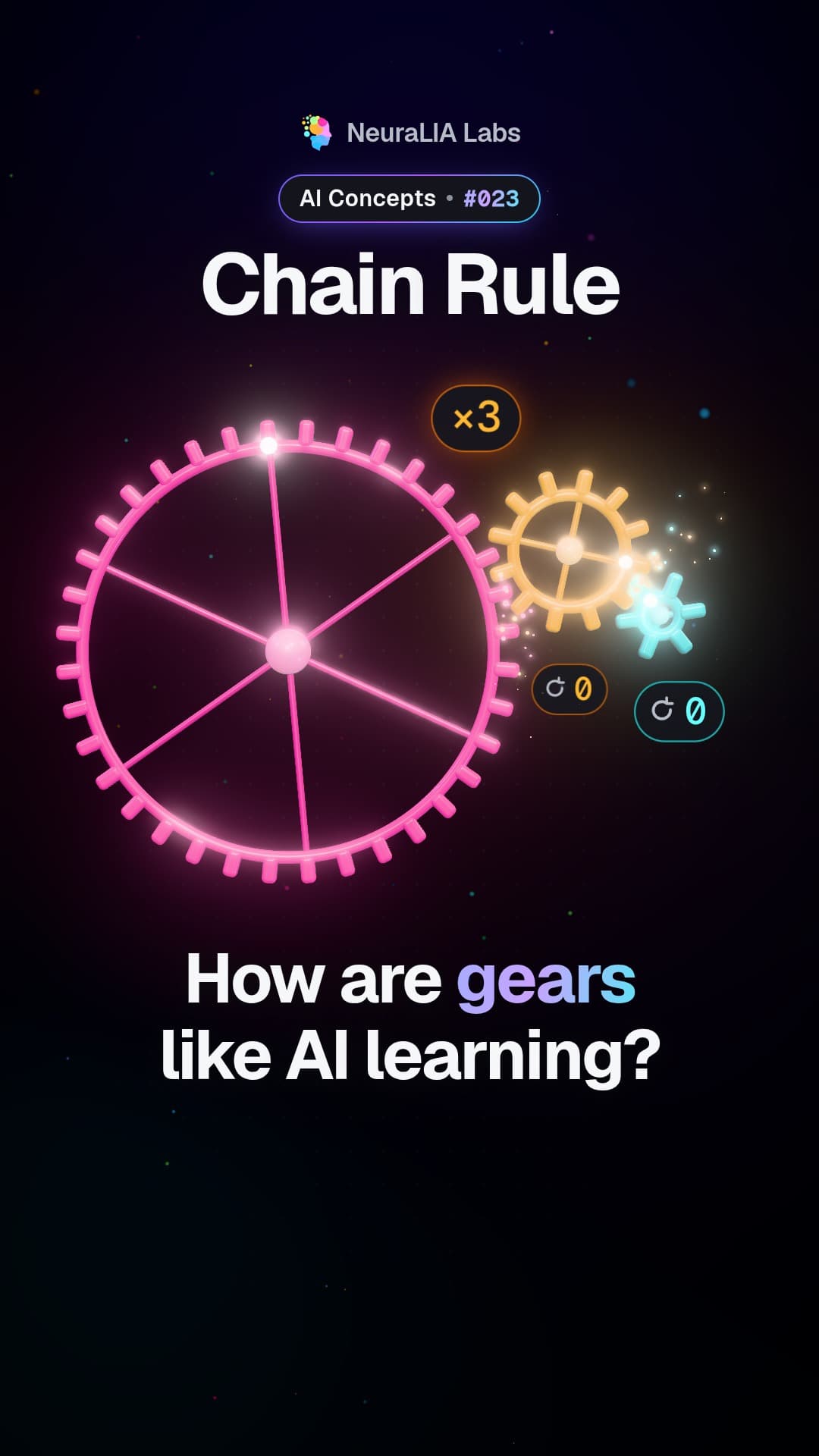 #023
#023Chain rule: how AI traces the effect of every layer
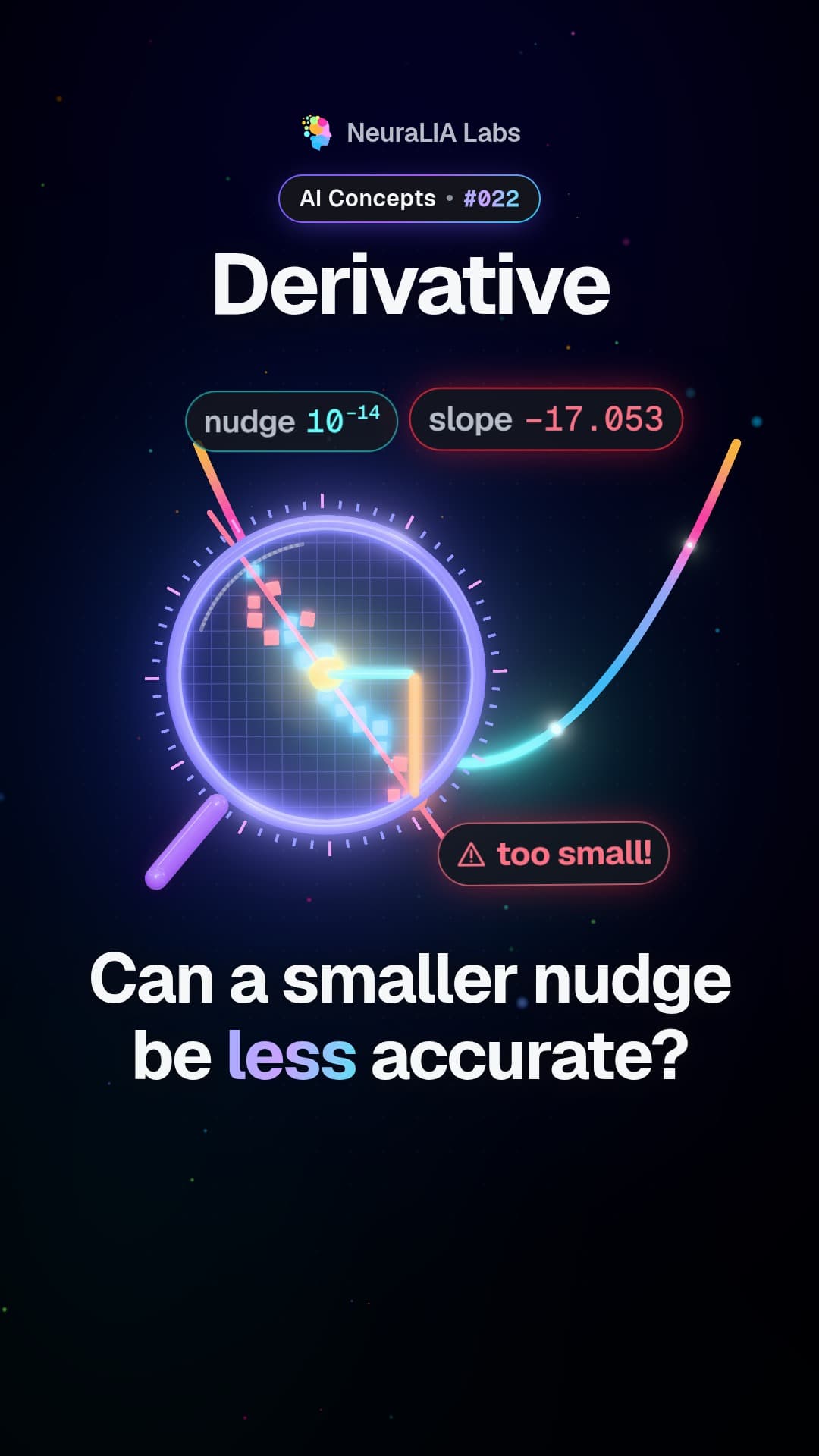 #022
#022Derivative: how much the result moves when you nudge one input
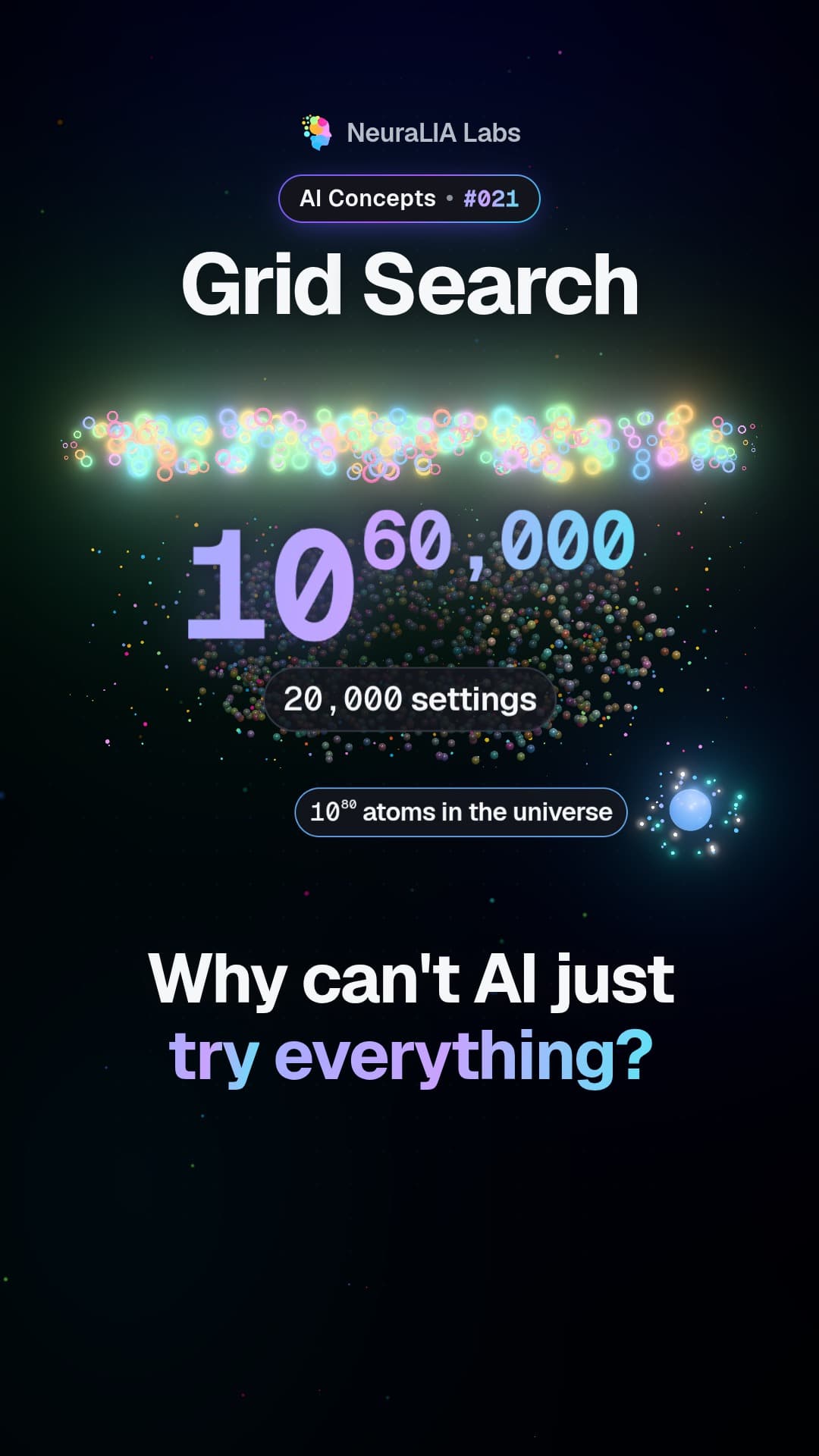 #021
#021Grid search: why you cannot train an AI by trying every setting
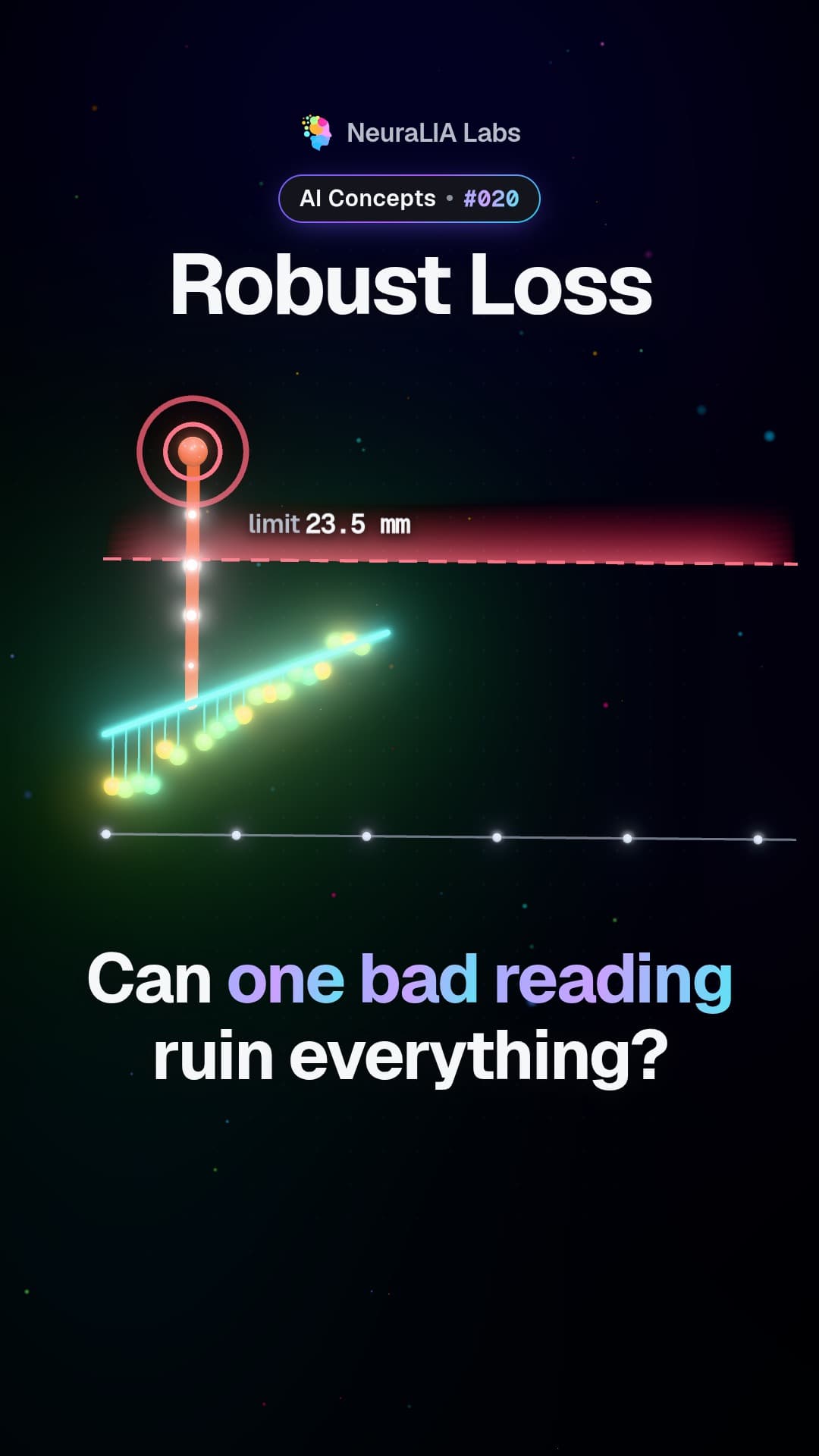 #020
#020Robust loss: stop one wild reading from wrecking your forecast
 #019
#019Heavy tails: when rare, huge errors break the usual average
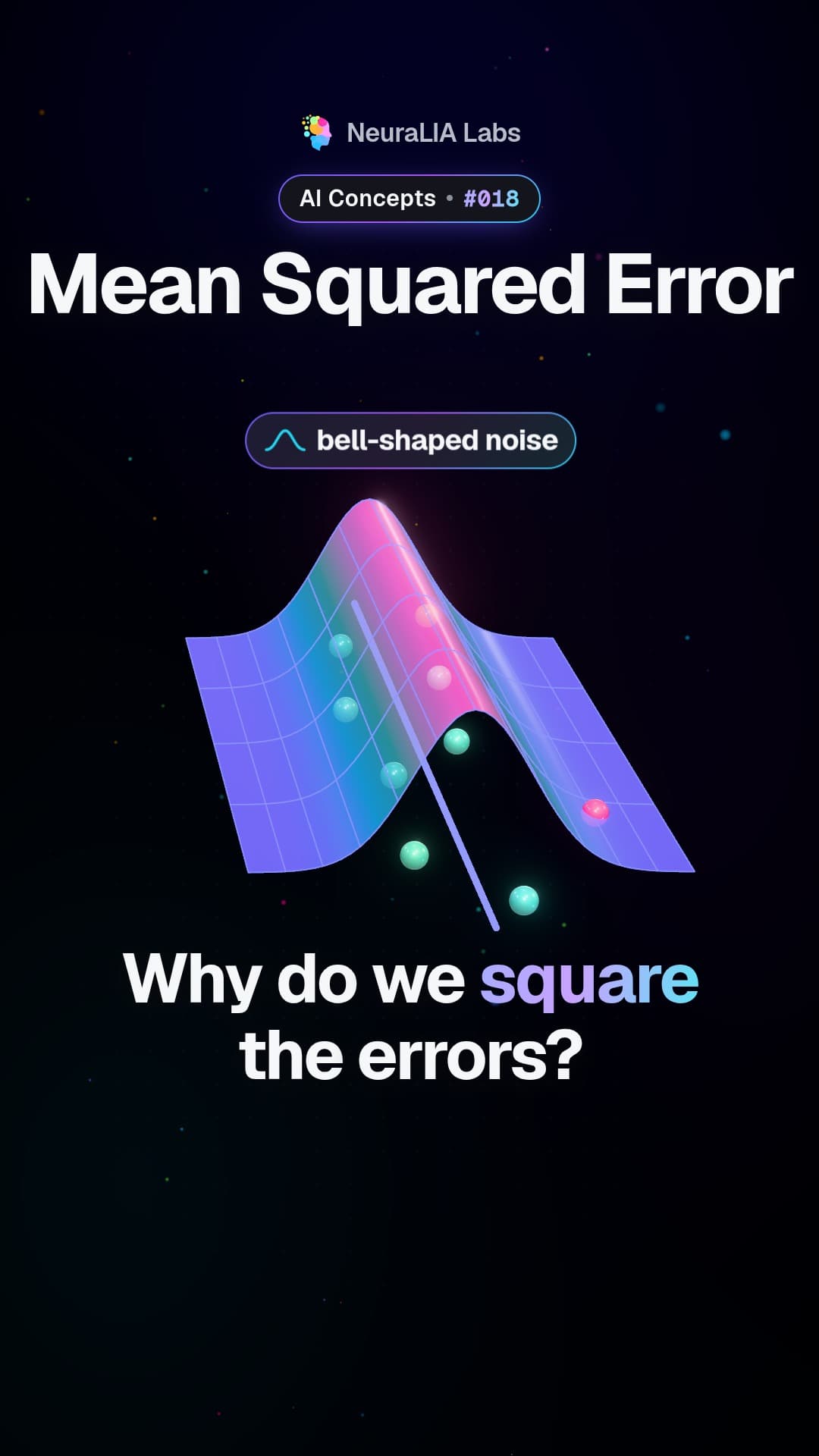 #018
#018Mean squared error: the hidden bet behind squaring your mistakes
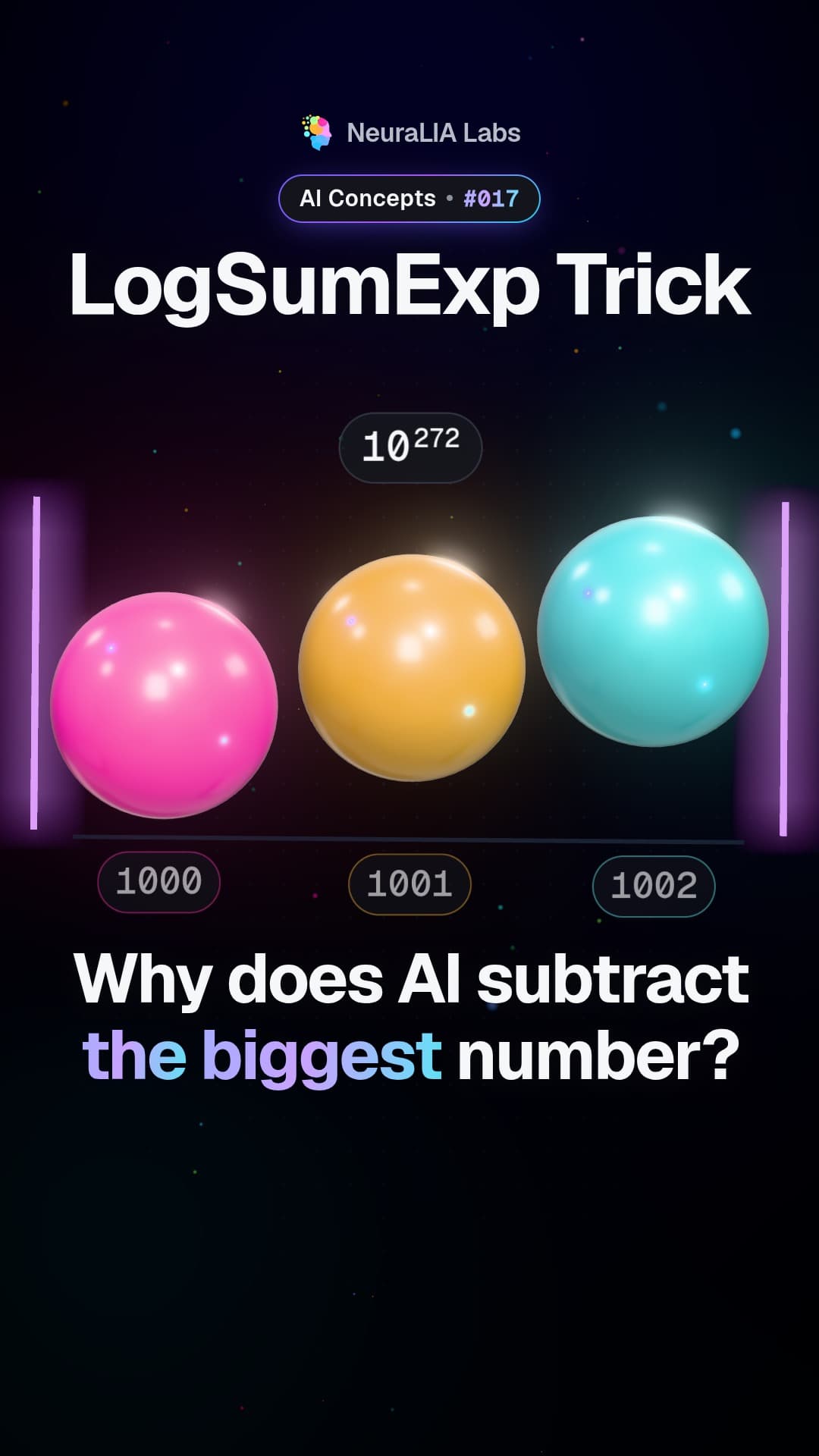 #017
#017The LogSumExp trick: one subtraction that stops AI math overflowing
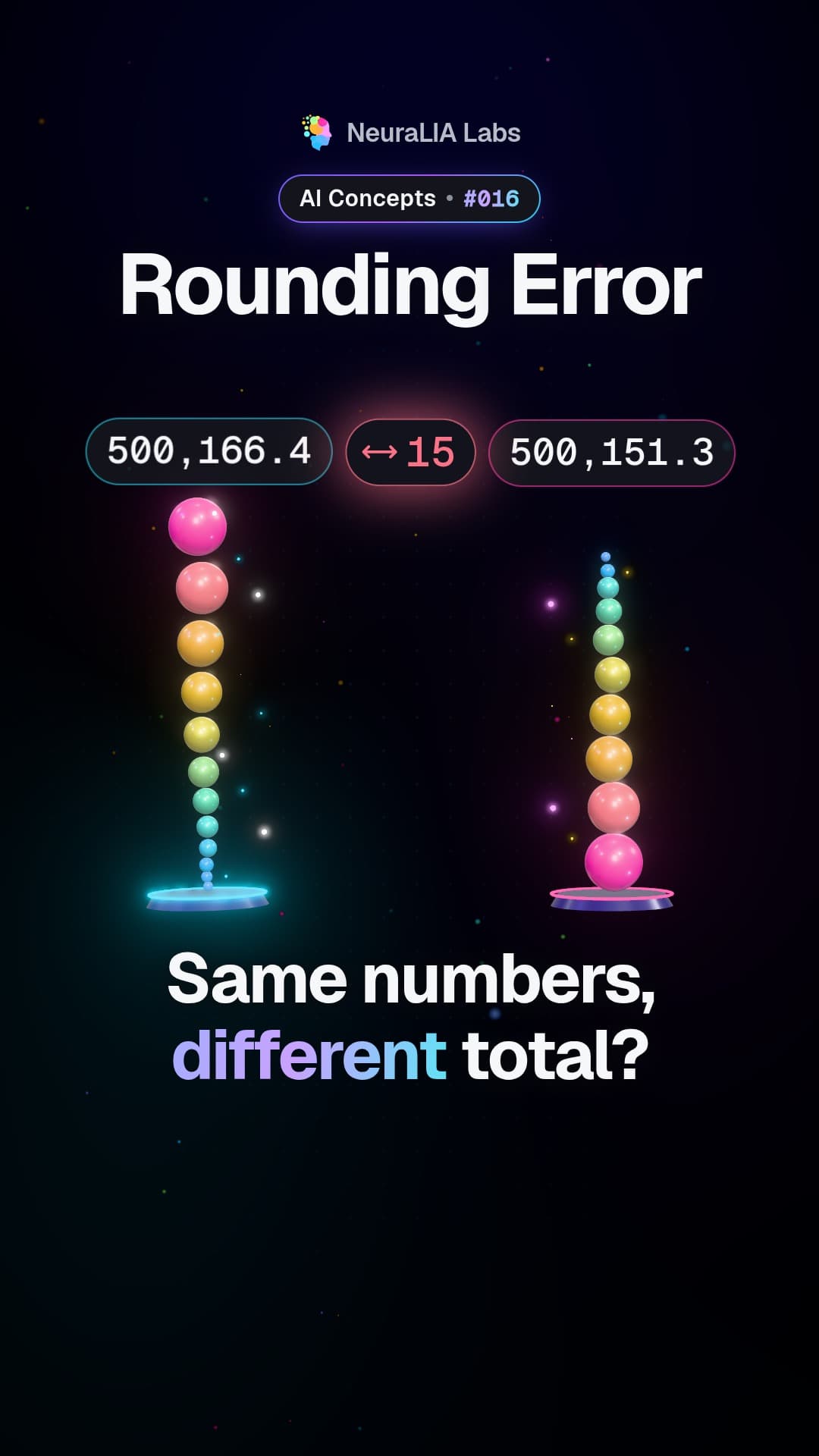 #016
#016Rounding error: why adding the same numbers can give two answers
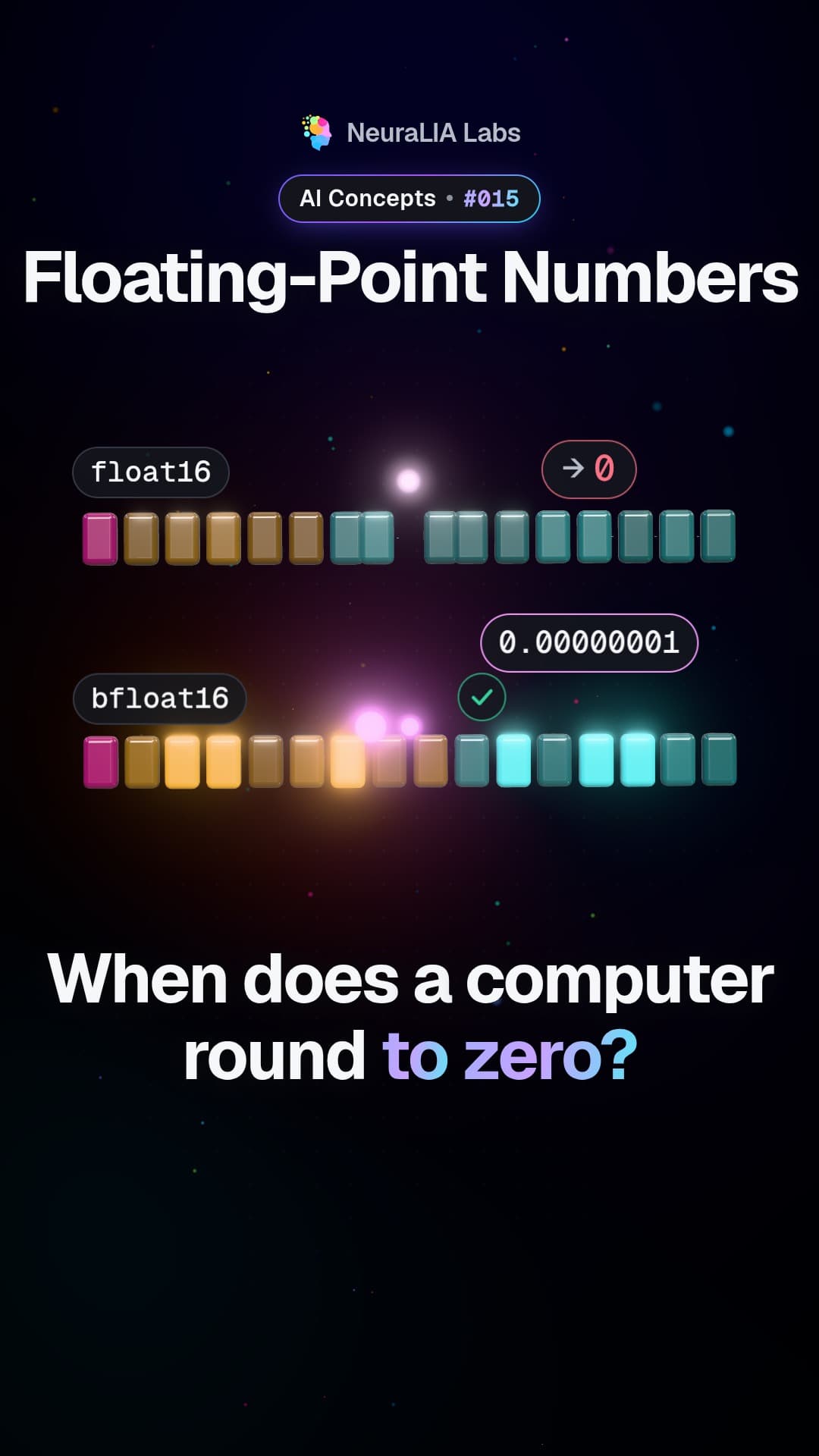 #015
#015Floating-point numbers: why your computer cannot hold every number
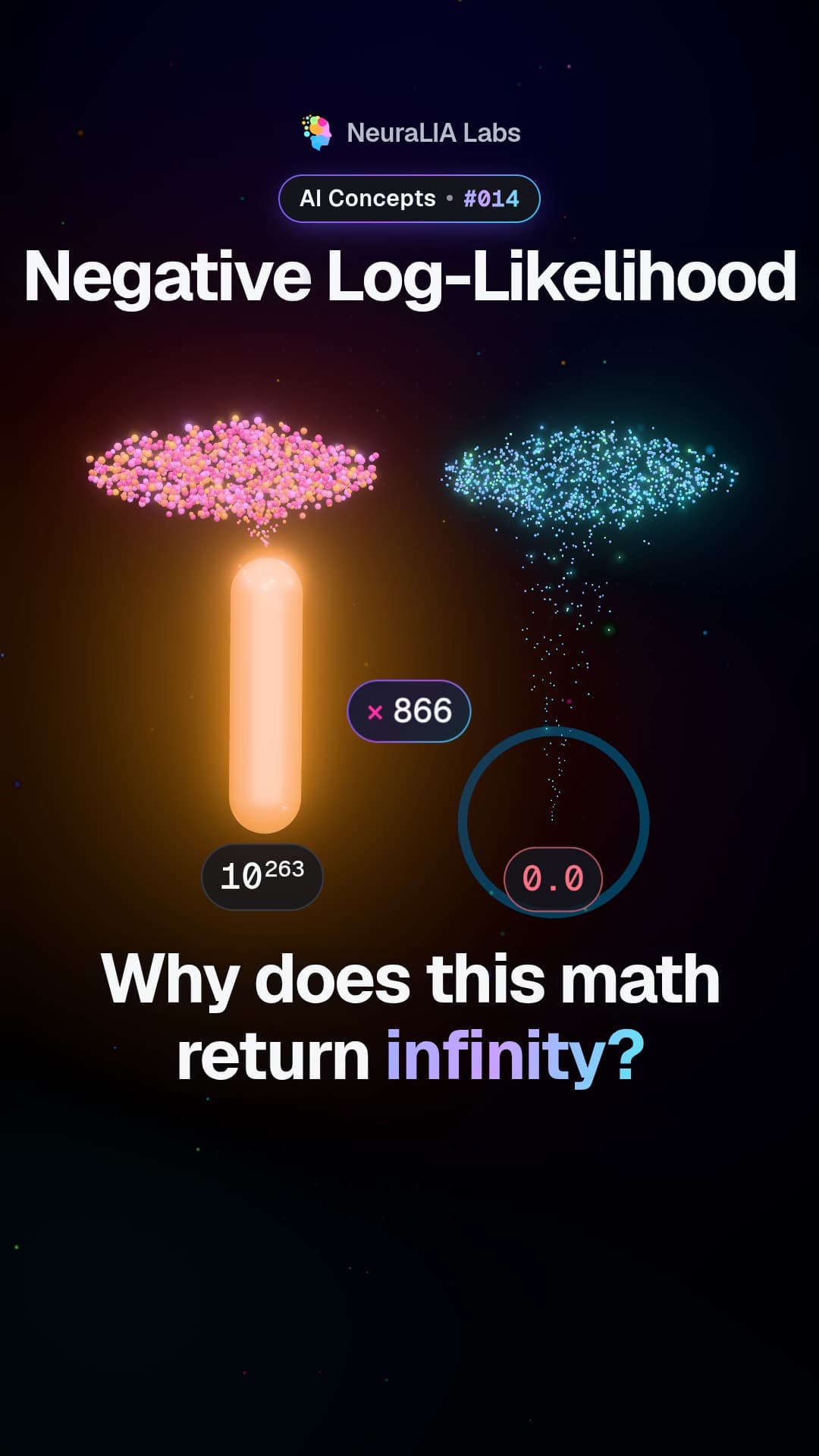 #014
#014Negative log-likelihood: turning a fragile product into a calm sum
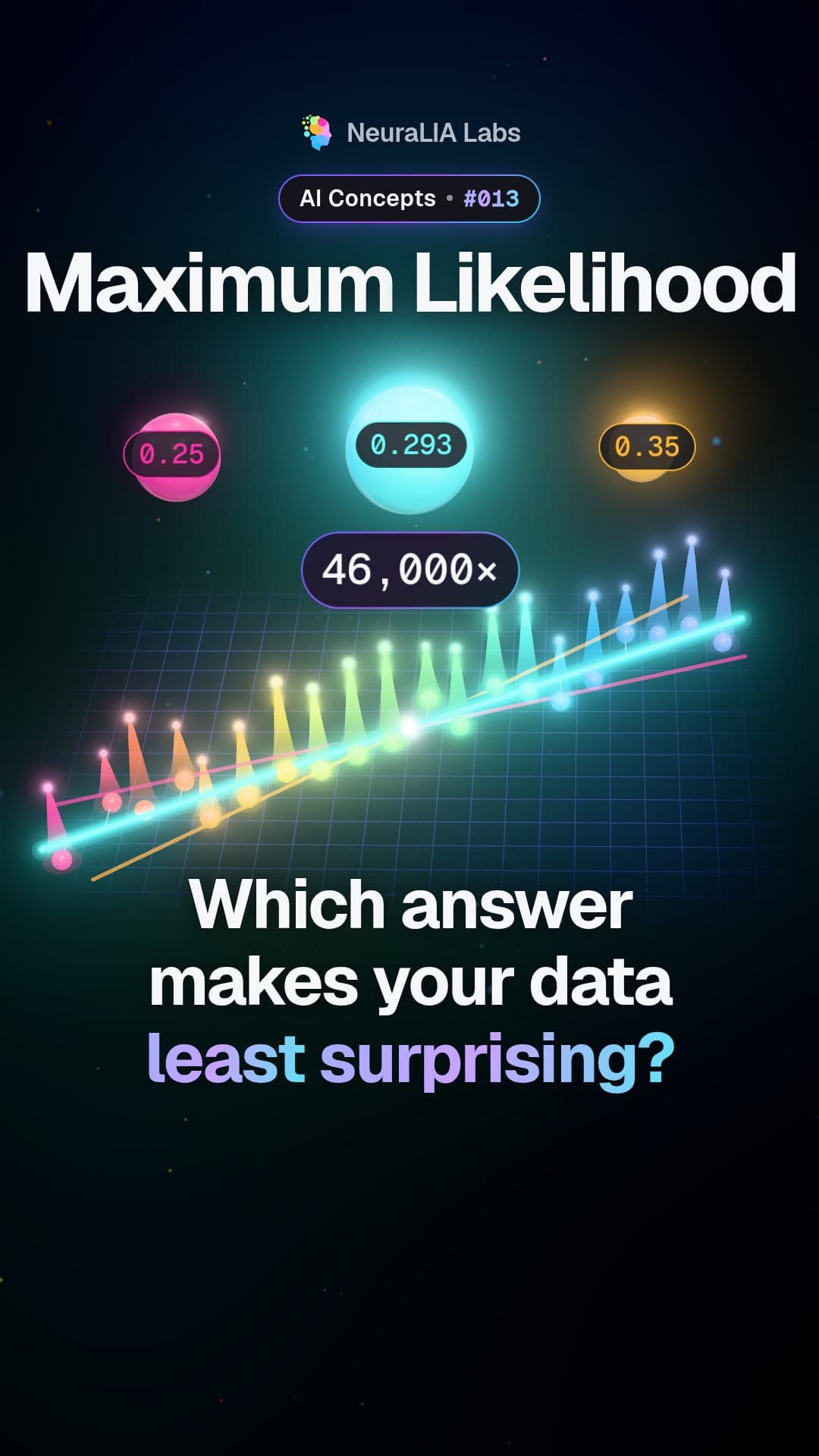 #013
#013Maximum likelihood: the answer that makes your data least surprising
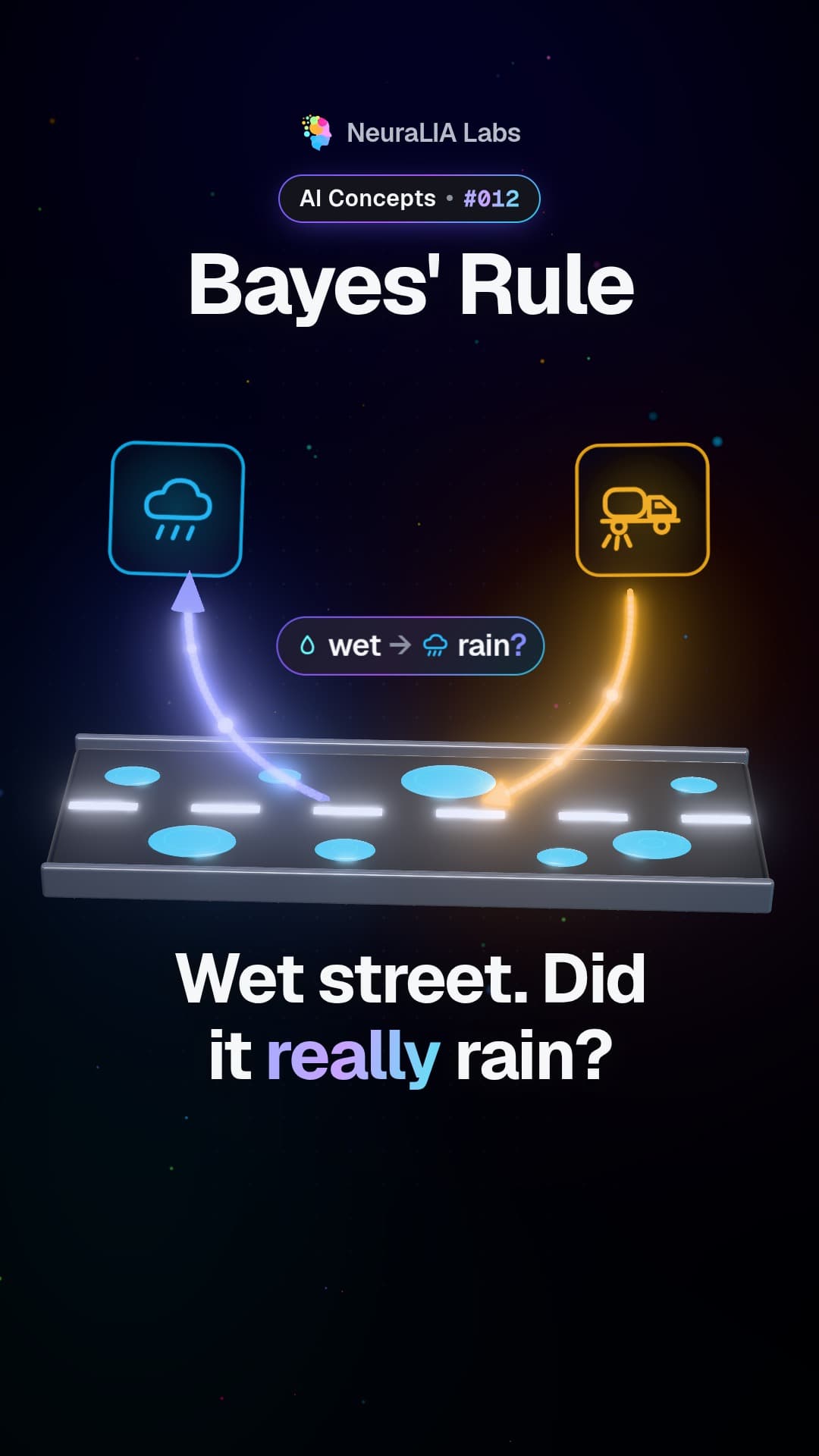 #012
#012Bayes' rule: reasoning backwards from a clue to its most likely cause
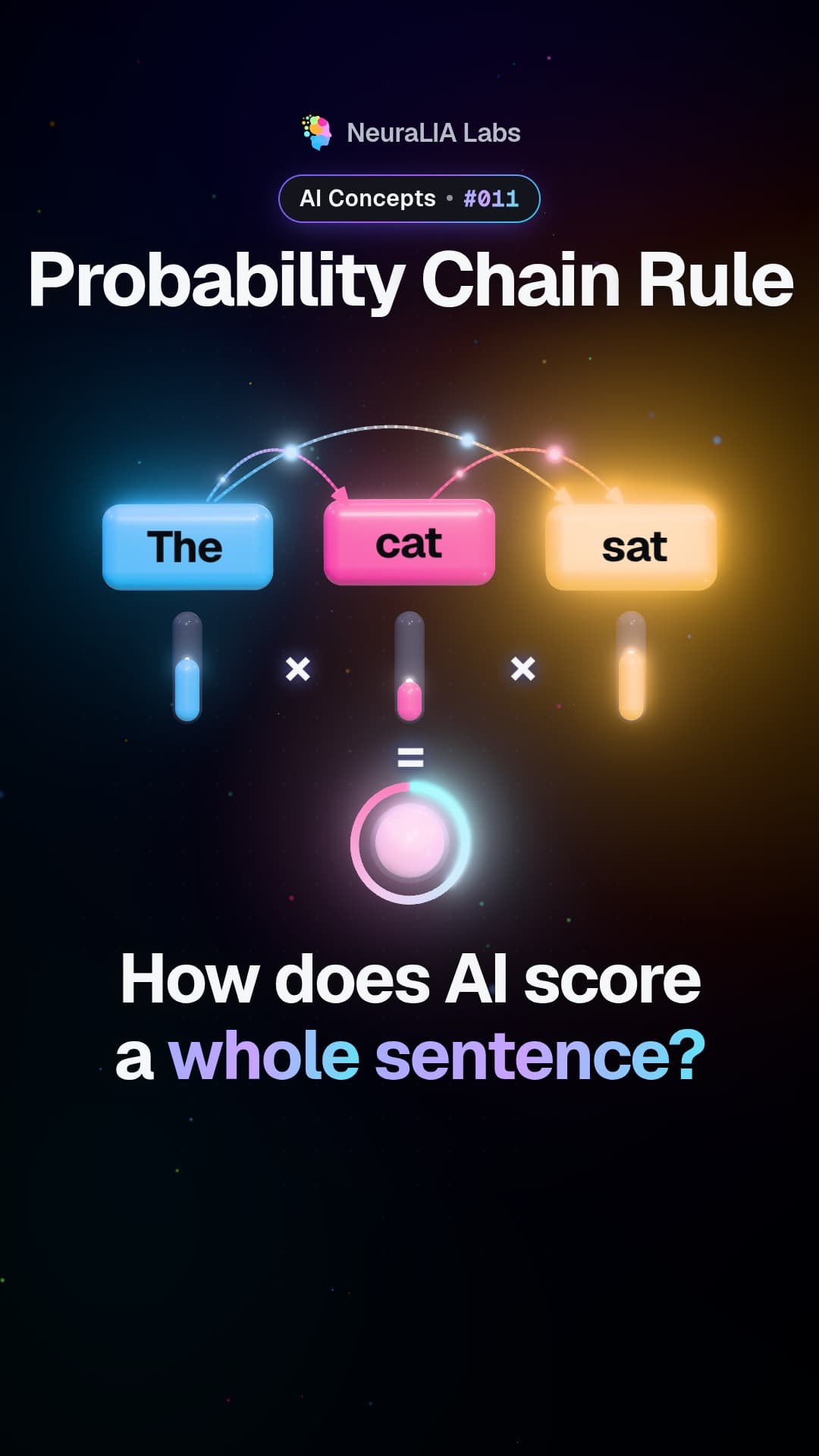 #011
#011Chain rule of probability: how AI scores a sentence word by word
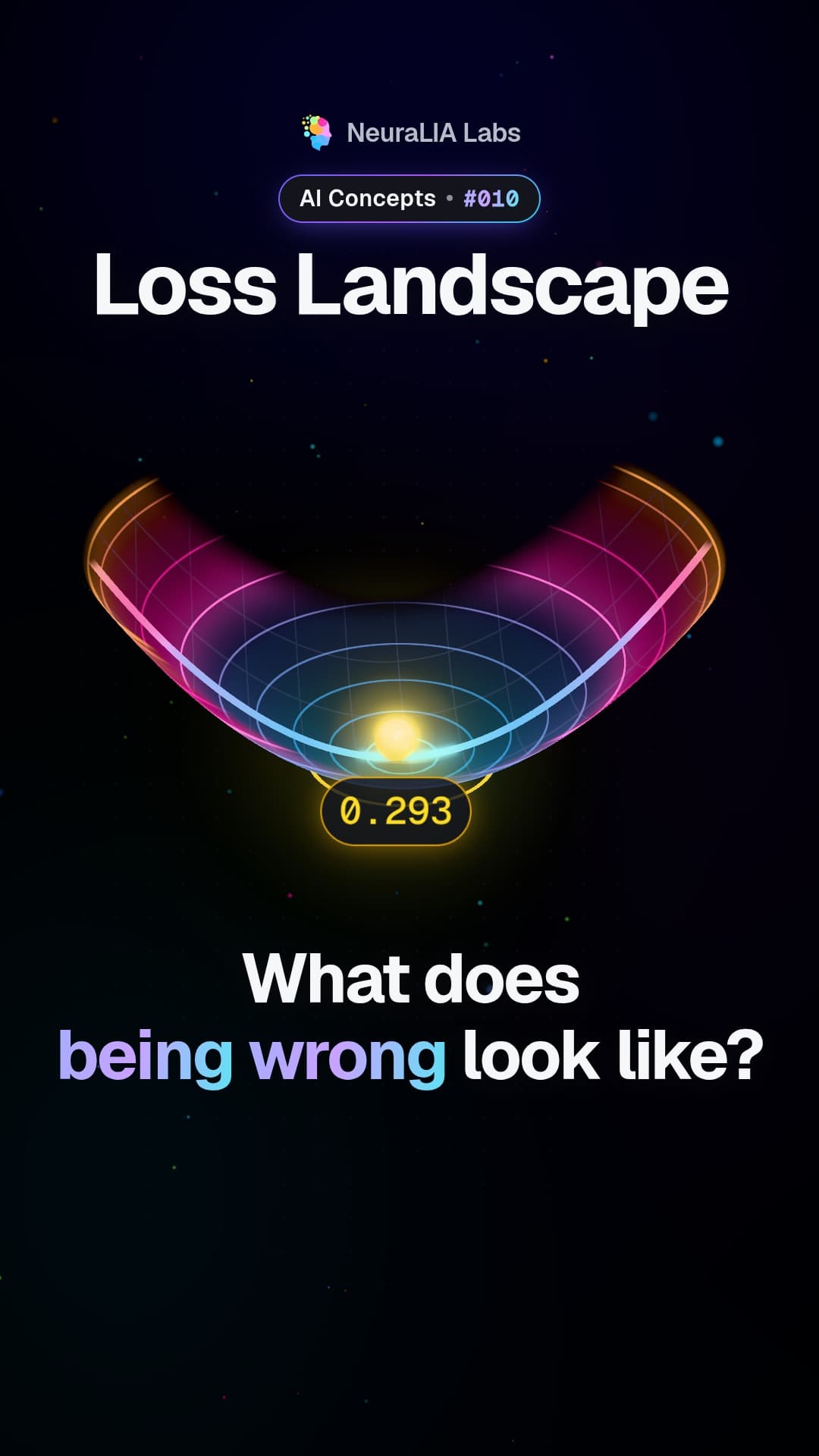 #010
#010Loss landscape: training an AI means finding the bottom of a valley
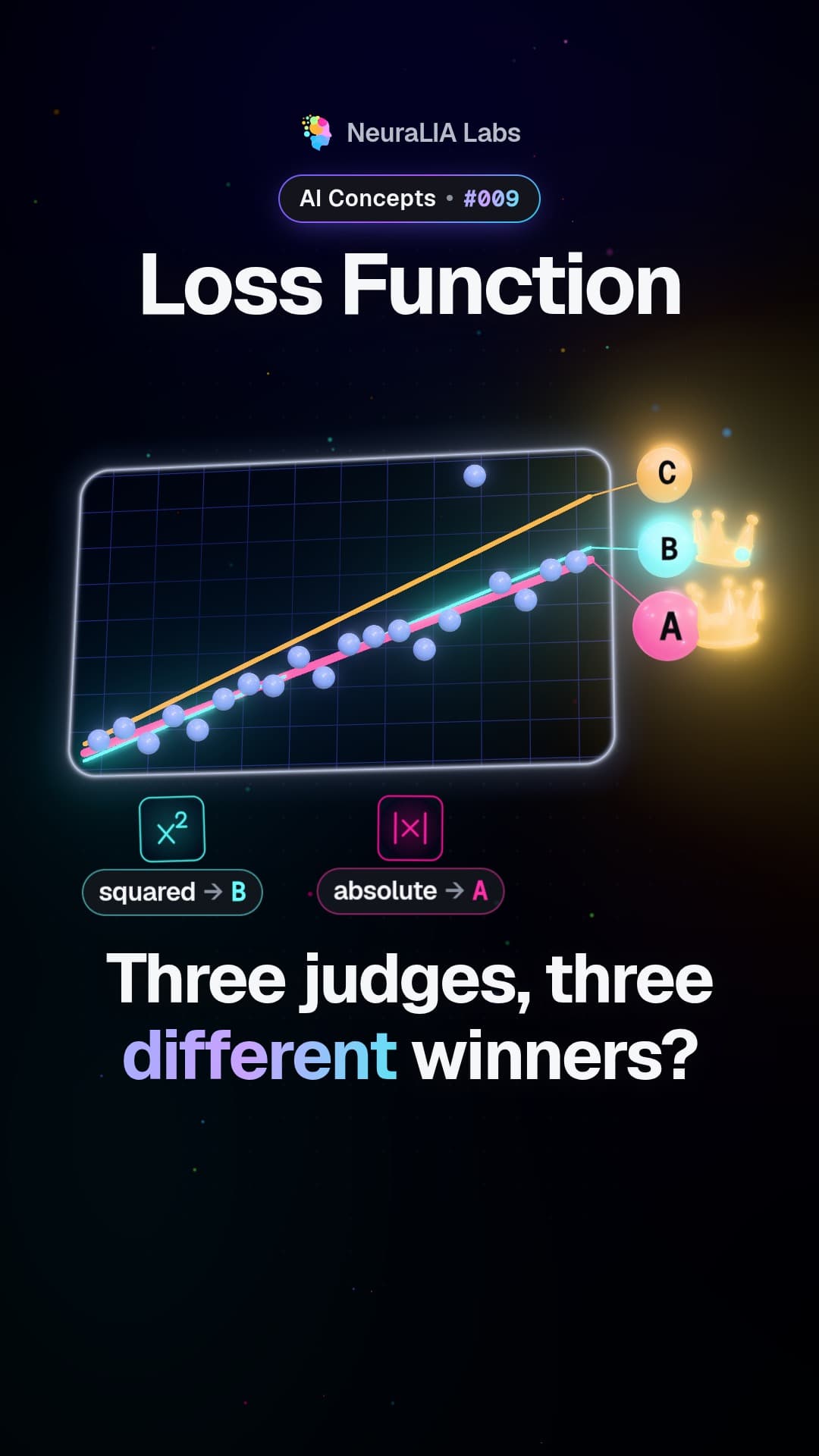 #009
#009Loss function: the scoring rule that decides which answer wins
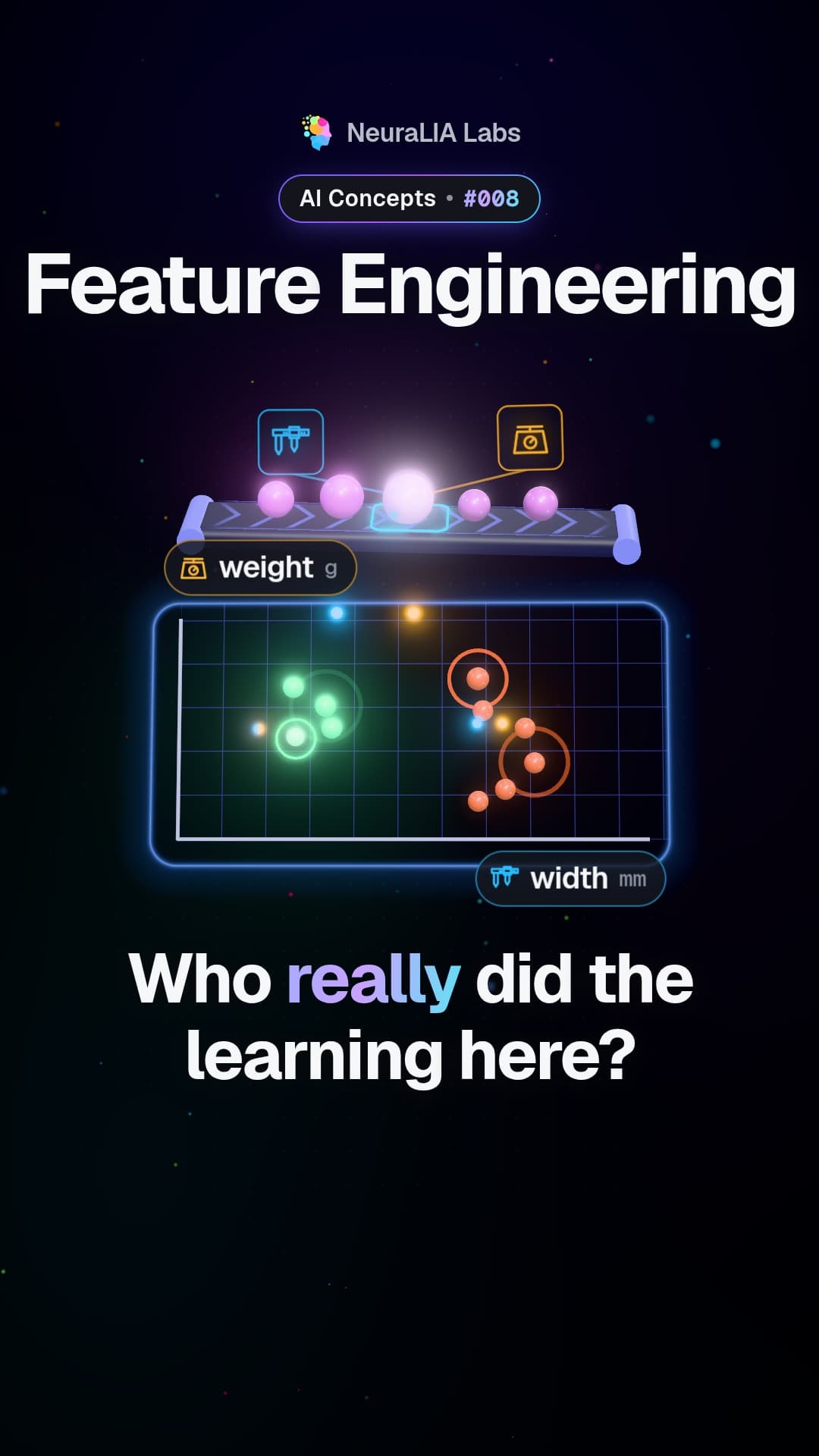 #008
#008Feature engineering: the human choice that can beat the algorithm
Por capítulo do curso
- 1O perceptron do zero: o que um neurônio calcula10 vídeos
- 2De onde vem uma função de perda: verossimilhança, não convenção12 vídeos
- 3Ladeira abaixo: gradient descent e os dois passos que todo mundo pula12 vídeos
- 4Classificação, entropia cruzada e como não se enganar
- 5Backpropagation do zero: primeiro o motor, depois a rede1 vídeo
- 6Fazer a rede treinar — e fazê-la generalizar
- 7Crie um tokenizer BPE: por que seu modelo não conta os R's1 vídeo
- 8Predição do próximo token: embeddings e o que perplexidade significa1 vídeo
- 9Attention e o bloco transformer, derivados de uma média
- 10Pré-treinando um LLM: dados, computação, leis de escala e custo
- 11Do modelo base ao assistant: SFT, RLHF, DPO e GRPO
- 12Chain of Thought, RLVR e compute em test-time, medidos
- 13Barateando a inferência: KV cache, batching e quantização
- 14Sua primeira chamada LLM em produção: streaming, retentativas e timeouts
- 15Prompt Engineering, medido: o que muda a saída
- 16Context Window, Tokens e a conta, medidos
- 17Temperatura, top-p e o determinismo que você não tem
- 18Tool calling e saídas estruturadas: o contrato que não quebra
- 19RAG em produção: chunking, retrieval e citações honestas
- 20Fine-Tune, Retrieve ou Prompt? A decisão é econômica
- 21Precificação multimodal: o que imagens, áudio e vídeo realmente cobram
- 22O que é um AI Agent: cinco tipos clássicos, duas definições rivais
- 23Construa um agent harness: o loop e suas cinco saídas
- 24Context Engineering: por que seu agent fica mais burro no turno 40
- 25Orquestração multi-agent: cinco padrões e quando um vence
- 26MCP explicado pela especificação: o que um servidor realmente é
- 27Publique um servidor MCP: TypeScript e Python, medidos
- 28Agent Skills e SKILL.md: progressive disclosure, medido
- 29Avaliação de LLM: dos benchmarks públicos ao seu golden set
- 30Prompt Injection e a tríade letal: protegendo um agent real