
 #01
#01Vídeos
IA explicada en vídeos cortos
Una idea por vídeo, en lenguaje claro. Cada uno enlaza al capítulo de nuestro curso gratis que la explica paso a paso.
Empieza aquí AI 101
- #01
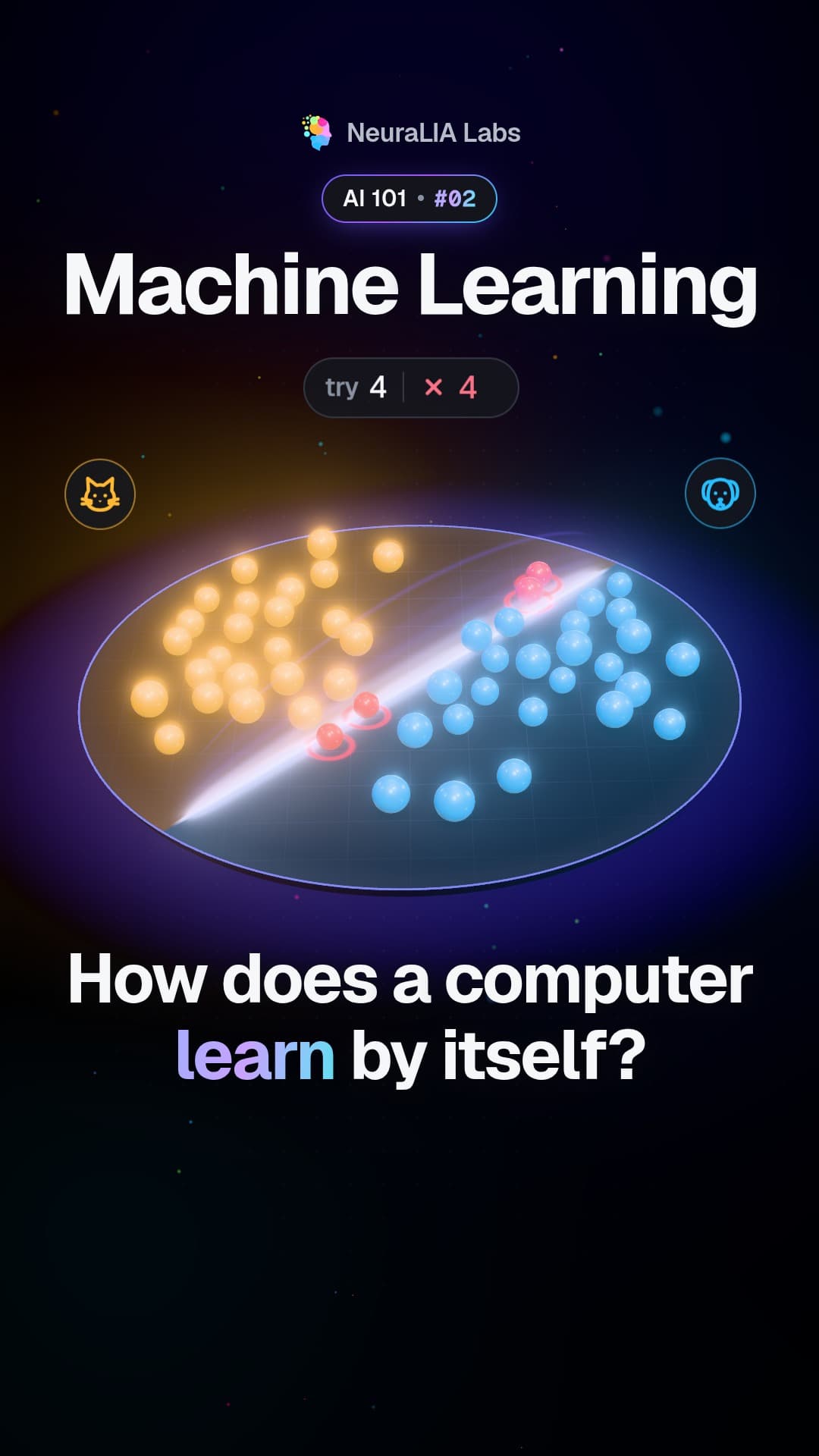 #02
#02Machine learning: how a computer draws its own dividing line
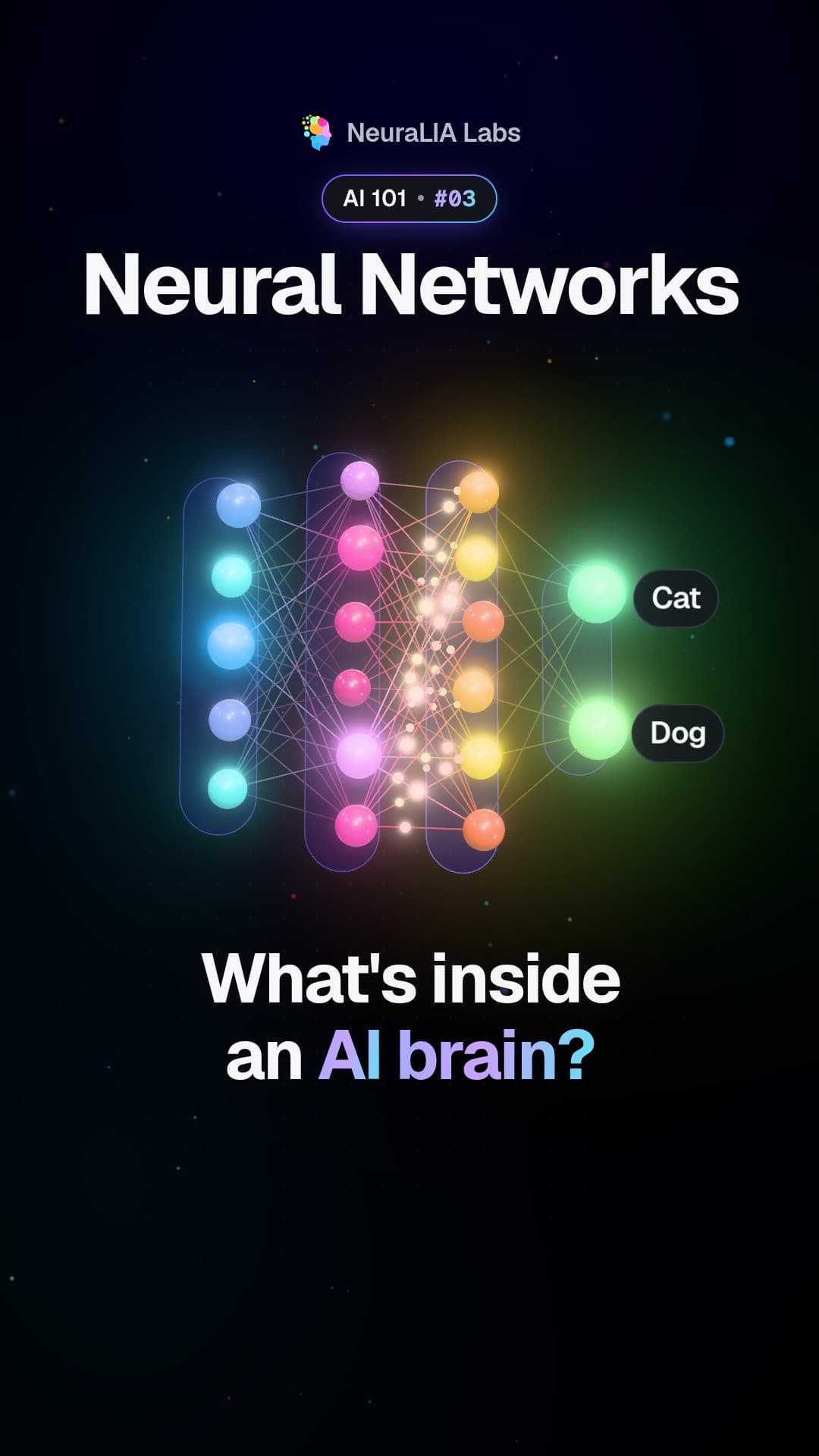 #03
#03Neural networks: layers of tiny calculators passing signals on
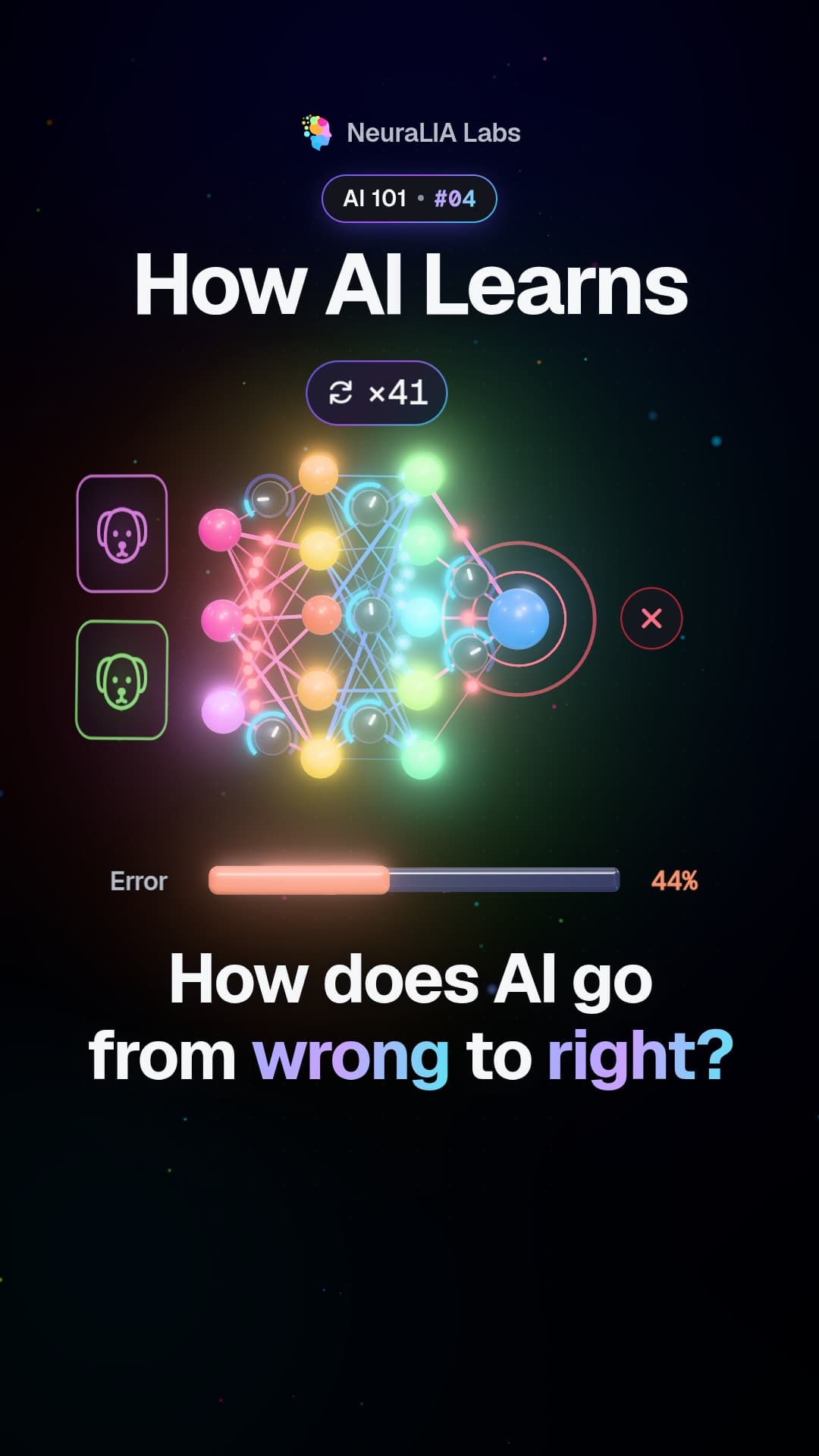 #04
#04How AI learns: guess, measure the error, nudge, repeat
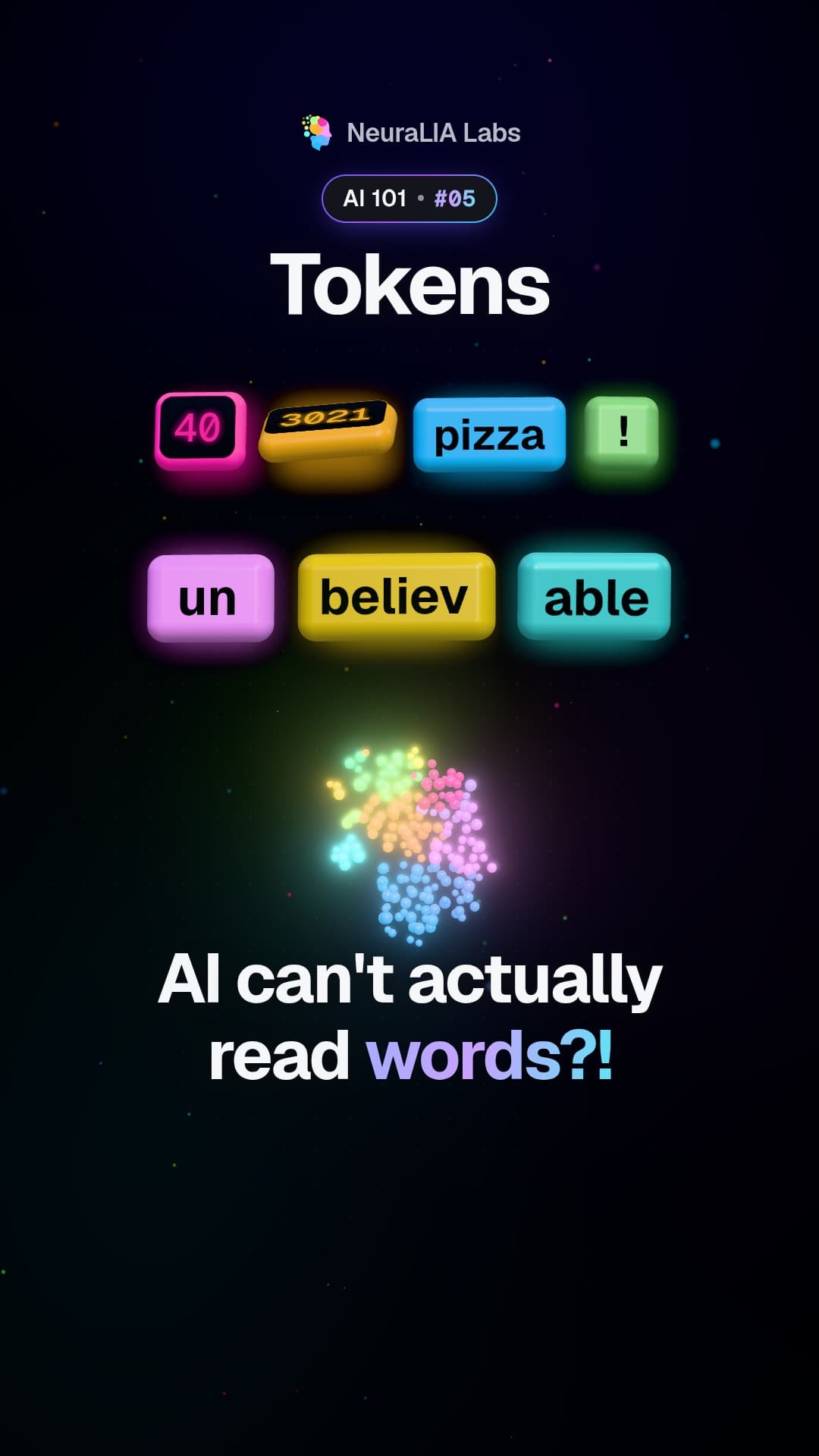 #05
#05Tokens: how AI chops your words into numbered pieces
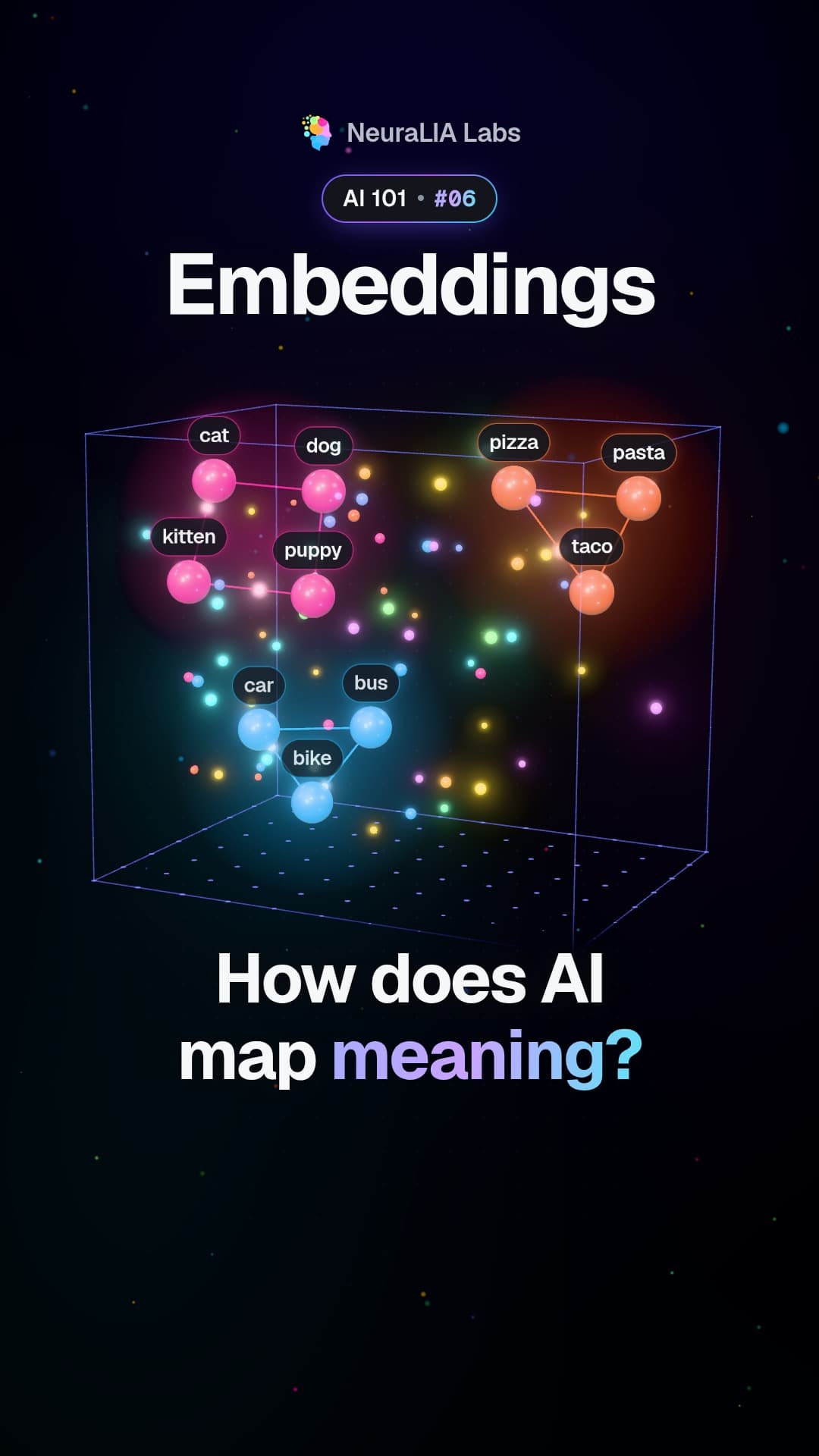 #06
#06Embeddings: why a puppy lands closer to a dog than to a pizza
Últimos
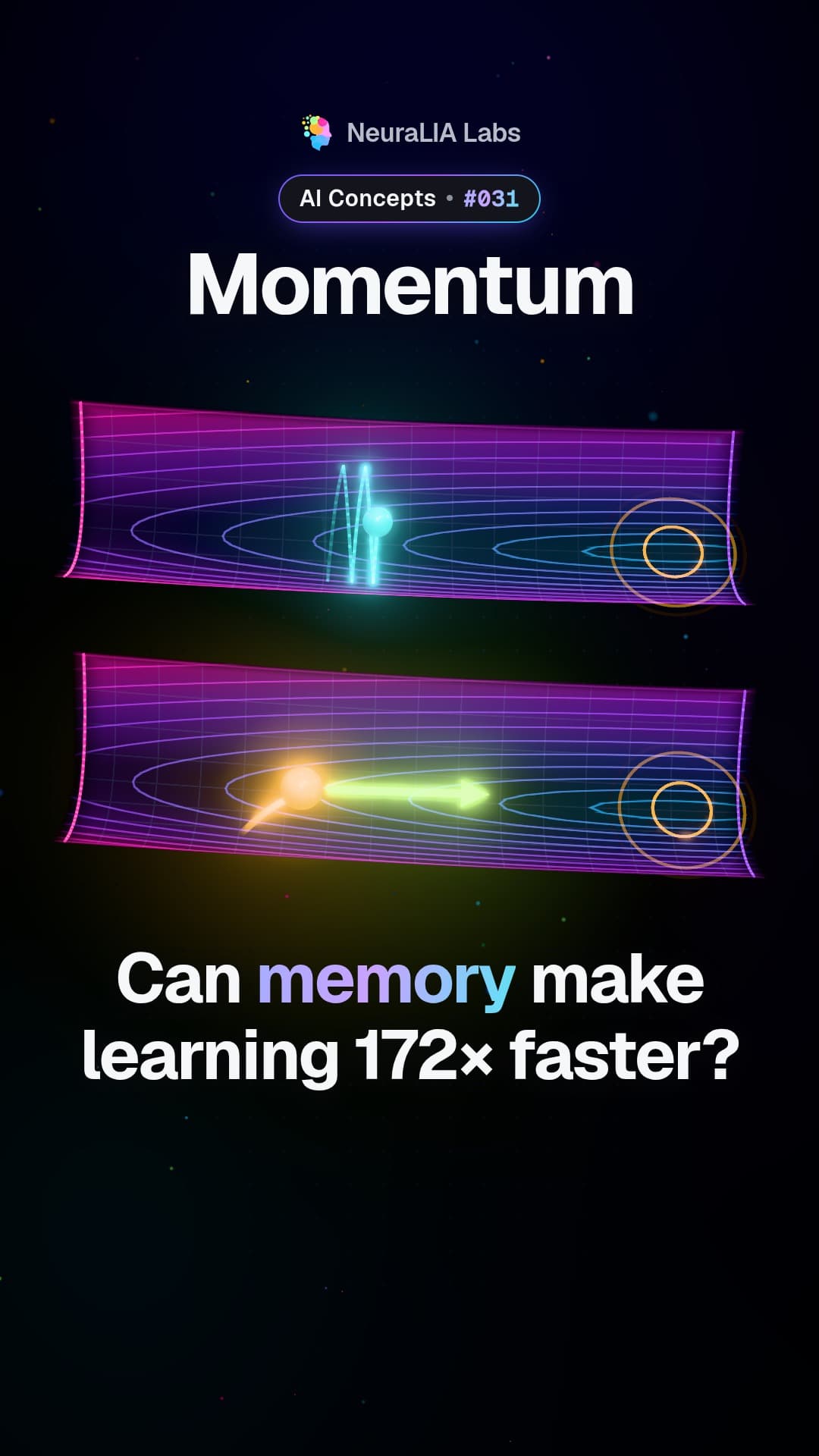 #031
#031Momentum: how remembering past steps stops AI training zigzagging
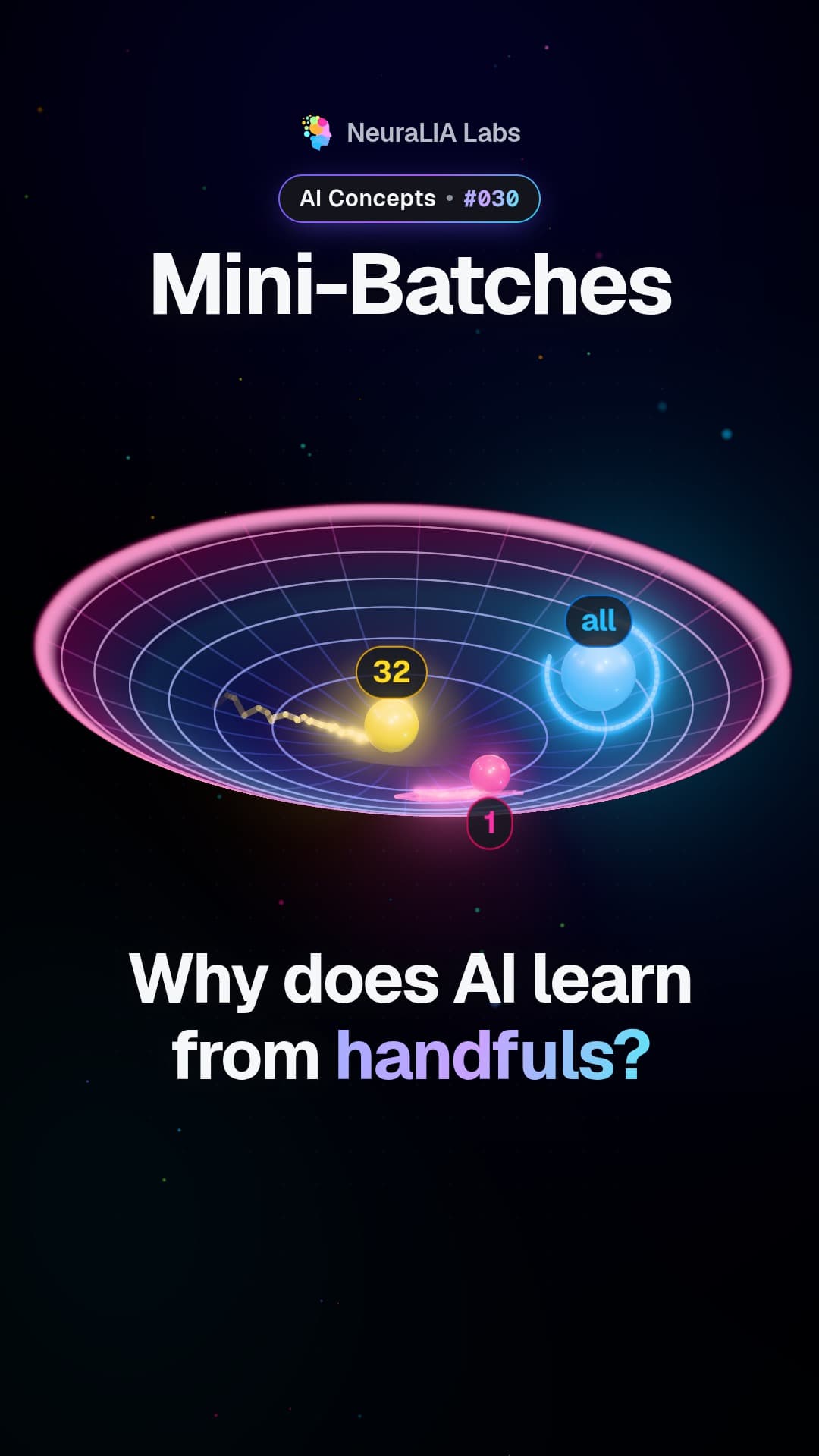 #030
#030Mini-batches: why AI learns faster from a random handful of data
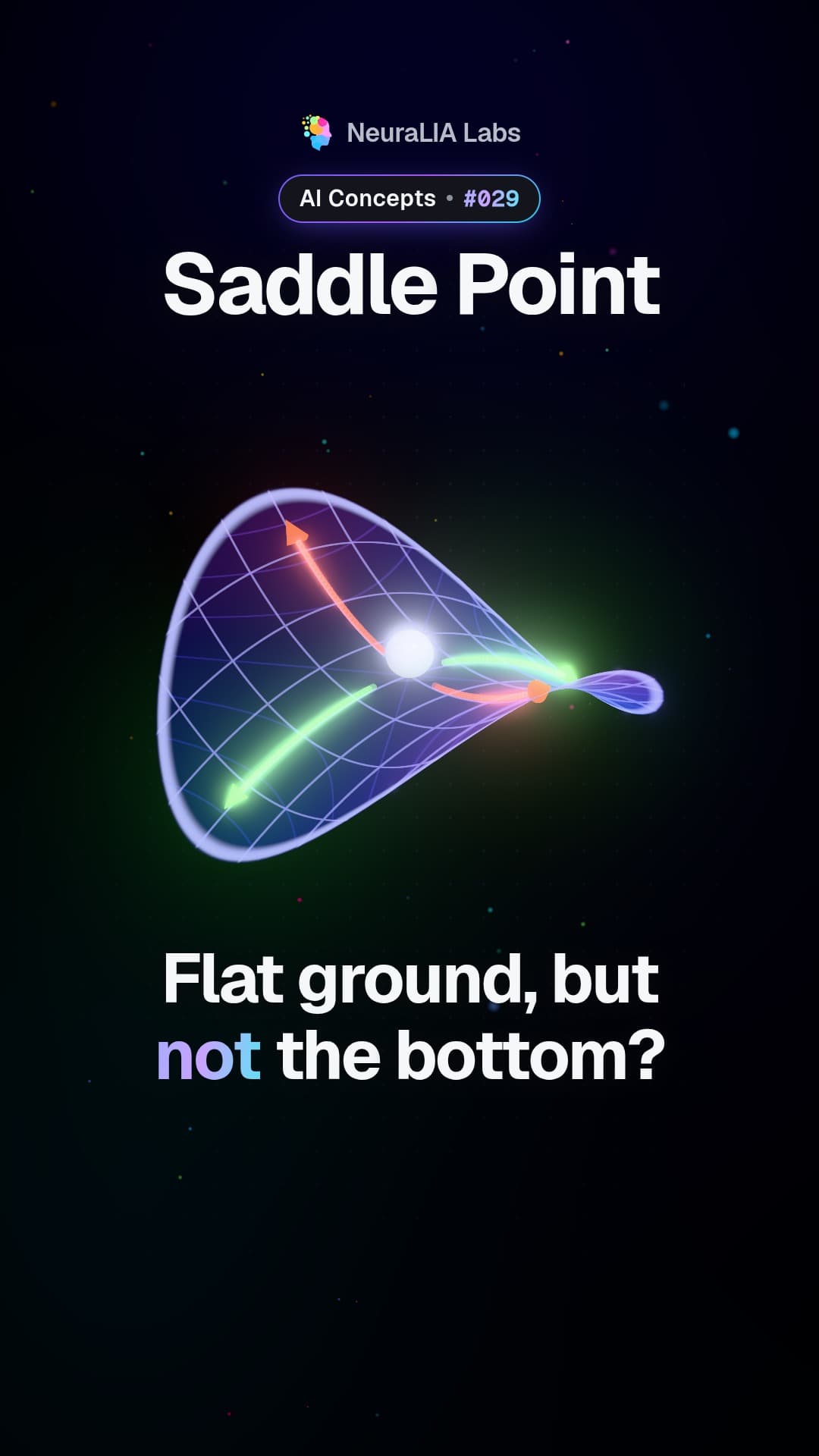 #029
#029Saddle points: where AI training looks stuck but has a way down
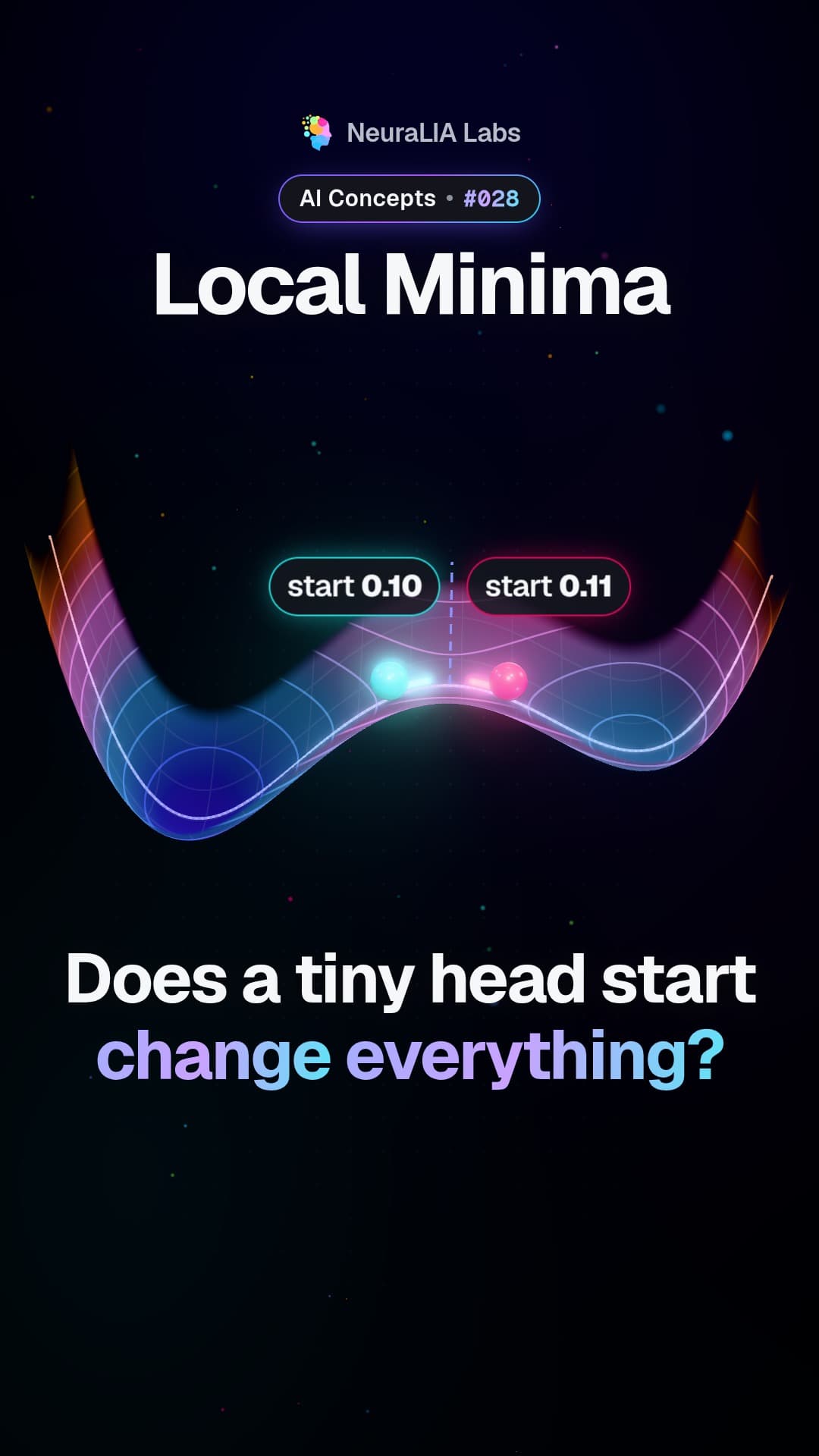 #028
#028Local minima: why AI training can settle for second best
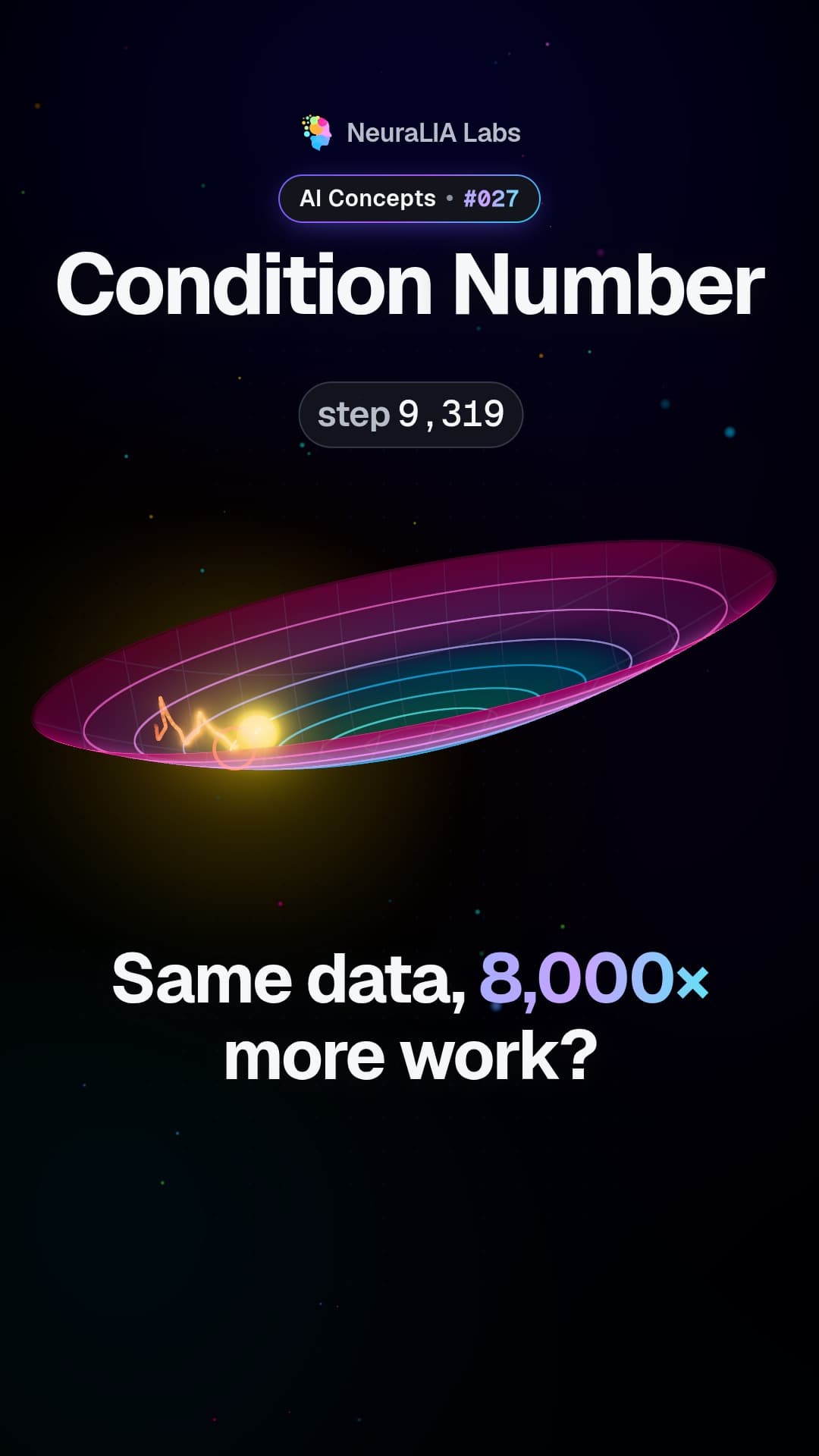 #027
#027Condition number: why a stretched valley makes AI training crawl
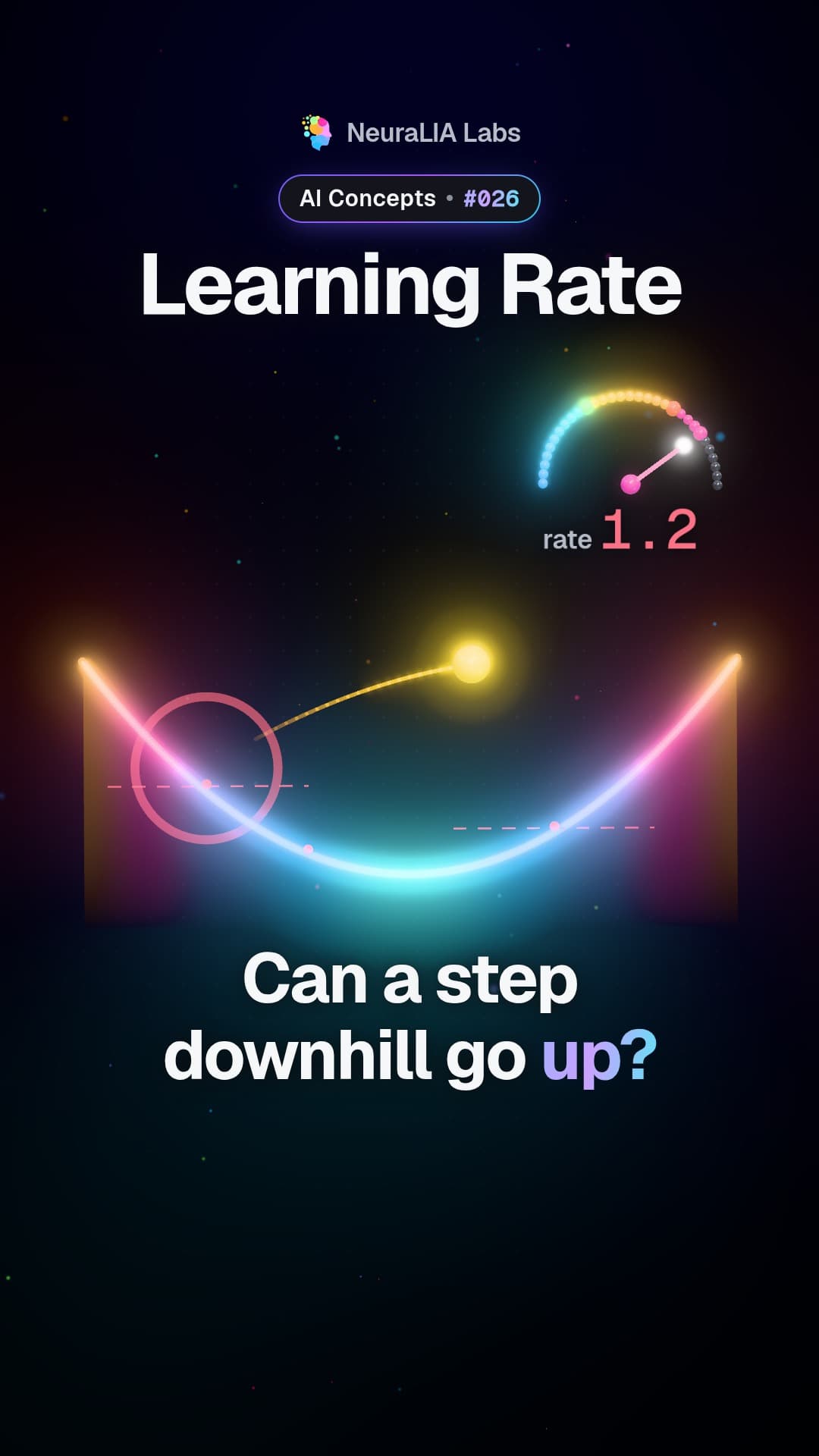 #026
#026Learning rate: the step size with a ceiling you can calculate
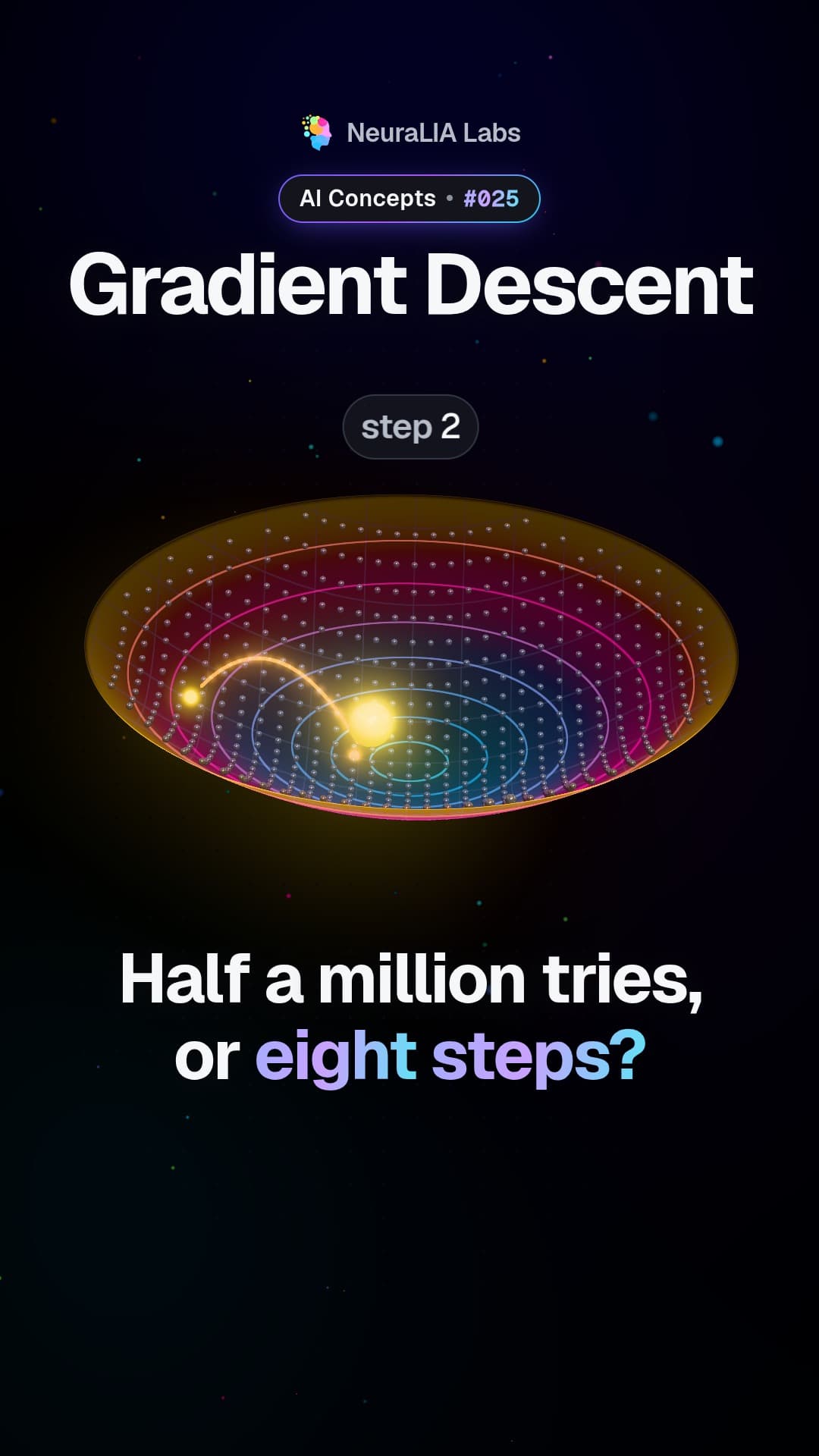 #025
#025Gradient descent: how AI finds its way downhill in small steps
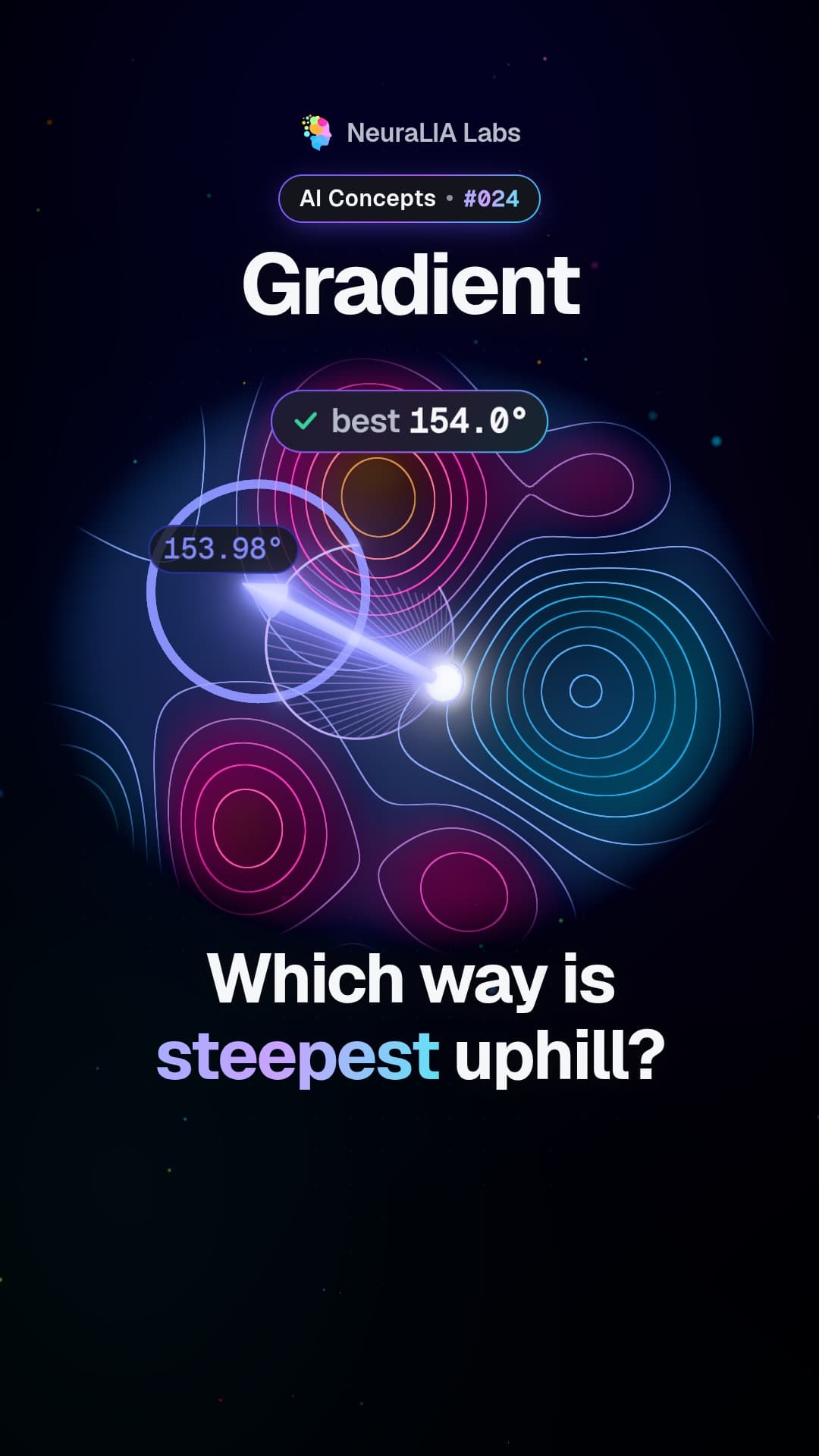 #024
#024Gradient: the arrow that points uphill, and why AI walks the other way
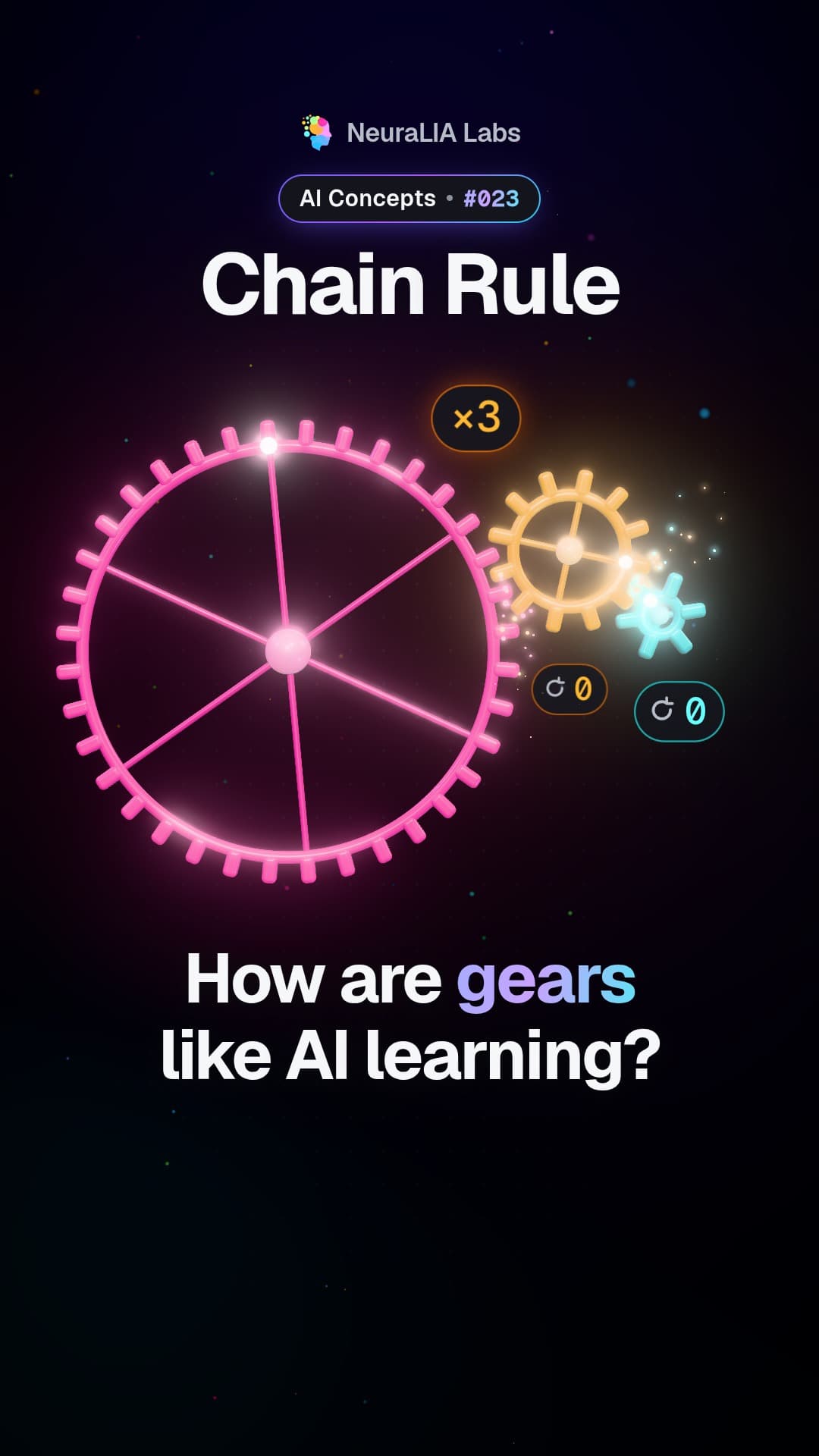 #023
#023Chain rule: how AI traces the effect of every layer
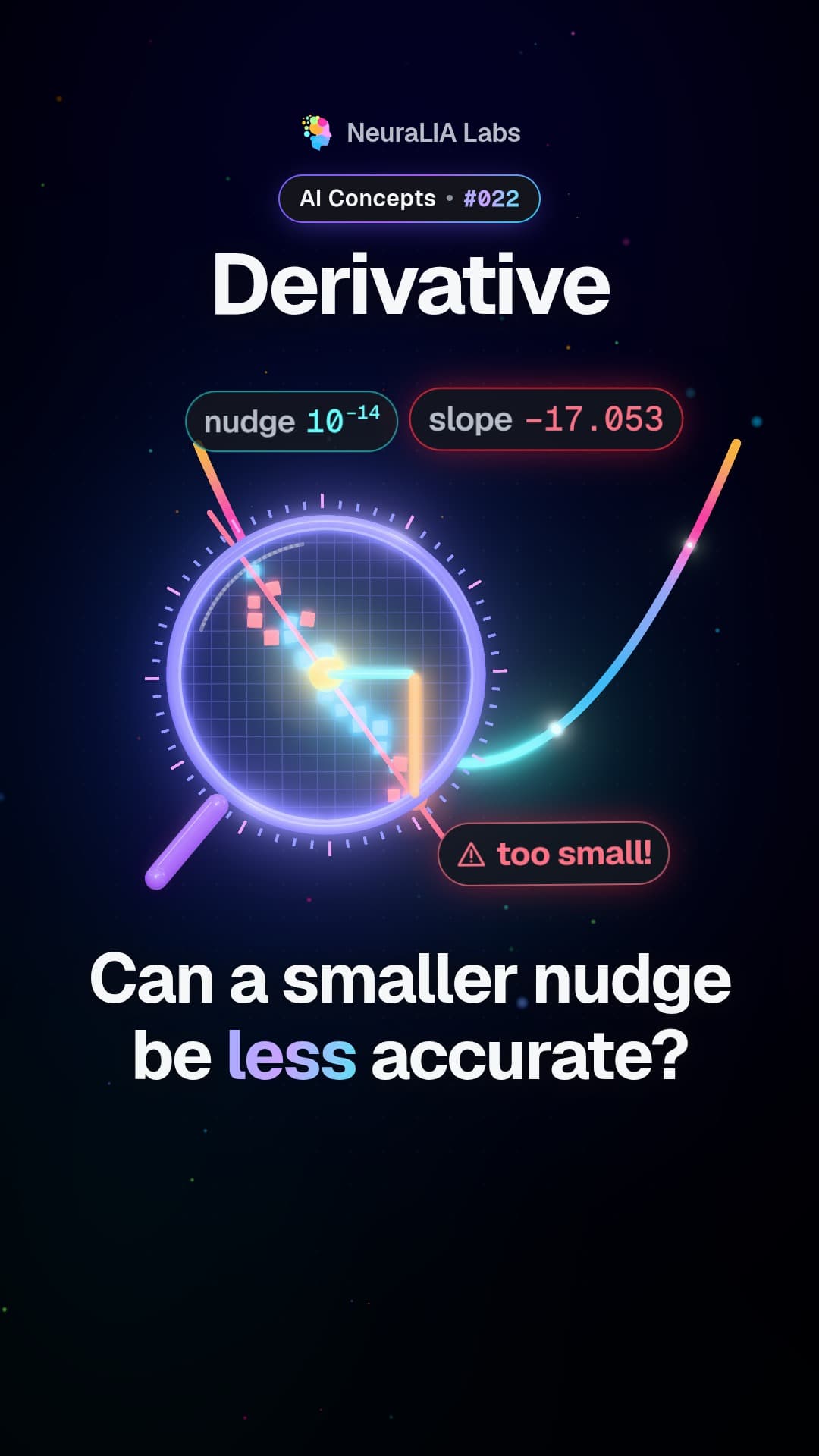 #022
#022Derivative: how much the result moves when you nudge one input
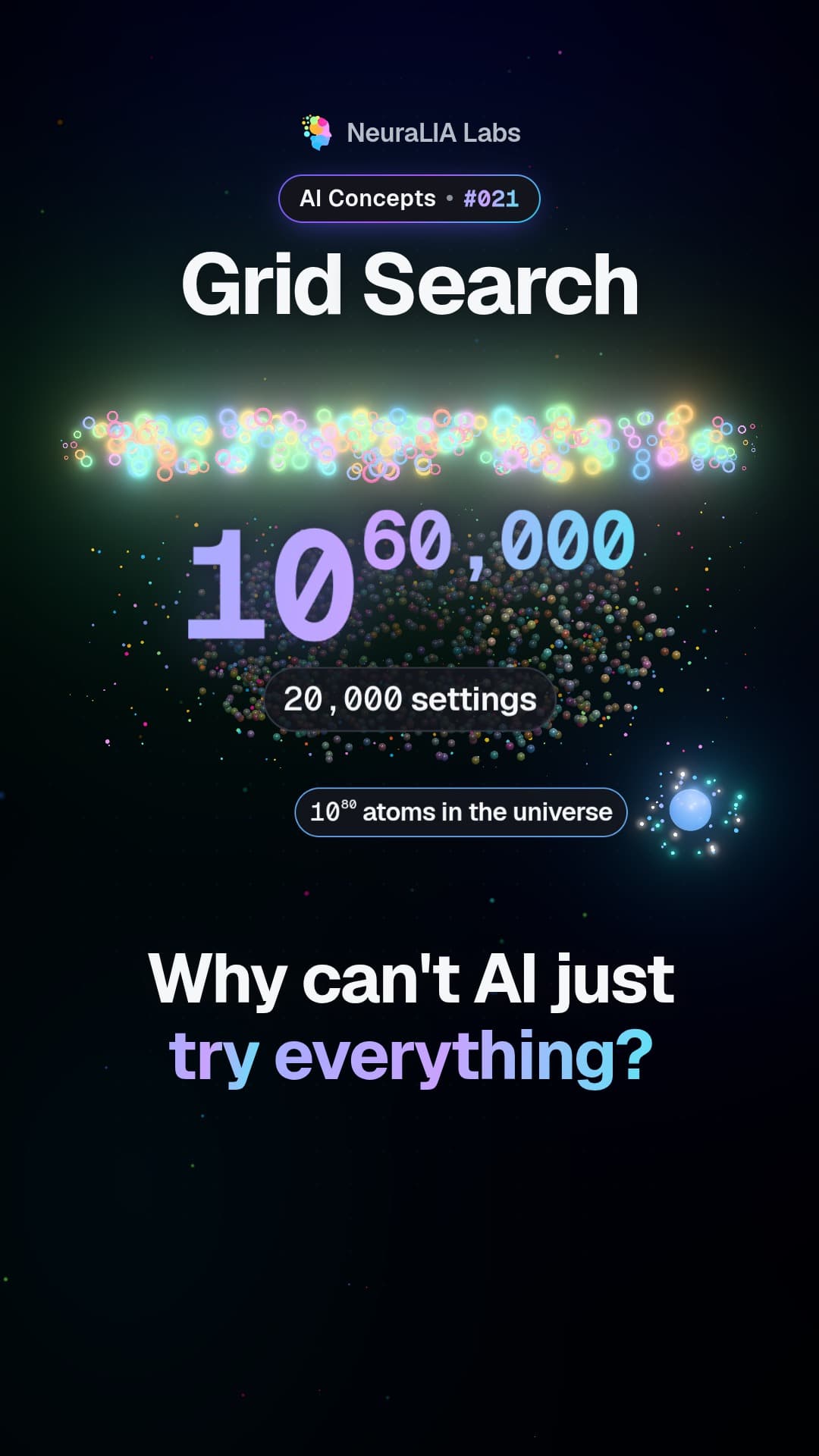 #021
#021Grid search: why you cannot train an AI by trying every setting
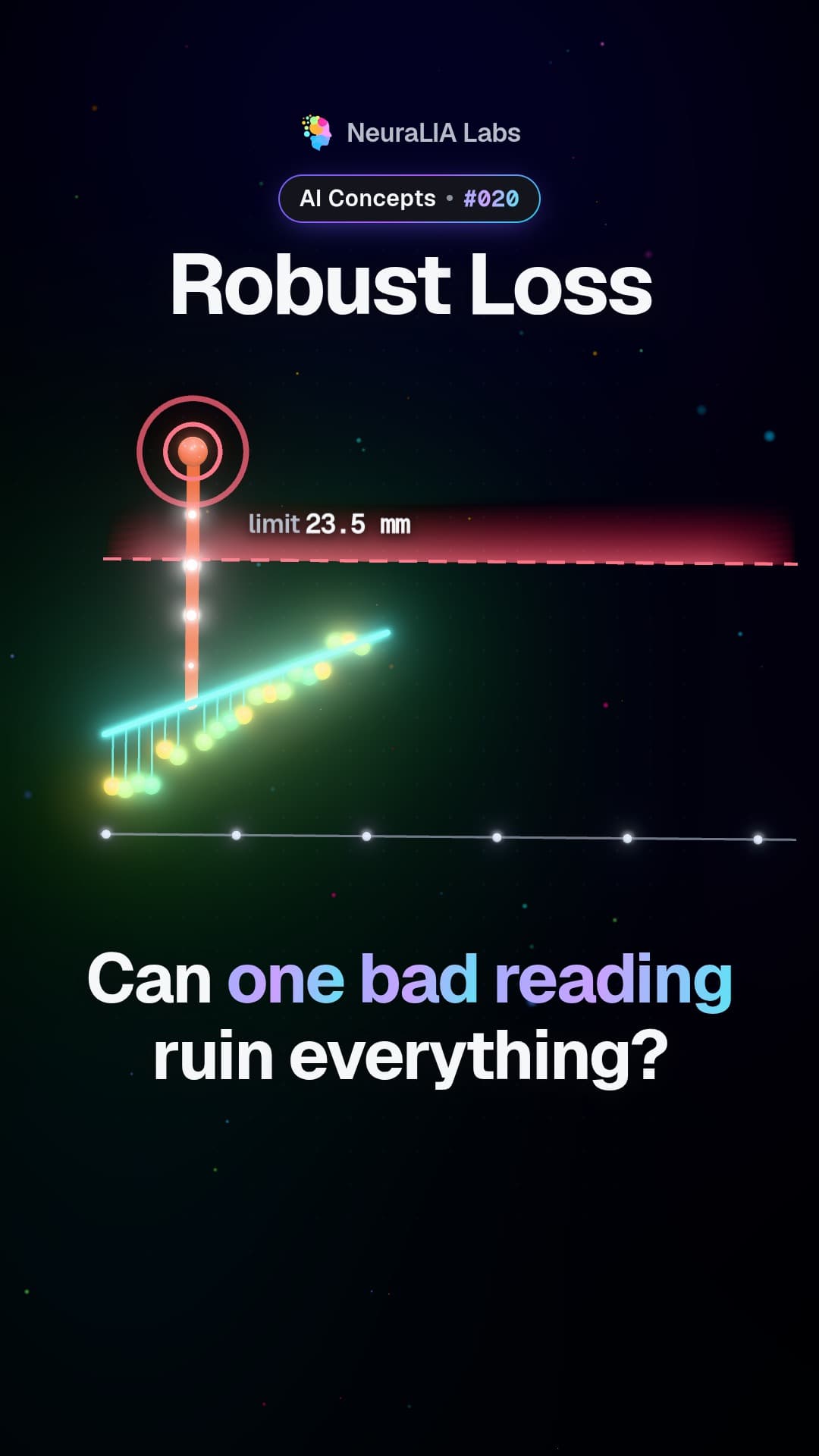 #020
#020Robust loss: stop one wild reading from wrecking your forecast
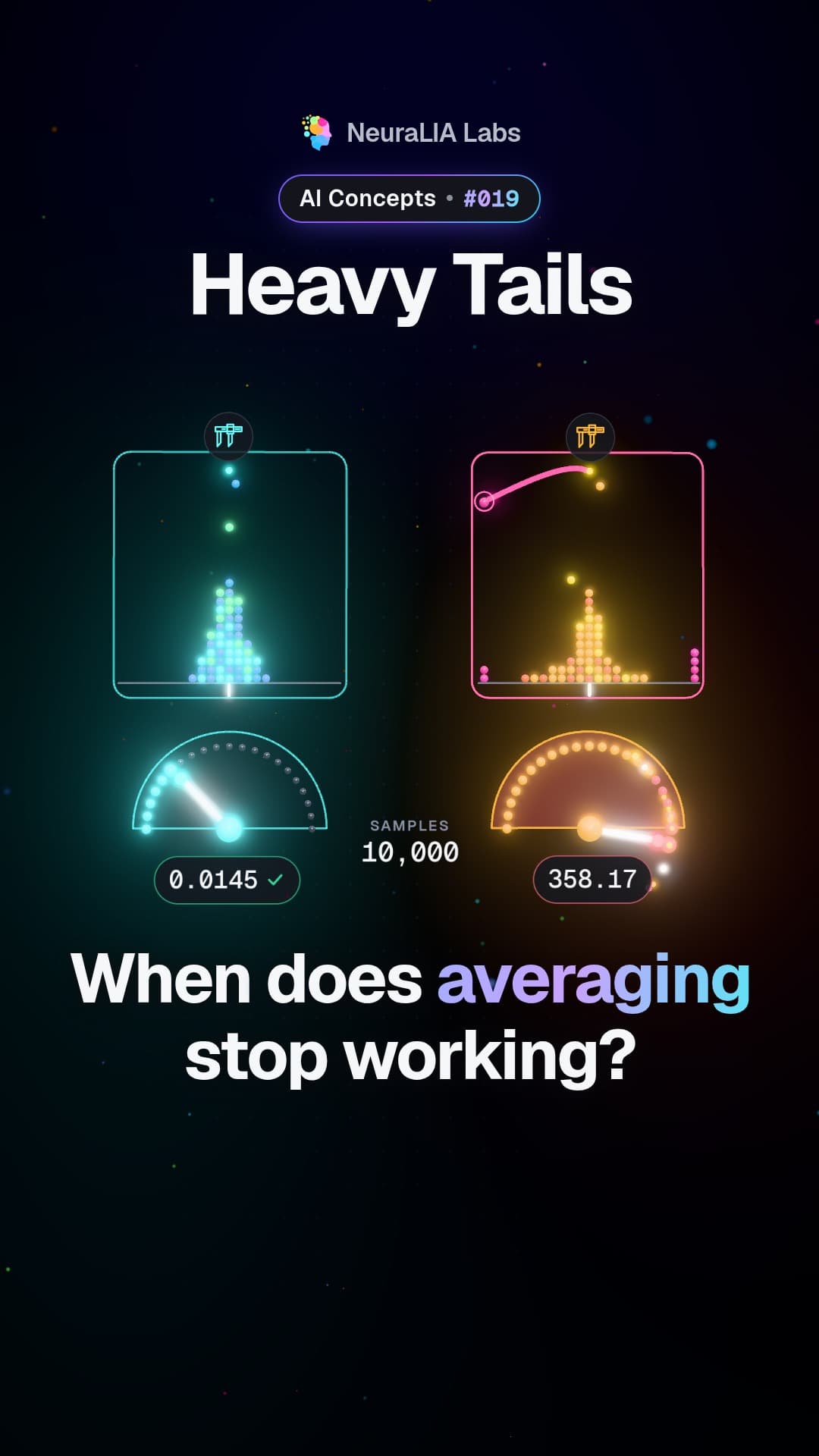 #019
#019Heavy tails: when rare, huge errors break the usual average
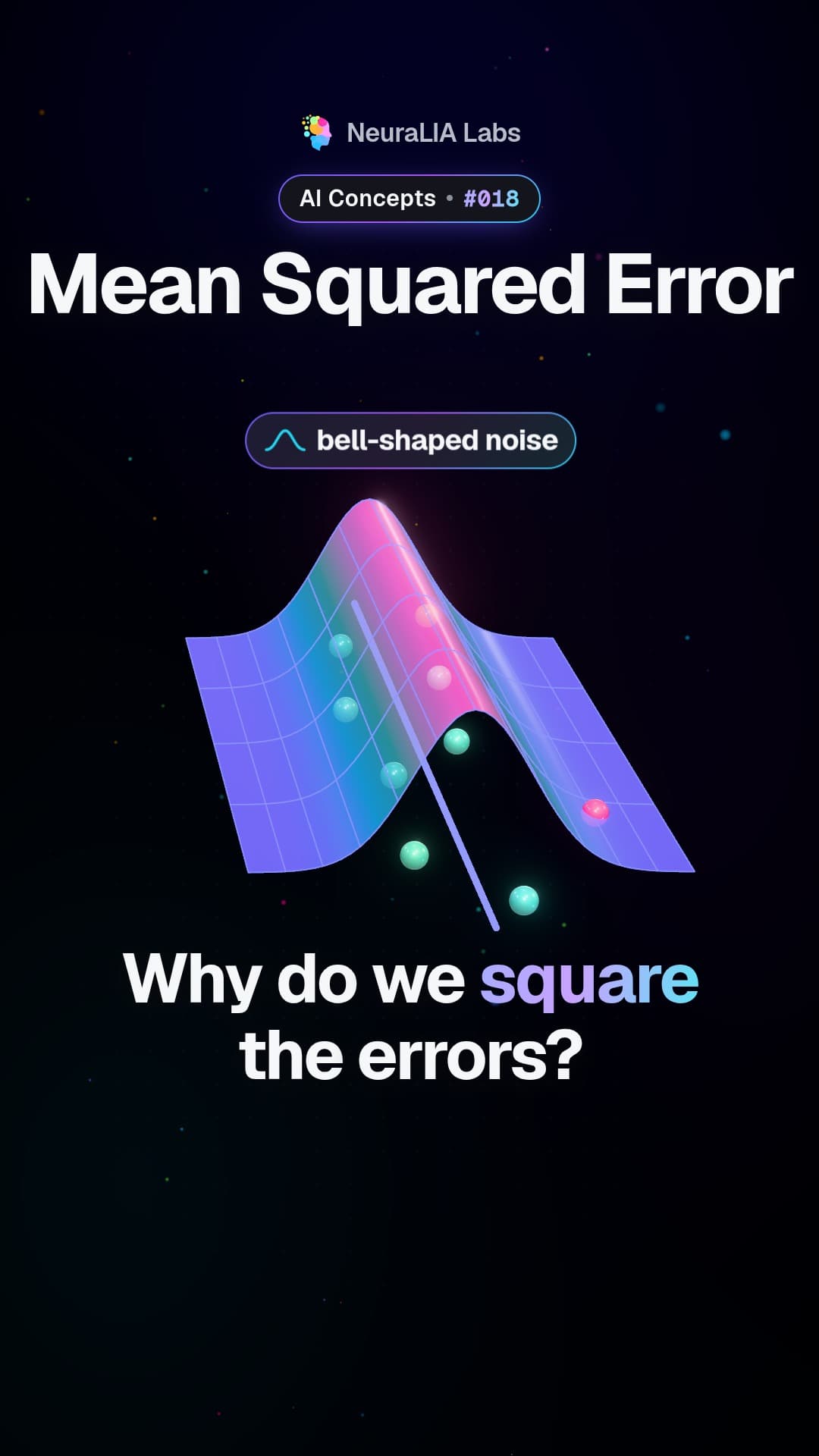 #018
#018Mean squared error: the hidden bet behind squaring your mistakes
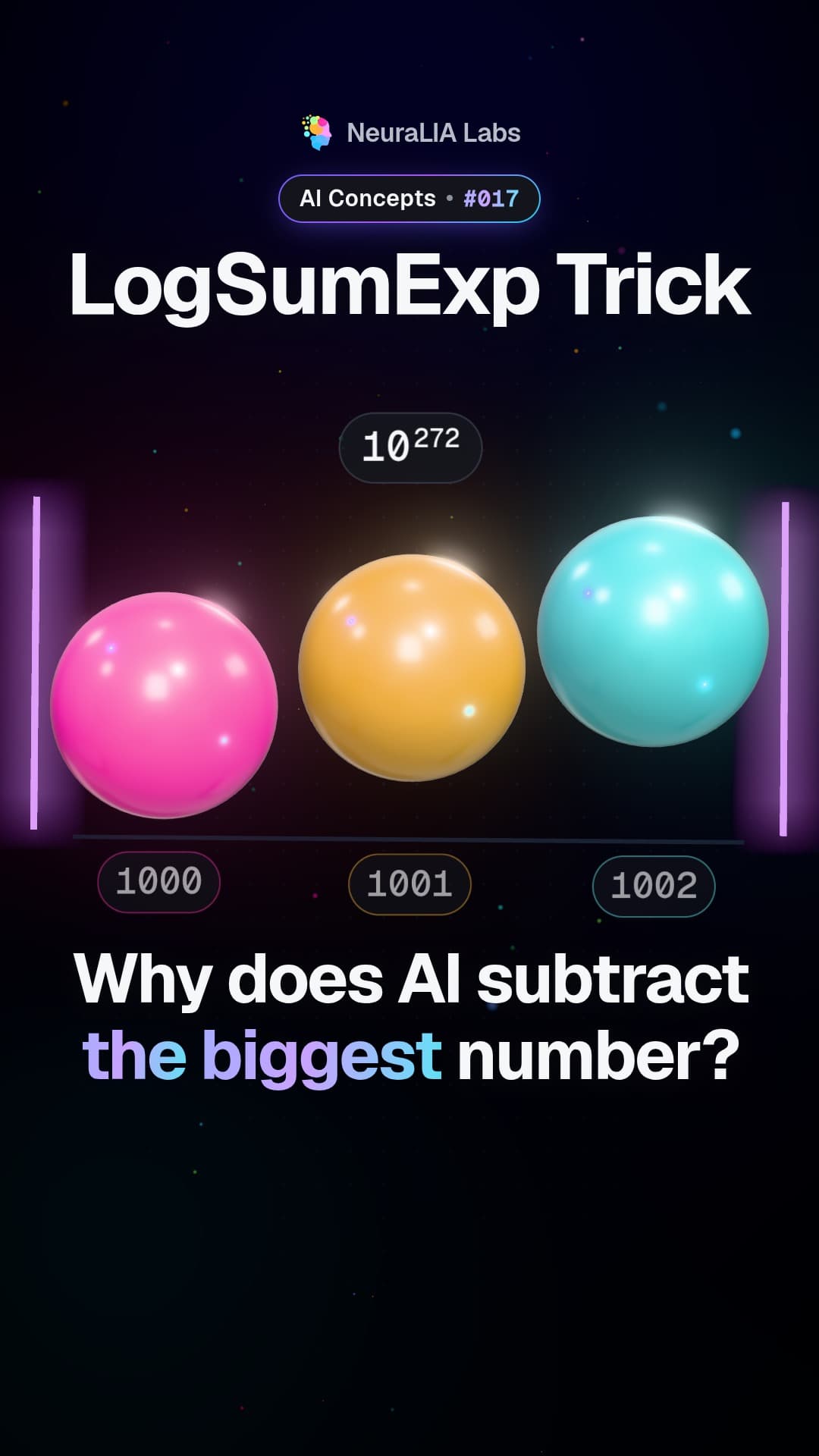 #017
#017The LogSumExp trick: one subtraction that stops AI math overflowing
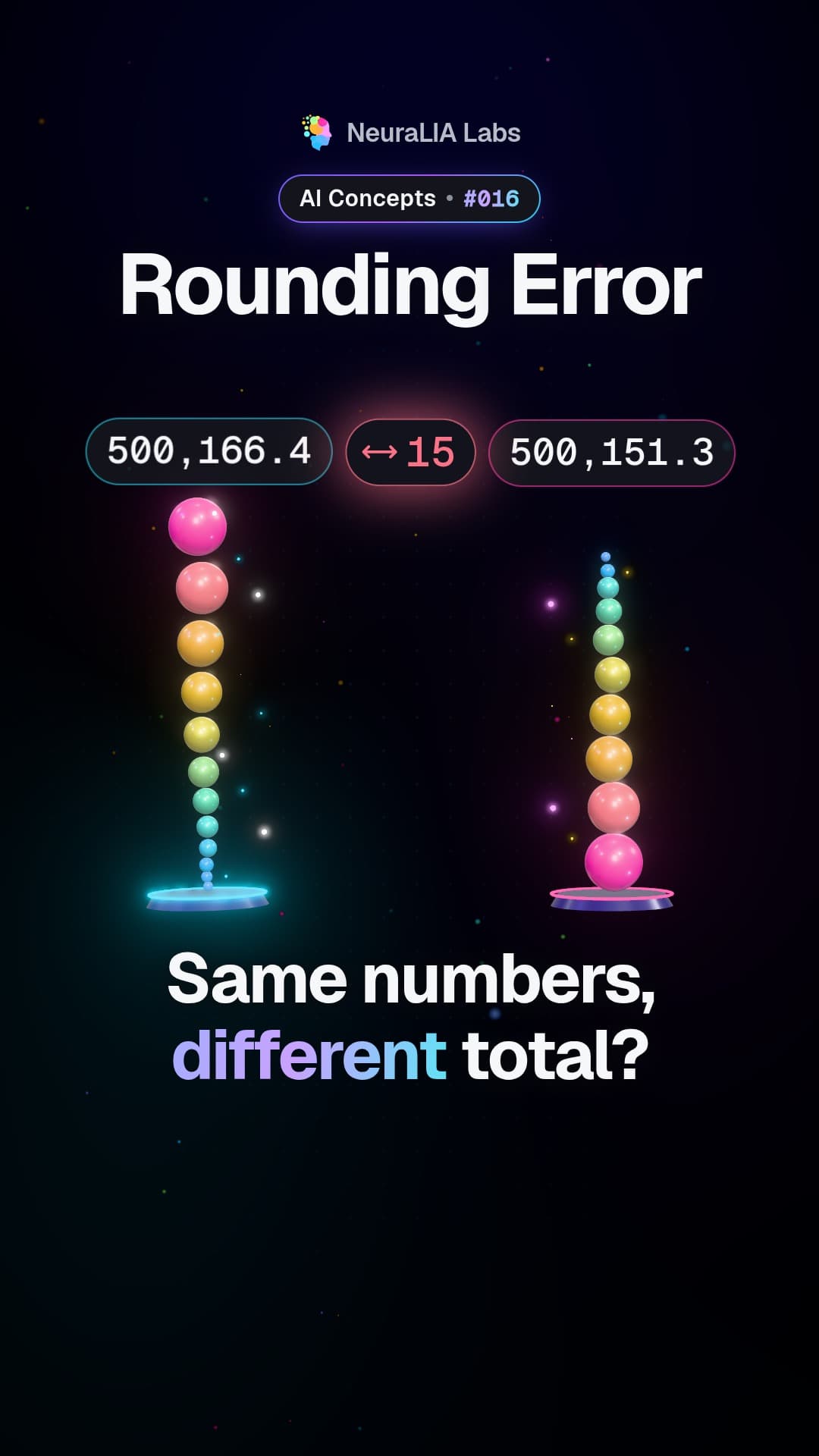 #016
#016Rounding error: why adding the same numbers can give two answers
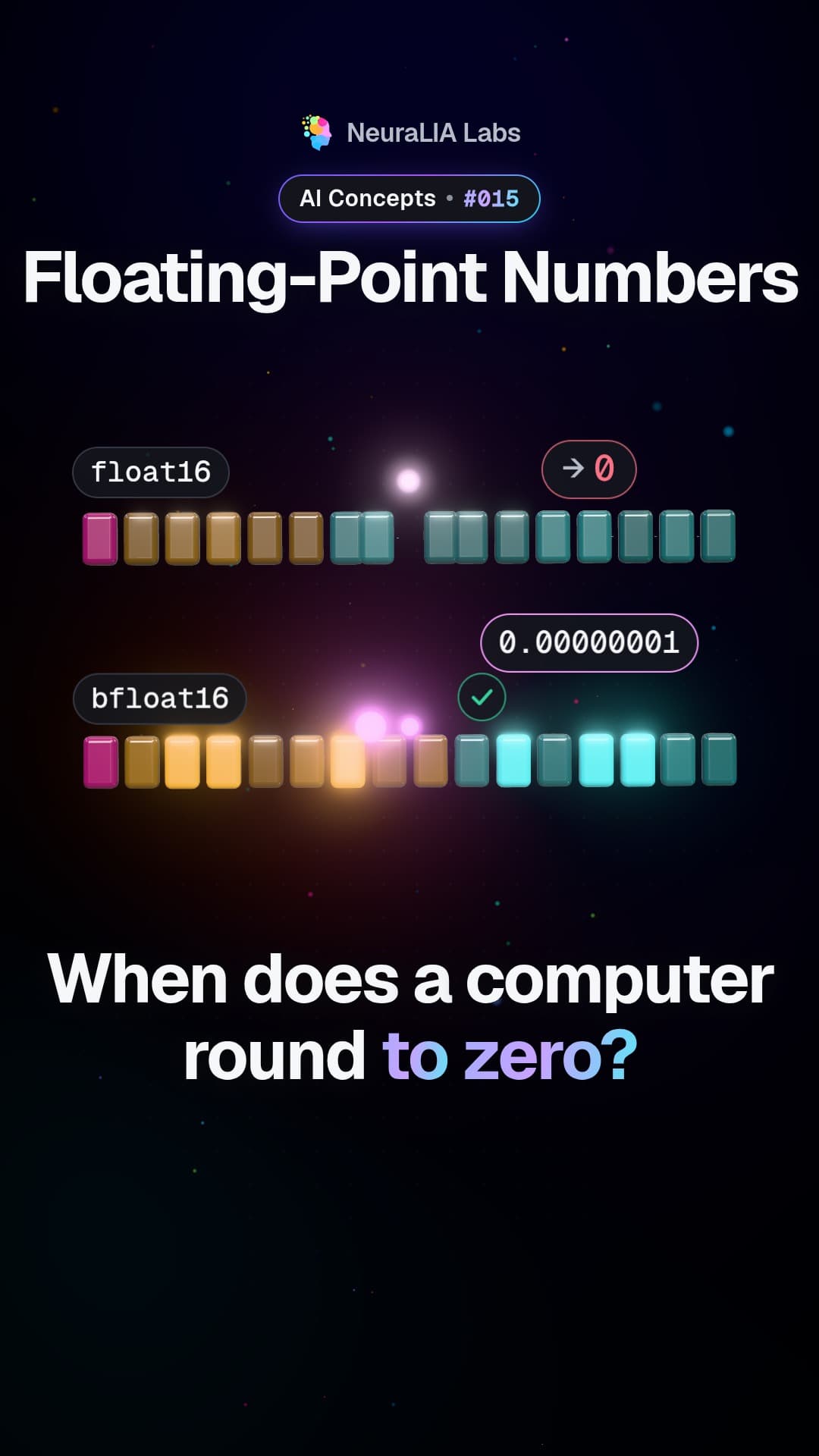 #015
#015Floating-point numbers: why your computer cannot hold every number
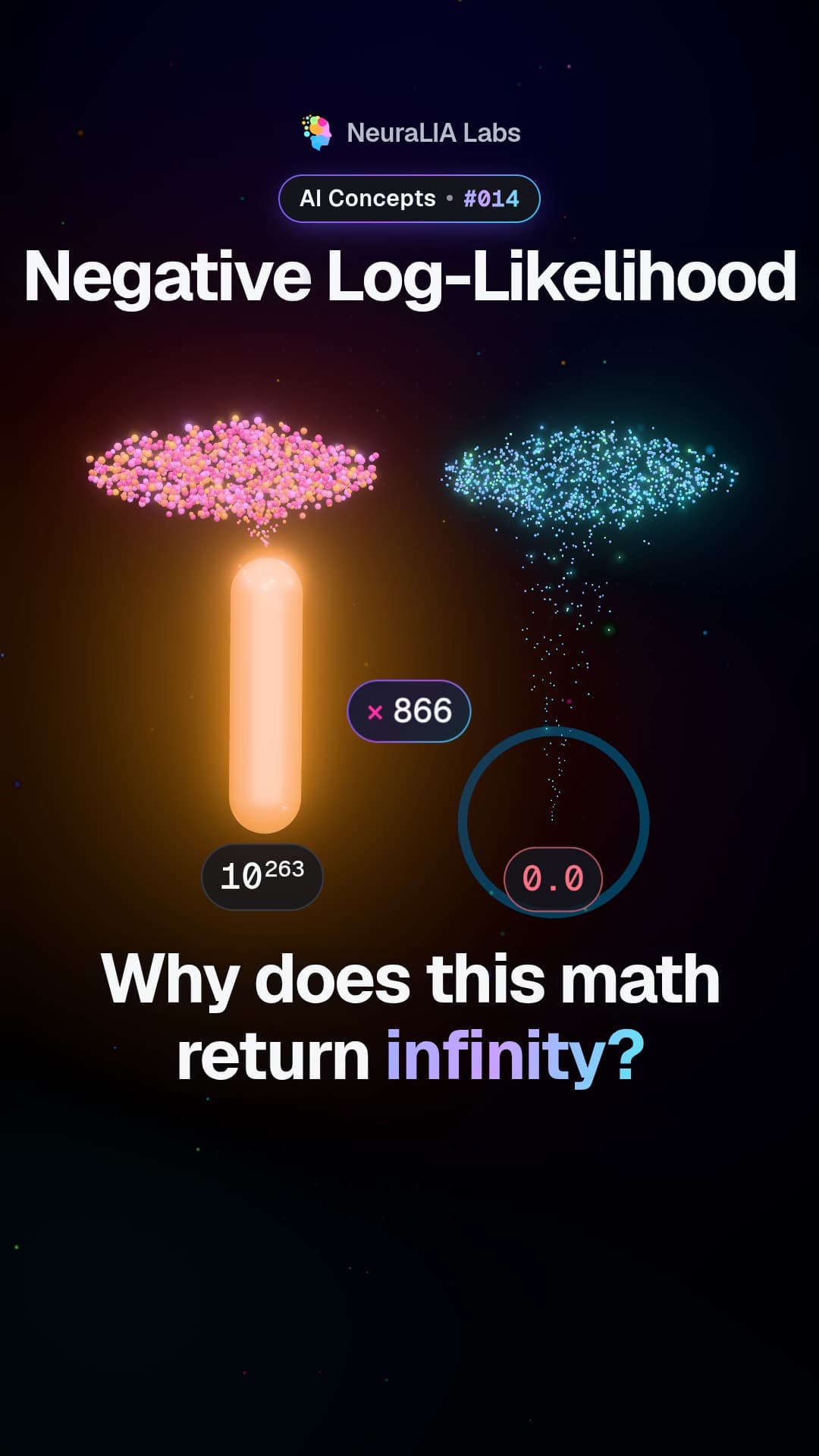 #014
#014Negative log-likelihood: turning a fragile product into a calm sum
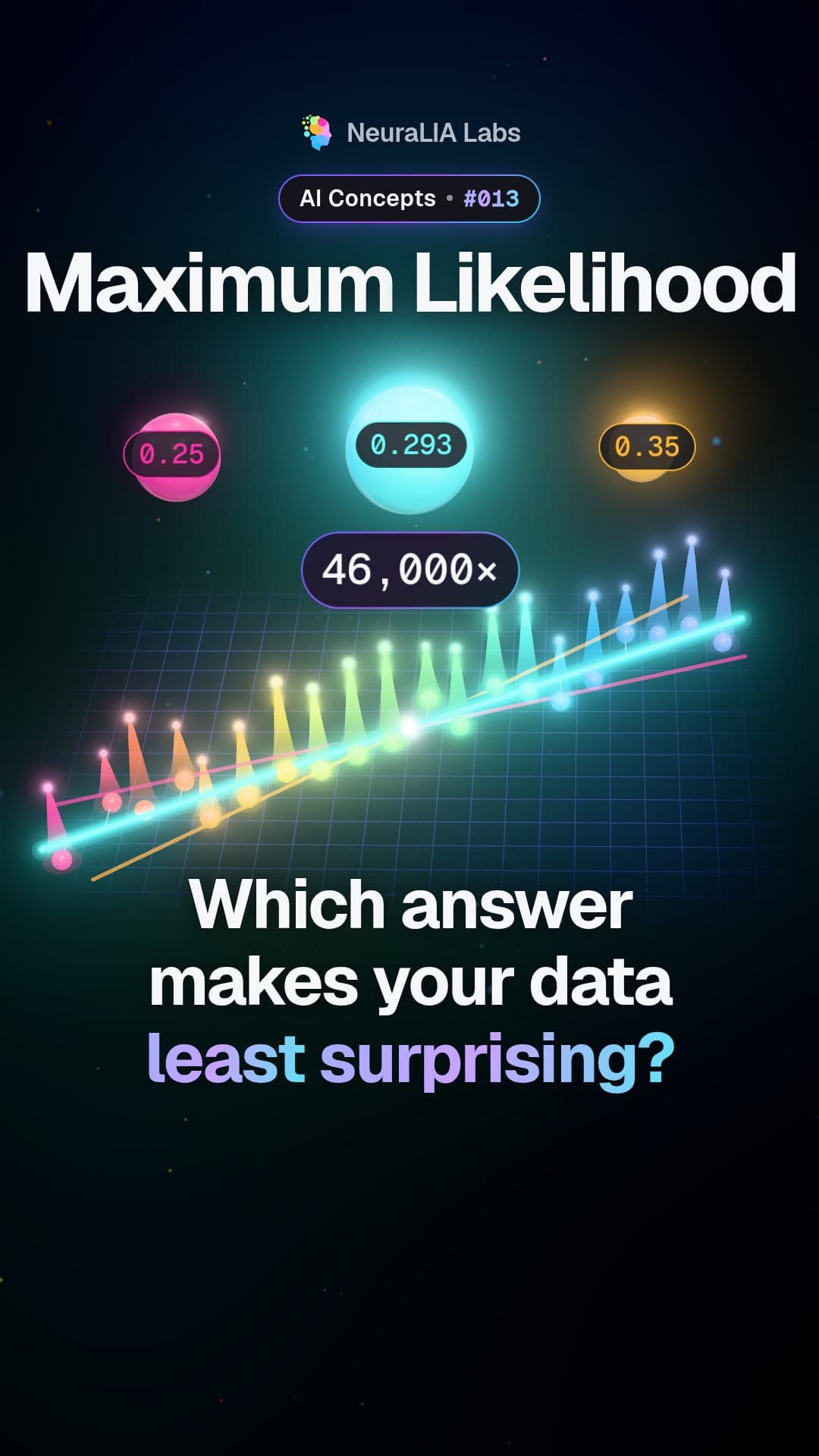 #013
#013Maximum likelihood: the answer that makes your data least surprising
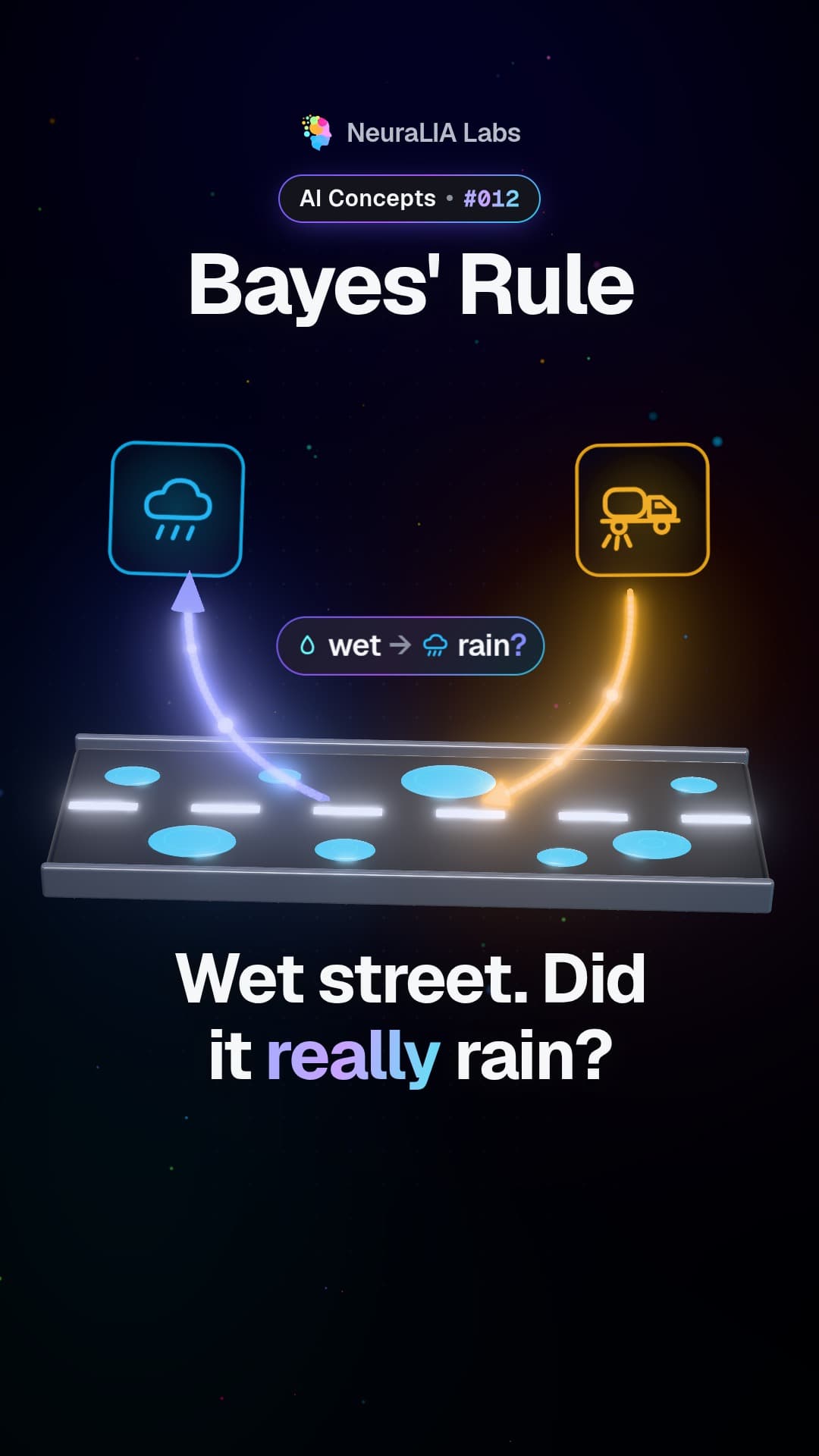 #012
#012Bayes' rule: reasoning backwards from a clue to its most likely cause
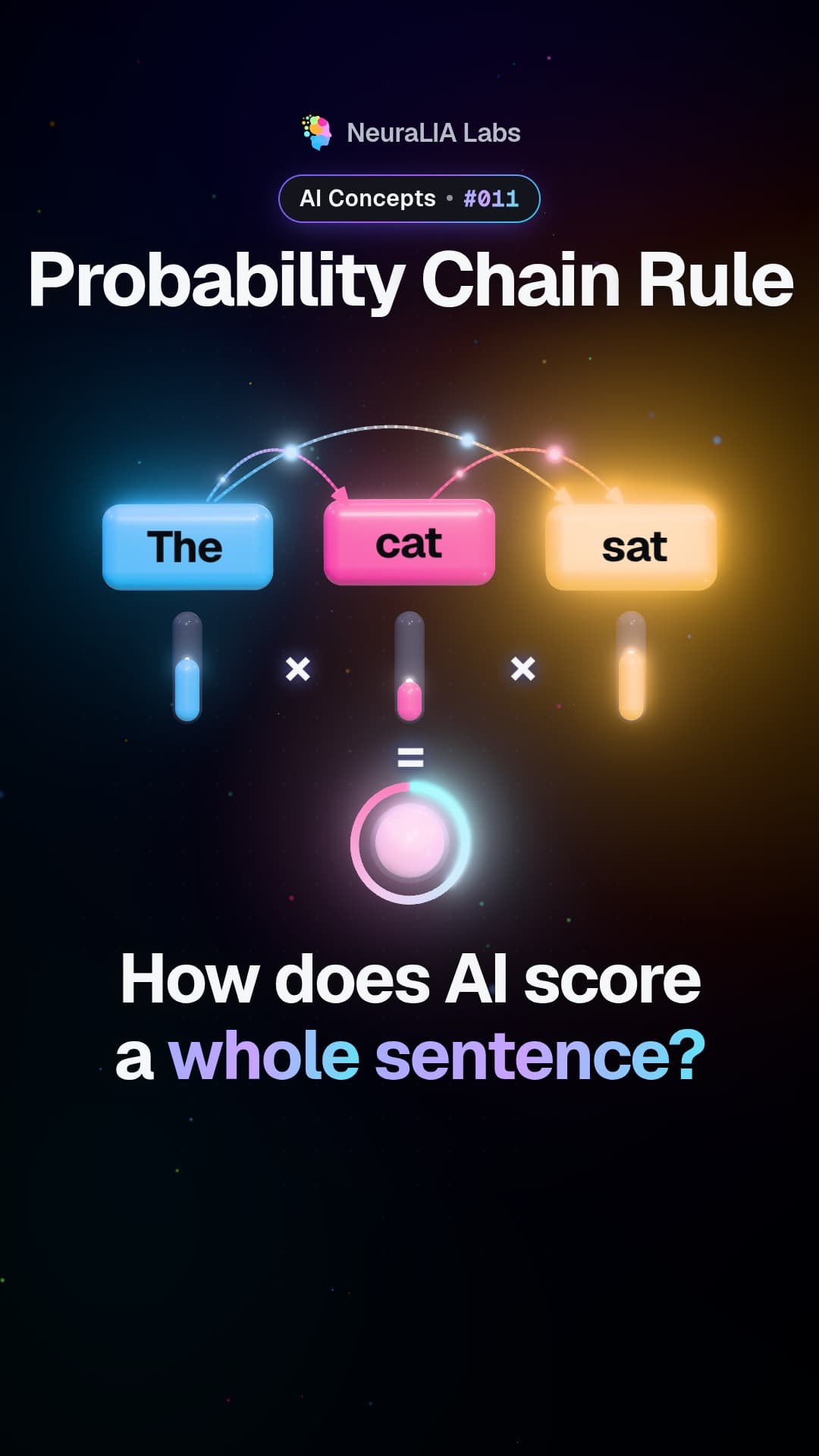 #011
#011Chain rule of probability: how AI scores a sentence word by word
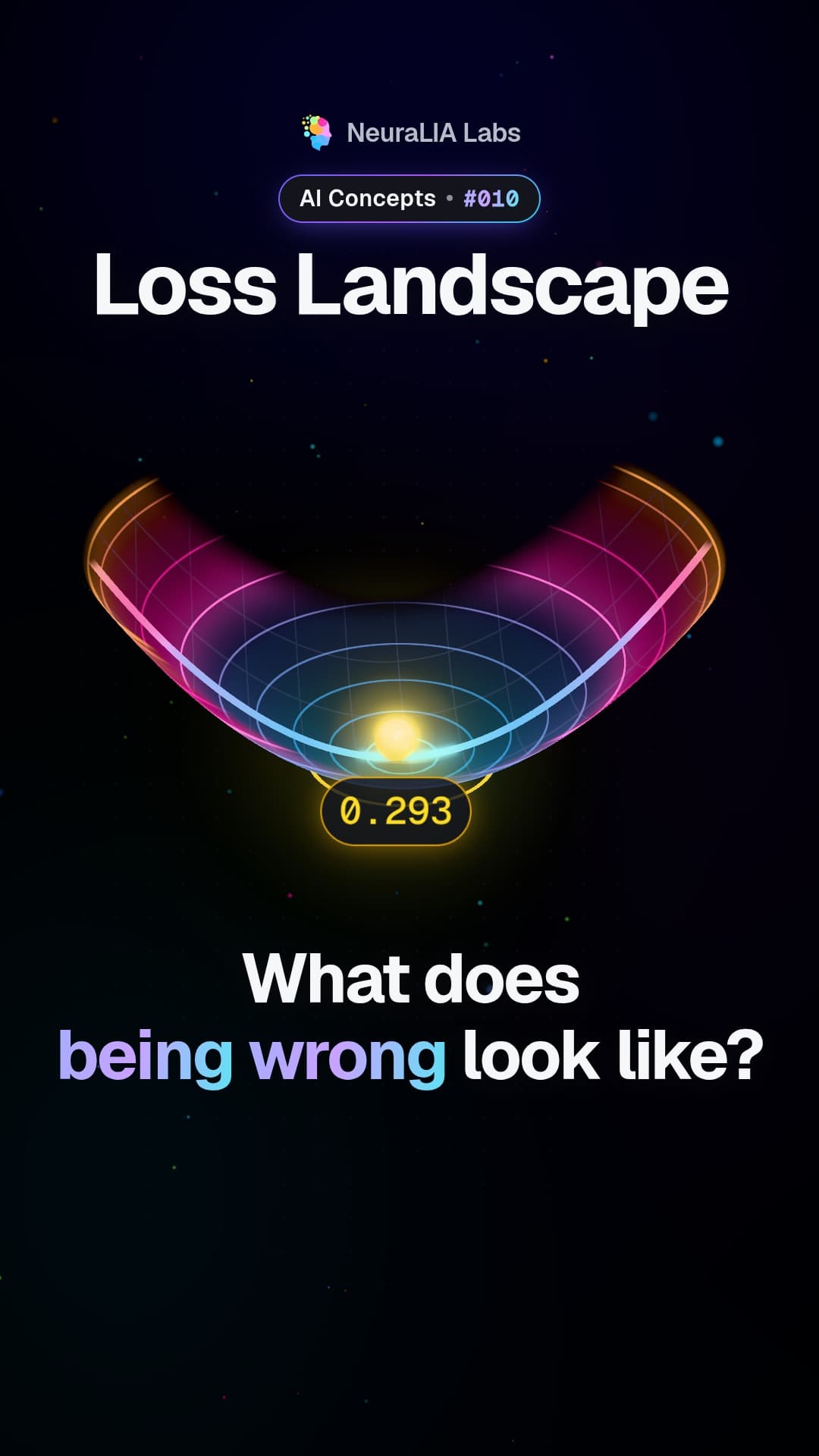 #010
#010Loss landscape: training an AI means finding the bottom of a valley
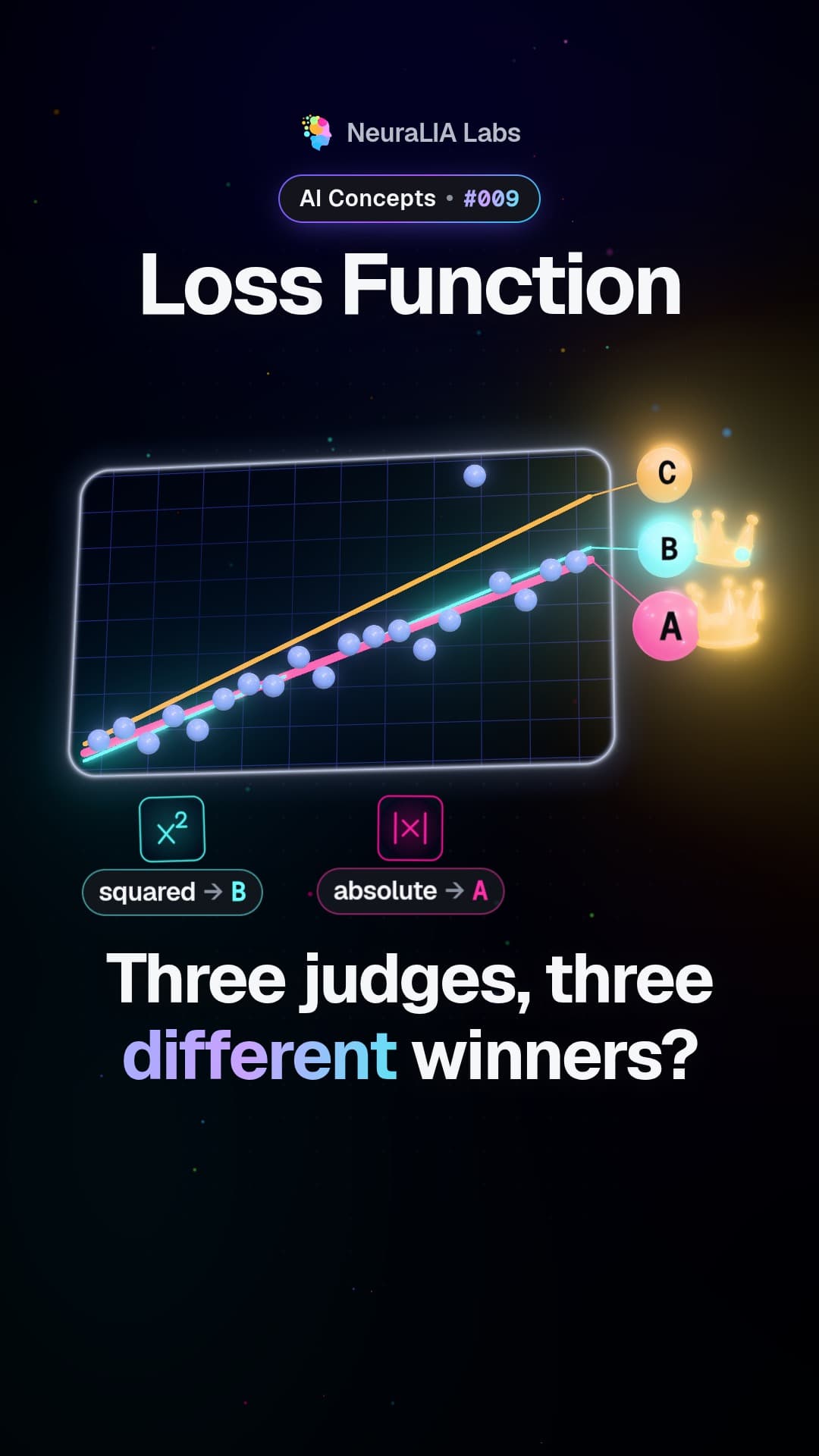 #009
#009Loss function: the scoring rule that decides which answer wins
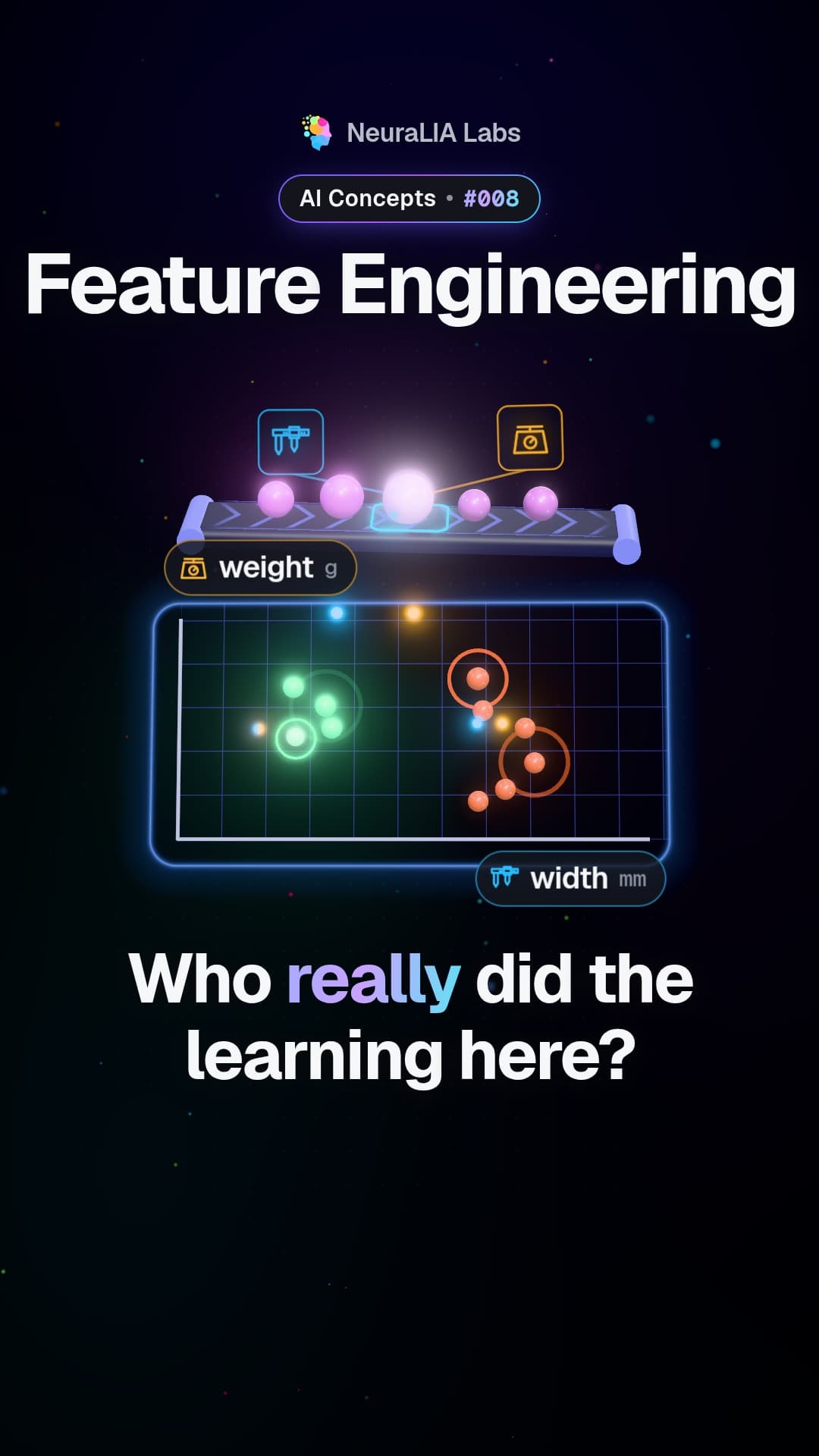 #008
#008Feature engineering: the human choice that can beat the algorithm
Por capítulo del curso
- 1El perceptrón desde cero: qué calcula una neurona10 vídeos
- 2De dónde sale una función de pérdida: verosimilitud, no convención12 vídeos
- 3Cuesta abajo: Gradient Descent y los dos pasos que todo el mundo se salta12 vídeos
- 4Clasificación, entropía cruzada y cómo no engañarte a ti mismo
- 5Backpropagation desde cero: primero el motor, luego la red1 vídeo
- 6Conseguir que entrene y que generalice
- 7Crea un tokenizador BPE: por qué tu modelo no sabe contar las r1 vídeo
- 8Predicción del siguiente token: embeddings y qué significa la perplejidad1 vídeo
- 9Attention y el bloque transformer, derivados de una media
- 10Preentrenar un LLM: datos, compute, scaling laws y coste
- 11Del modelo base al asistente: SFT, RLHF, DPO y GRPO
- 12Chain of Thought, RLVR y test-time compute, medidos
- 13Abaratar la inferencia: KV cache, batching y cuantización
- 14Tu primera llamada LLM en producción: streaming, reintentos y timeouts
- 15Prompt engineering, medido: qué cambia la salida
- 16Context window, tokens y factura, medidos
- 17Temperatura, Top-p y el determinismo que no tienes
- 18Tool Calling y salidas estructuradas: el contrato que aguanta
- 19RAG en producción: chunking, recuperación y citas honestas
- 20¿Fine-tune, recuperar o usar un prompt? La decisión es económica
- 21Precios multimodales: qué facturan de verdad las imágenes, el audio y el vídeo
- 22Qué es un AI agent: cinco tipos clásicos, dos definiciones rivales
- 23Construye un agent harness: el bucle y sus cinco salidas
- 24Context engineering: por qué tu agent se vuelve más tonto en el turno 40
- 25Orquestación multi-agent: cinco patrones y cuándo gana uno
- 26MCP explicado desde la especificación: qué es realmente un servidor
- 27Publica un servidor MCP: TypeScript y Python, medidos
- 28Agent Skills y SKILL.md: progressive disclosure, medido
- 29Evaluación de LLM: de los benchmarks públicos a tu golden set
- 30Prompt injection y la tríada letal: cómo proteger un agent real