
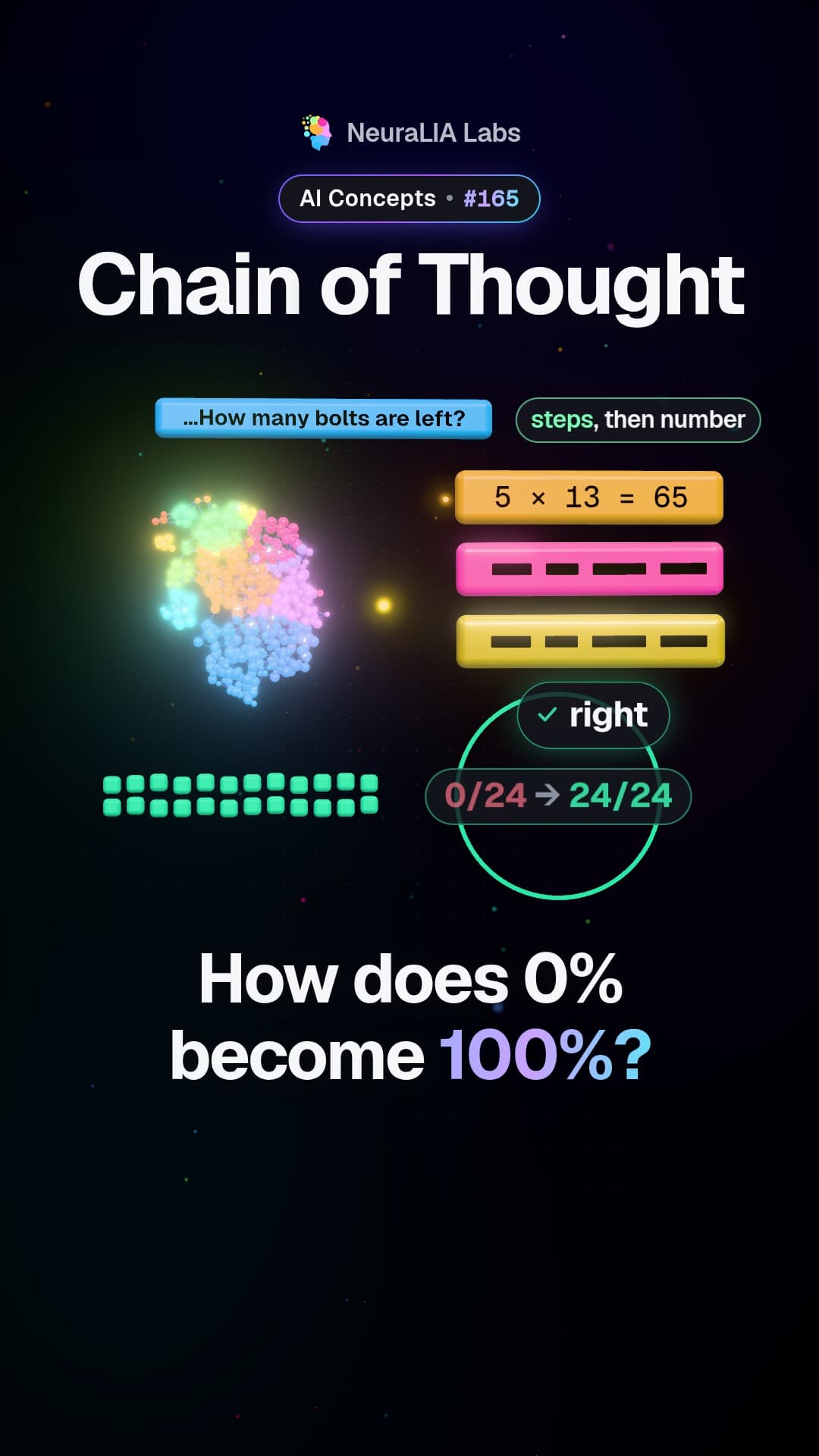
 #165
Це відео та його текст англійською.
Emergent reasoning: the AI that started double-checking on its own
DeepSeek rewarded a model only for right answers, and it began working step by step and re-checking itself. Here is why that happened, and why it is not magic.
Докладно
What emergent reasoning is
"Emergent" means a behaviour shows up that nobody built in on purpose. Emergent reasoning is what happened when an AI model, trained only to get answers right, started working through problems step by step and even checking itself, although nobody had shown it how. The case the course describes comes from the AI company DeepSeek in early 2025, with a model called R1-Zero.
What the video shows
The video tells the R1-Zero story in a few seconds. The model was rewarded only for right answers, and it got no example answers to learn from first. Even so, long chains of reasoning appeared: it began writing out its working before answering, and it started re-checking its own steps. The video's explanation is short and sober. Hard problems require that work, so a model rewarded for solving them ends up doing it.
An everyday example
Imagine a new cook in a kitchen where only one thing is judged: whether the finished dish tastes good. Nobody tells them to taste the sauce halfway, or to stop and rethink when something smells wrong. But on the nights they happen to do those things, the dish comes out better and gets praised, so those are the habits that stick. The habit was never taught. It was simply the most reliable route to the only thing being rewarded.
How it happened
Most AI chat models are built in stages. First comes a base model, which has read a huge amount of text and is good at continuing it, but has not been taught to follow instructions or solve problems on request. Next comes supervised fine-tuning: the model studies example answers written by people, so it can copy their style and method. Only after that is it polished further.
DeepSeek left out the example-answers stage entirely, the stage that is usually treated as the foundation of everything. They took the base model and trained it straight away with verifiable rewards: an automatic checker marks each final answer right or wrong, with no person judging.
What came out was more than longer answers. The model showed behaviours that nobody had trained:
- going back over its own steps to check them;
- stopping partway through a solution to reconsider its approach, which is the passage of the research paper people quote most.
A common misconception
It is tempting to read this as the model "waking up" or discovering thought by itself. The course gives a more down-to-earth reading. If the only thing that earns a reward is a correct answer, and hard problems cannot be answered correctly without working through them, then training will discover how to work through them. That includes habits people also use, like checking and backtracking, because the problem demands them, not because a teacher showed them.
Why it matters
This result changed how the field thinks about building reasoning models. It showed that step-by-step thinking does not have to be copied from human examples first. Given a reliable way to check answers, the right incentive was enough for the behaviour to appear. It is also a reminder about incentives in general: a model will find whatever route earns the reward, so what you choose to reward matters a great deal.
Learn it step by step in Chapter 12 of our free course AI From Scratch: Chain of Thought, RLVR and Test-Time Compute, Measured.
Також на
Більше з цього розділу
- #165
 #166
Think step by step: why a famous prompt works, and when it backfires
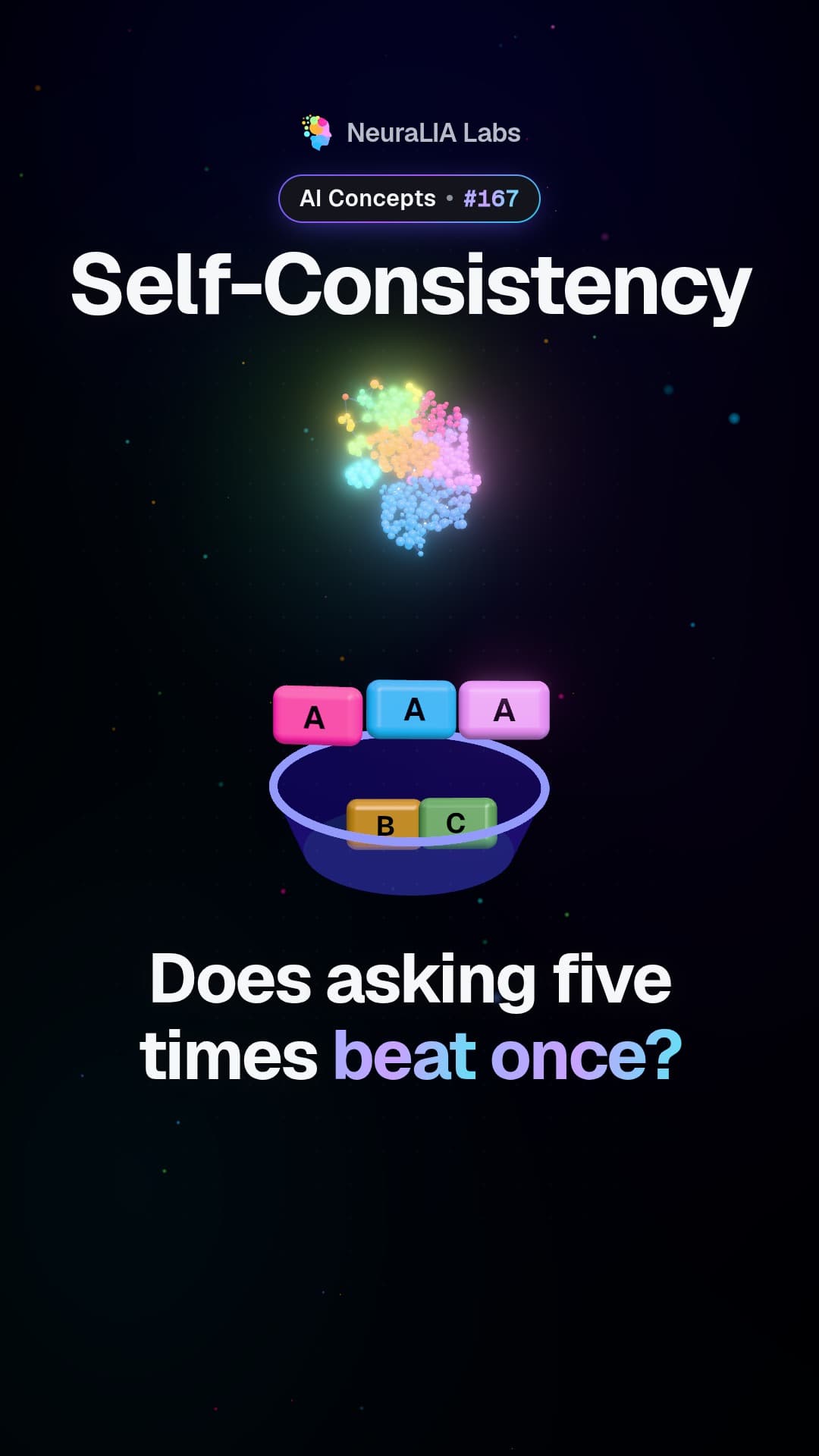 #167
Self-consistency: ask an AI several times, then trust the majority
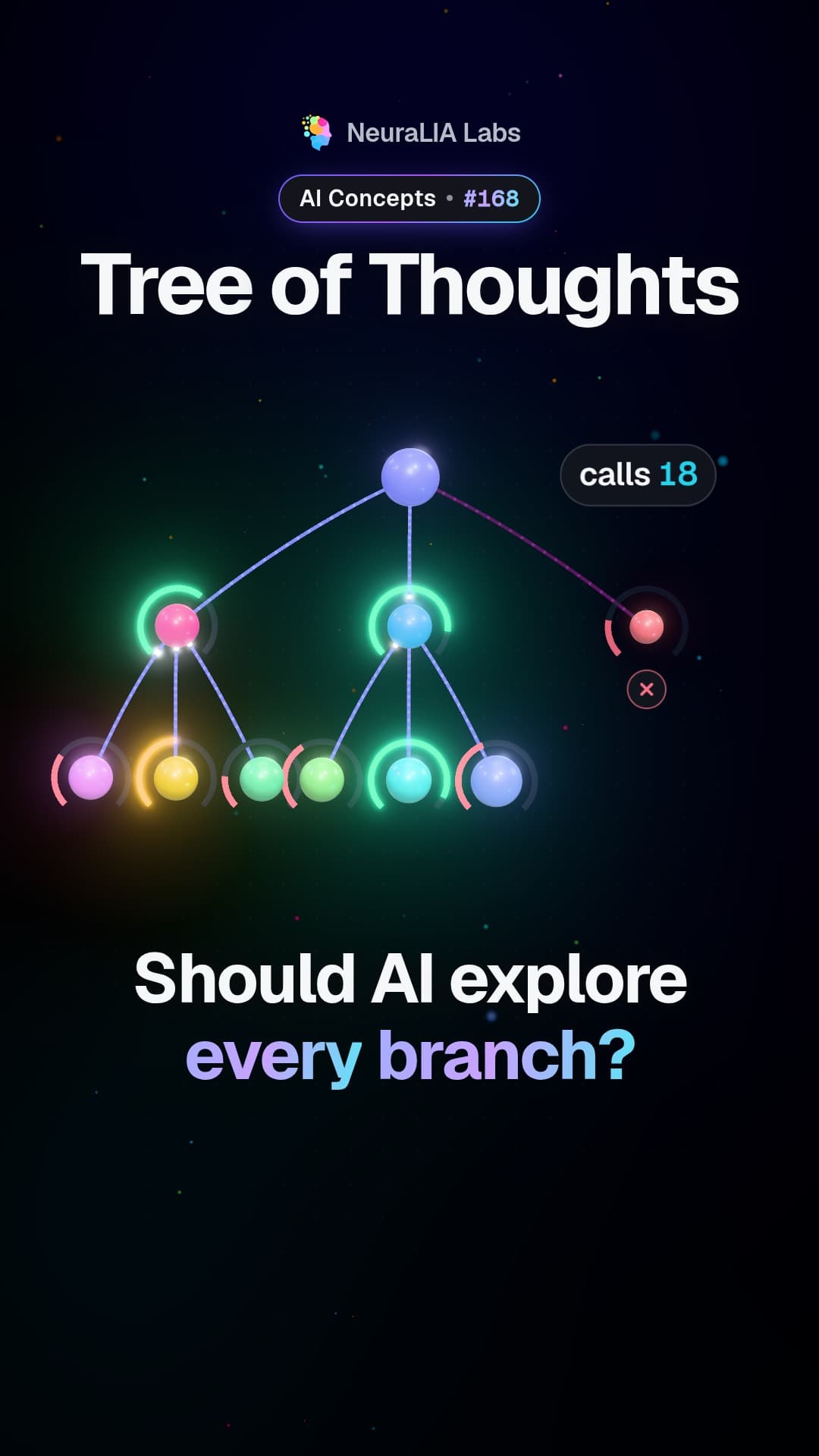 #168
Tree of thoughts: how an AI searches through ideas, and what it costs
 #169
Verifiable rewards: training AI on answers a program can check
 #170
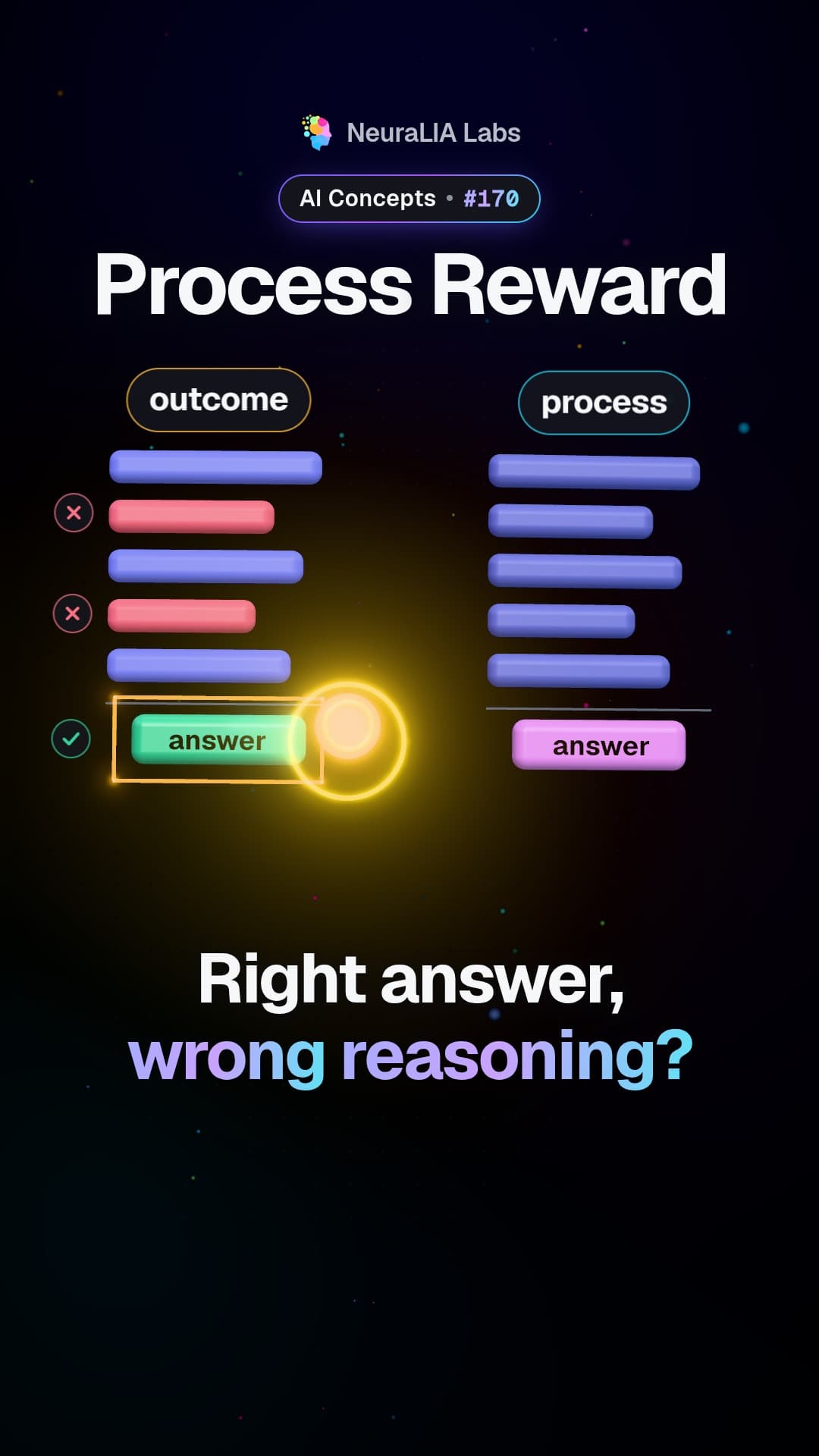
Process reward: grading an AI's working, not just its final answer
Текст написано за допомогою AI на основі розділу 12 нашого безкоштовного курсу.