 #01
#01Acest videoclip și textul său sunt în engleză.
Feature engineering: the human choice that can beat the algorithm
Before a model learns anything, someone decides what to measure. Learn what feature engineering is, why it can outweigh the algorithm, and what replaced it.
În detaliu
What feature engineering is
A feature is one measurement you hand a model about each example: the width of a part, the weight of a parcel, the age of a customer. Feature engineering is the human work of deciding which measurements the model gets, and sometimes of building new ones out of the raw data.
It happens before any learning starts, and the model never questions it. A model can get very good at using the measurements it receives. It cannot go and fetch different ones.
What the video shows
The video's point is simple: before a model learns anything, someone decides what to measure. Choose the right measurements and the problem becomes easy. Choose the wrong ones and no learning method can rescue it. Sometimes the human choice beats the algorithm.
To be precise about the source: the course makes this point in a single line rather than with a full experiment. In its factory example, a person picked width and weight as the two measurements for sorting parts, and the course says that decision carried more of the load than the learning rule itself.
An everyday example
Imagine teaching a friend to tell ripe avocados from unripe ones. If you tell them to study the price sticker, they can practise all week and never improve, because the sticker has nothing to do with ripeness. If you tell them to press gently near the stem, they will be good at it after a few tries. Same friend, same effort. The only difference is what they were told to look at.
A model is in the friend's position, with one extra limitation: it cannot decide on its own to look somewhere else.
How it works
The perceptron in the course (one of the simplest learning programs) follows a fixed recipe: multiply each measurement by a weight that says how much it counts, add everything up, add a constant, and turn the total into a yes or a no. Learning only adjusts those weights and that constant. So:
- If the measurements really separate the parts to accept from the parts to reject, enough adjustments will find a dividing line.
- If they do not, no amount of adjusting can create information that was never there.
What survived, and what did not
The course ends its first chapter by sorting the perceptron's ideas into what modern networks still use and what they dropped:
| Still used today | Dropped | |---|---| | The recipe: weigh, add up, apply a function | The hard yes/no answer (replaced by probabilities in Chapter 4) | | Learning by correcting mistakes | The single layer (replaced in Chapter 5) | | Training on a handful of examples at a time | Hand-picked features (Chapter 8) |
Hand-picked features sit in the dropped column. From Chapter 8 on, models start choosing their own features through learned embeddings: lists of numbers the model builds for itself to describe each example.
Why it matters
The video puts it bluntly: pick the wrong measurements and nothing can save the model. For a simple learner like the perceptron, that is close to the truth, because it can only weigh what it is handed. Later models ease the problem by learning their own measurements (though they still cannot find what the raw data does not contain), which is exactly why the course lists hand-picking as something that did not survive.
The lesson underneath does survive. A model's results are capped by what its inputs actually contain, and whoever decides those inputs shapes the outcome before training even starts.
Learn it step by step in Chapter 1 of our free course AI From Scratch: The Perceptron From Scratch: What a Neuron Computes.
Și pe
Mai multe din acest capitol
- #01
 #001
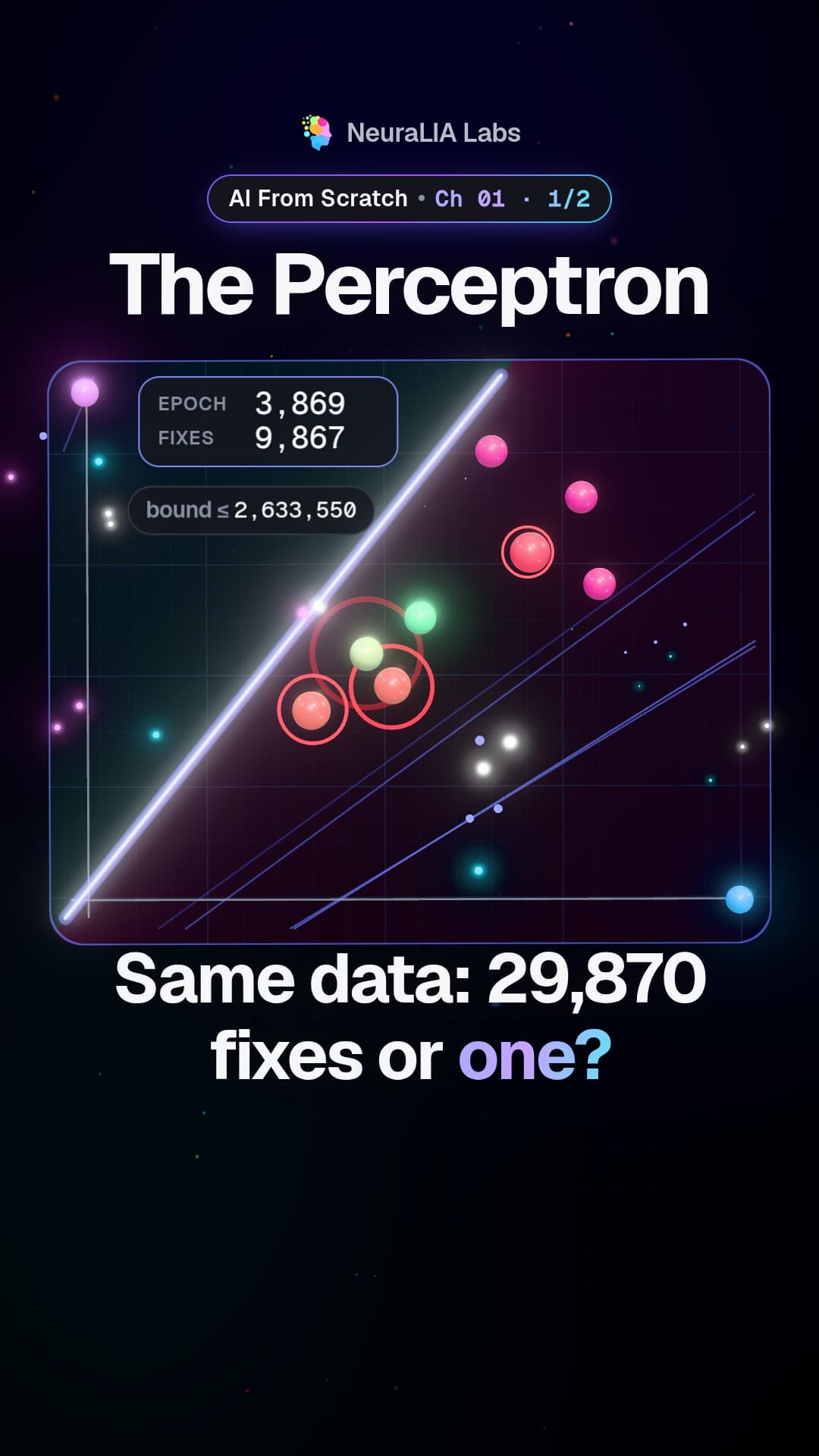
#001Perceptron: the yes-or-no model every neural network grew from
 #02
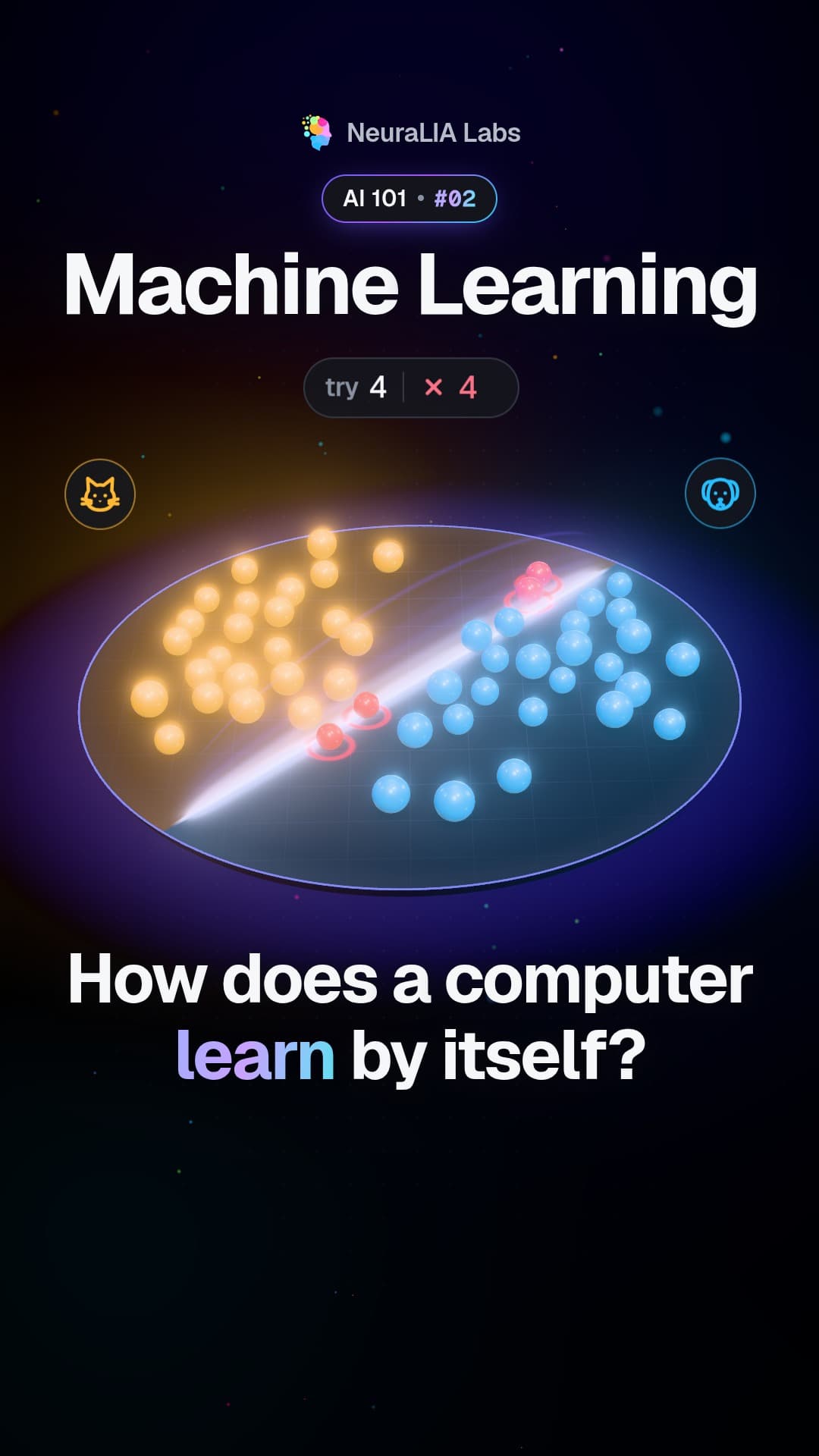
#02Machine learning: how a computer draws its own dividing line
 #002
#002Decision boundary: the line a simple model draws between yes and no
 #003
#003Dot product: the multiply-and-add step at the heart of AI's math
 #004
#004Learning from mistakes: the perceptron rule that only moves when wrong
Text scris cu asistență AI din capitolul 1 al cursului nostru gratuit.