
 #128
Este vídeo y su texto están en inglés.
Emergent abilities: do AI skills really appear out of nowhere?
Some AI skills seem to switch on suddenly as models grow. Learn how all-or-nothing scoring turns steady progress into a fake cliff, and when a jump is real.
En detalle
What emergent abilities are
As language models get bigger, some skills seem to appear out of nowhere. A small model scores no better than random guessing on a task. A model ten times bigger does the same. Then, past a certain size, the score shoots up. Researchers call these emergent abilities: skills that are missing in smaller models and present in larger ones.
The real question is whether the model changed suddenly, or whether the way we mark its answers only makes it look that way.
What the video shows
The video starts with the famous picture: skills that seem to switch on as models grow. Then it shows the catch. When a test gives points only for a perfect answer, steady progress can stay hidden and then appear all at once. In one audit of a big collection of AI tests, only 5 of 39 scoring methods showed a jump at all.
An everyday example
Imagine a spelling test where you get a point only if every letter of a ten-letter word is right. A student gets a little better at each letter every week. For weeks the score stays at zero, because one wrong letter still sinks the whole word. Then, near the end of term, the score leaps. Nothing sudden happened to the student. The marking rule hid the progress, then revealed it in one go.
How it works
Wei and colleagues collected examples of the jump. One was three-digit arithmetic, which stayed at chance level across several tenfold increases in training compute (the amount of computing spent on training) and then appeared in the GPT-3 family of models. If that pattern were a real property of AI, it would be bad news: small, cheap experiments could never tell you what a big model will do.
Schaeffer, Miranda and Koyejo looked at the arithmetic of the scoring instead. A model's chance of getting each single token right (a token is a word or a piece of a word) improves smoothly as it grows. But an exact-match score needs every token of the answer right at the same time, so those chances get multiplied together. Here is what that does to an imaginary 10-token answer:
| Chance each token is right | Chance all 10 are right | |---|---| | 50% | about 0.1% | | 70% | about 3% | | 90% | about 35% | | 99% | about 90% |
A slow, steady climb in the left column becomes a cliff in the right one. When the researchers rescored the very same answers with partial credit, counting correct tokens instead of demanding all of them, the curves turned smooth and predictable.
Their audit of BIG-Bench, a large shared collection of tests for language models, found that at most 5 of its 39 recommended scoring methods show emergence at all. Two sharp-cutoff methods accounted for over 92% of the claimed cases.
The honest version
This does not prove that sudden jumps never happen. The same authors say plainly that they are not claiming large models cannot have emergent abilities. The fair takeaway is narrower: a jump on a chart is first a fact about the scoring method, until someone shows it is a fact about the model.
Why it matters
If skills truly appeared at random sizes, nobody could plan ahead, because testing small models would say nothing about big ones. If most jumps come from the ruler, progress is more predictable than the headlines suggest. And picking a pass-or-fail score is a choice you can make without noticing, which can create the same cliff-shaped illusion in your own results.
Learn it step by step in Chapter 10 of our free course AI From Scratch: Pretraining an LLM: Data, Compute, Scaling Laws and Cost.
También en
Más de este capítulo
- #128
 #129
Pretraining: the guess-the-next-word game played on a whole library
 #130
Base model: the AI that continues your text instead of answering
 #131
FLOPs: the six-operation rule for sizing an AI training run
 #132
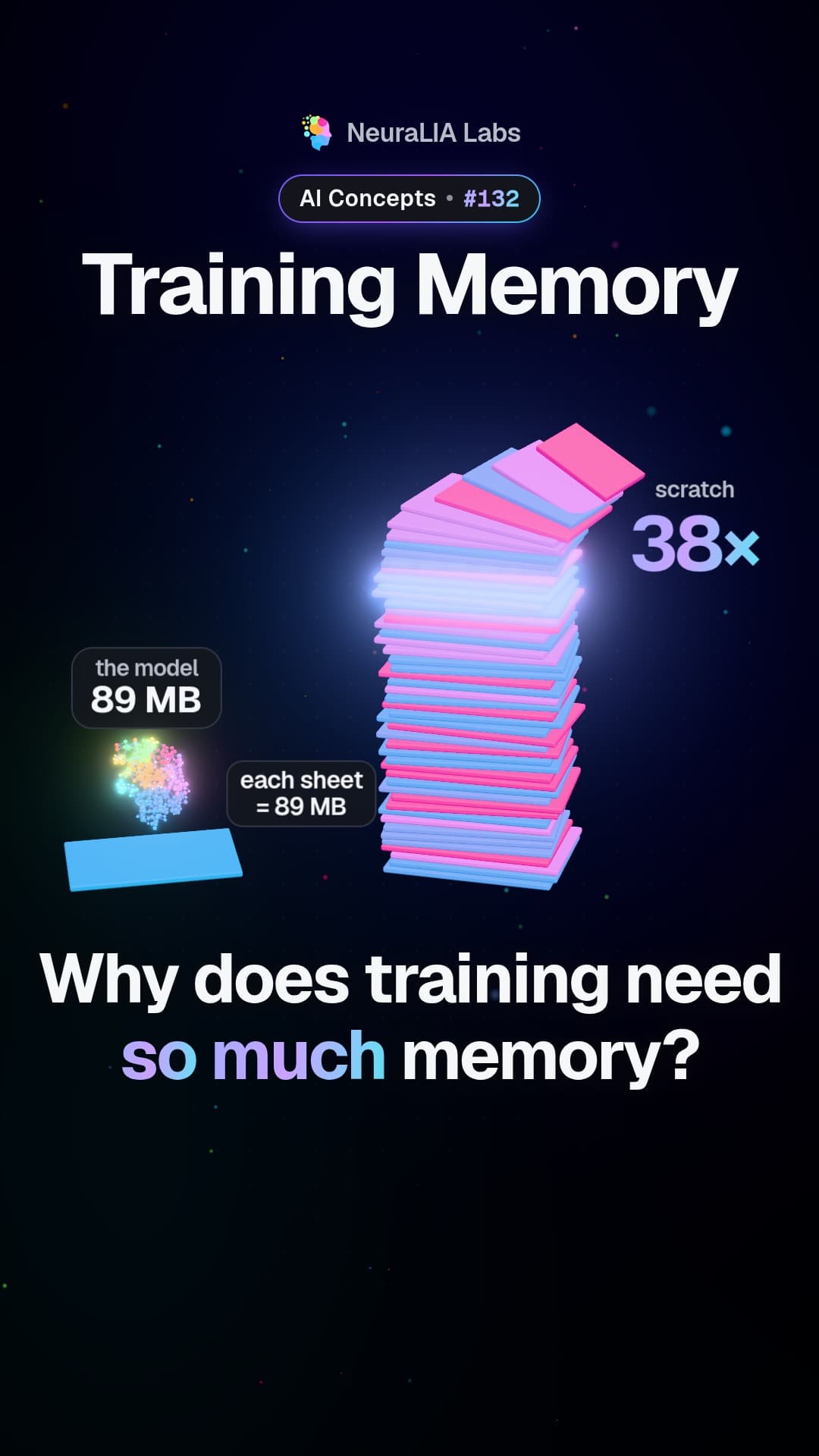
Training memory: 16 bytes per setting, plus a mountain of scratch work
 #133
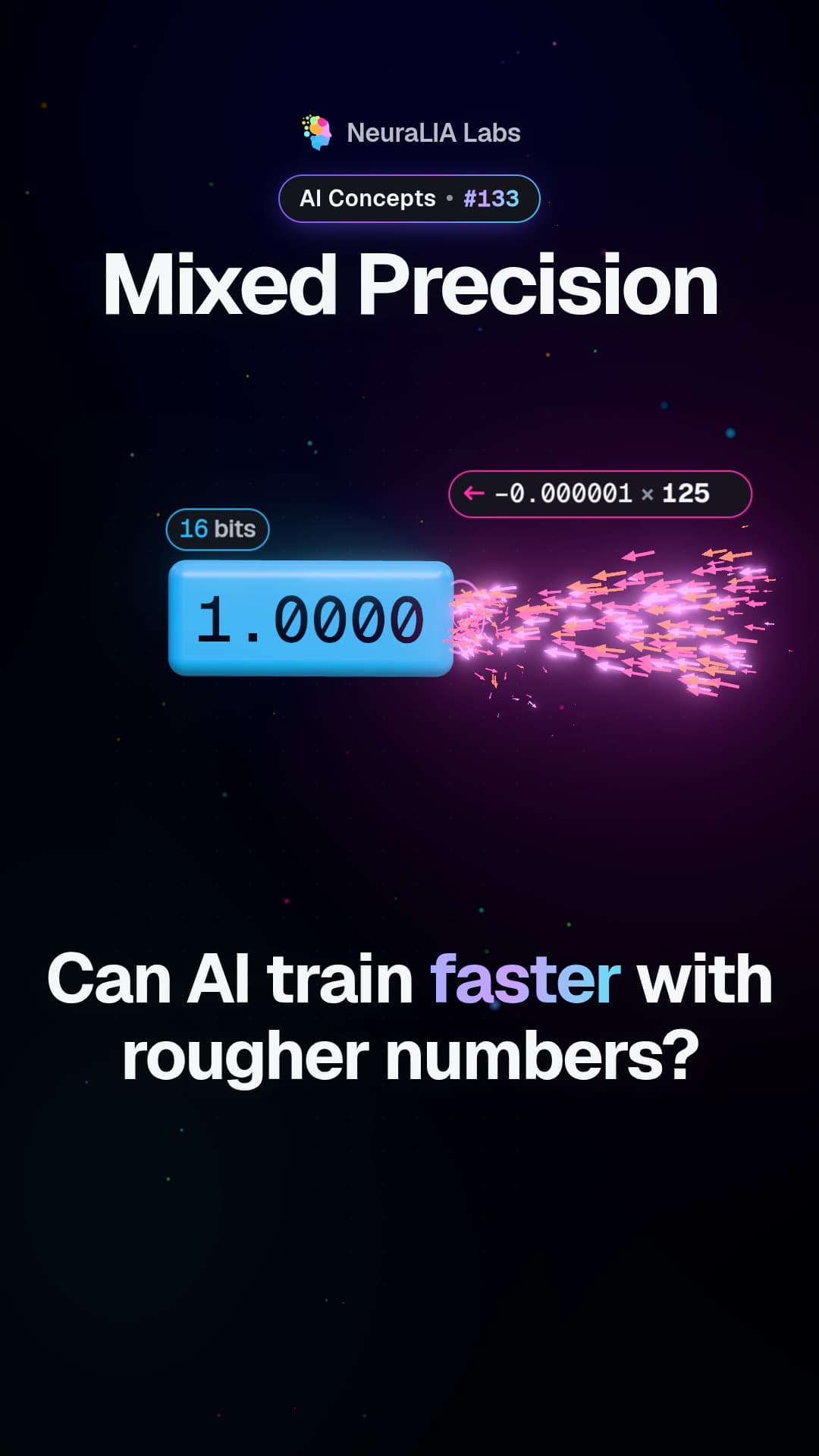
Mixed precision: faster AI training without losing the tiny updates
Texto escrito con ayuda de IA a partir del capítulo 10 de nuestro curso gratis.