
 #128
Dieses Video und der Text sind auf Englisch.
Data provenance: tracing where an AI's training books came from
AI models learn from books and pages whose origin is often unclear. Learn what data provenance means, the Books3 story, and why US law is still unsettled.
Im Detail
What data provenance is
Provenance is a word borrowed from the art world, where it means the documented history of a painting: where it came from and who has owned it. Data provenance is the same idea applied to the text an AI model learns from. Where did each book, article or web page come from? Who wrote it? Was it collected with permission, bought, or copied from somewhere it should never have been taken?
For the enormous text collections behind today's language models, those questions are often hard, and sometimes impossible, to answer. Of all the steps in preparing training data, this is the one the field has not settled.
What the video shows
The video explains that AI learns from millions of books and pages whose origin is often unclear. It gives two concrete examples: one book dataset came from a torrent tracker, a site for sharing files directly between users, and one court case ended with a $1.5 billion settlement. Its conclusion: the law is still unsettled.
The Books3 story
The Pile, a large public collection of training text, included a part called Books3, a set of books that made up roughly 12% of the whole collection. By the Pile paper's own account of its sources and consent, those books came from a private torrent tracker. Books3 was taken offline in August 2023 after a copyright complaint.
What US courts have said so far
Three US rulings are often quoted as if they formed a trend. They actually point in different directions:
- Judge Alsup found that training on books that had been lawfully acquired was "exceedingly transformative", a legal term for using a work for a genuinely new purpose, which counts in favour of the use being allowed. But he did not extend that finding to a library built out of pirated copies. Anthropic settled that part of the case for $1.5 billion, covering 482,460 works, or roughly $3,000 per work. The settlement was approved on 20 July 2026.
- Judge Chhabria ruled in Meta's favour, but wrote that his decision did not declare Meta's training lawful. It only found that those particular plaintiffs, the people who sued, had made the wrong arguments.
- Judge Bibas, ruling against a company called Ross Intelligence, stressed that his case involved only non-generative AI, meaning AI that does not write new text or create new content of its own.
No US appeals court, the higher level of court whose decisions carry more weight, has ruled on the question yet.
An everyday example
Imagine buying a second-hand bike at a bargain price, with no receipt. If it later turns out to be stolen, you may have a problem however much you paid. Now imagine a warehouse holding millions of items with no receipts at all: some bought, some borrowed, some possibly stolen, and nobody able to say which is which. That is roughly where many large training datasets stand.
Why it matters
For companies building models, provenance is legal and financial risk: one settlement alone reached $1.5 billion. For writers, it is about whether their work was used without anyone asking. For everyone else, it is about trust: if nobody can say what a model was trained on, nobody can fully check what it learned. With the law still unsettled, the sensible habit is the unglamorous one: know where your data came from, and write it down.
This page explains the situation in plain words. It is not legal advice.
Learn it step by step in Chapter 10 of our free course AI From Scratch: Pretraining an LLM: Data, Compute, Scaling Laws and Cost.
Auch auf
Mehr aus diesem Kapitel
- #128
 #129
Pretraining: the guess-the-next-word game played on a whole library
 #130
Base model: the AI that continues your text instead of answering
 #131
FLOPs: the six-operation rule for sizing an AI training run
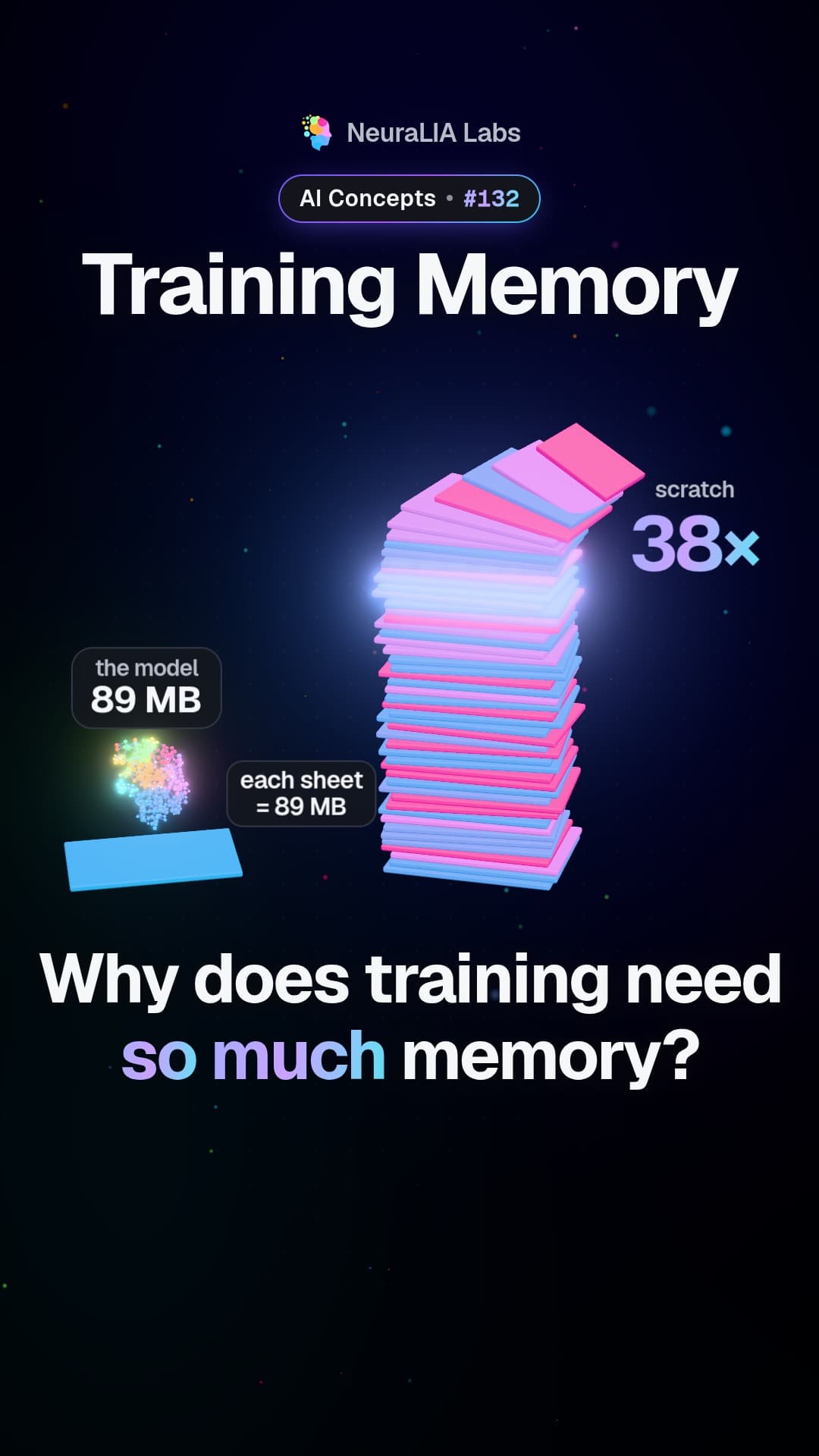 #132
Training memory: 16 bytes per setting, plus a mountain of scratch work
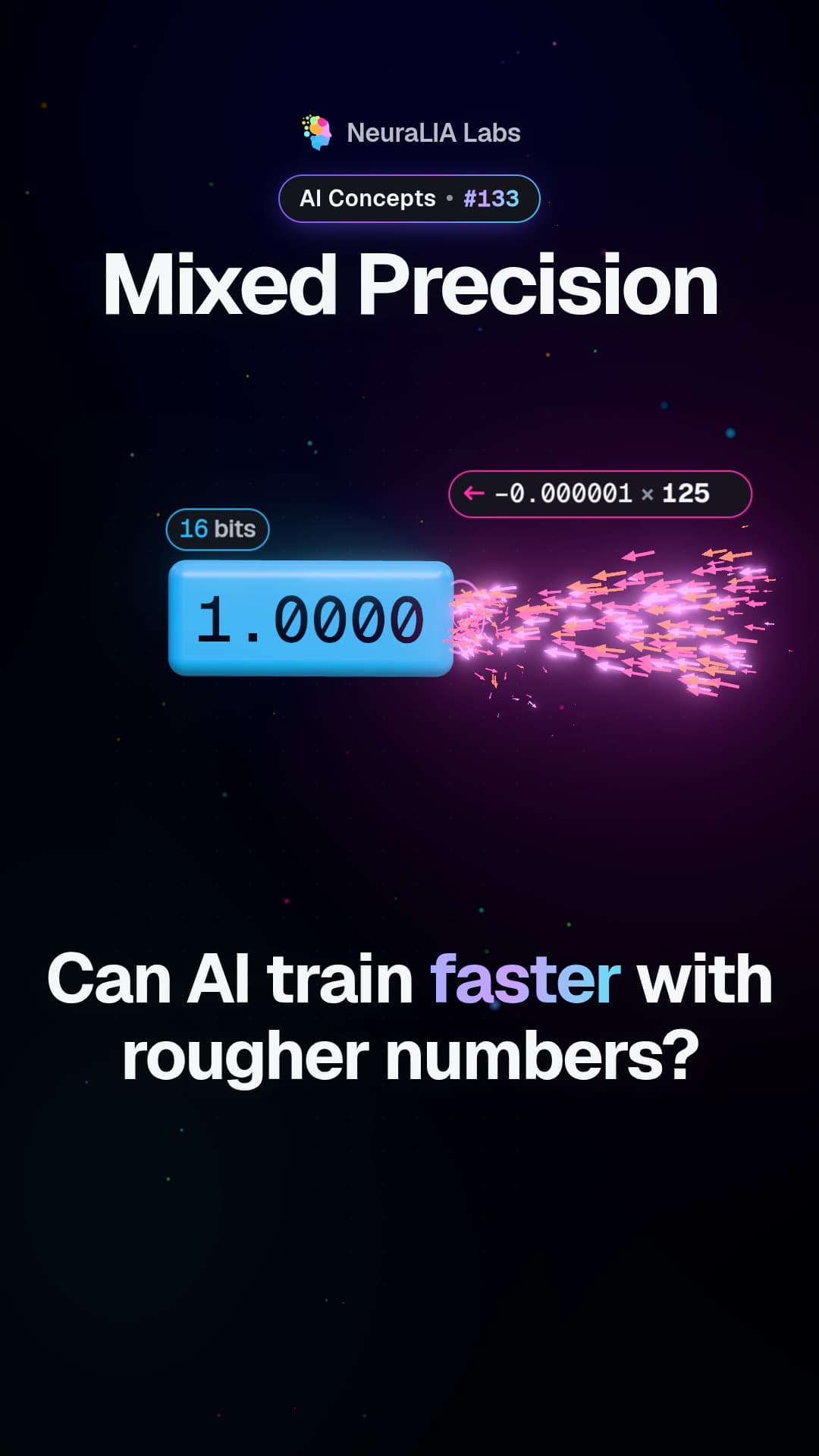 #133
Mixed precision: faster AI training without losing the tiny updates
Text mit AI-Unterstützung aus Kapitel 10 unseres kostenlosen Kurses geschrieben.