 #001
#001یہ ویڈیو اور اس کا متن انگریزی میں ہیں۔
What is AI? Software that learns its own rules from examples
Regular software follows rules that someone wrote. Modern AI learns them from examples instead. Here is what that swap means, with a handwriting example.
تفصیل میں
What AI is
Most software is a list of instructions that a person wrote by hand: if this happens, do that. Most of what people call AI today is built the other way round, with an approach called machine learning. Instead of being handed the rules, the program is shown examples and works out the pattern on its own. Once it has found that pattern, it can give an answer about a case nobody showed it.
What the video shows
It opens with a question: is AI just clever code? Then the two approaches play out one after the other, in under 20 seconds. First, regular software: lines of code (if, then, else) run one step at a time, following rules that people wrote. Then AI: pictures of cats and dogs fly in, and each one turns into a patch of coloured dots, building the model up from examples. Connections light up across it as it finds the patterns. Finally, a cat picture it was never shown goes in, and it answers "Cat".
Why hand-written rules break
Our free course opens in a factory. Parts roll along a conveyor belt, and each one gets two measurements: how wide it is, in millimetres, and how heavy, in grams. Someone has to decide which parts ship and which are sent back.
The obvious move is to write the rule yourself, for example "accept anything narrower than 22 millimetres". That holds until the supplier switches to a different metal mix and the weights move. So you add an exception. Then the tolerances get renegotiated, and you add another. Months later the rule has grown into a forty-line tangle, nobody can explain one of its lines, and the person who wrote it no longer works there.
An everyday example
Imagine teaching a machine to read handwritten numbers, say the postcodes on envelopes. Written as a rule, a 7 is "a flat line on top, then a slanted line down". Then someone crosses their 7s in the middle, someone else writes a 1 with a little hook that makes it look like a 7, and a hurried 4 comes out open at the top. Each fix adds an exception, and the list never ends.
The learning approach skips the list. You collect a large pile of handwritten numbers that people have already labelled, and the computer works out for itself what separates a 7 from a 1. When a new envelope arrives, in handwriting it has never seen, it can usually still read it, because it is matching the patterns it found rather than checking a list of rules.
How it works
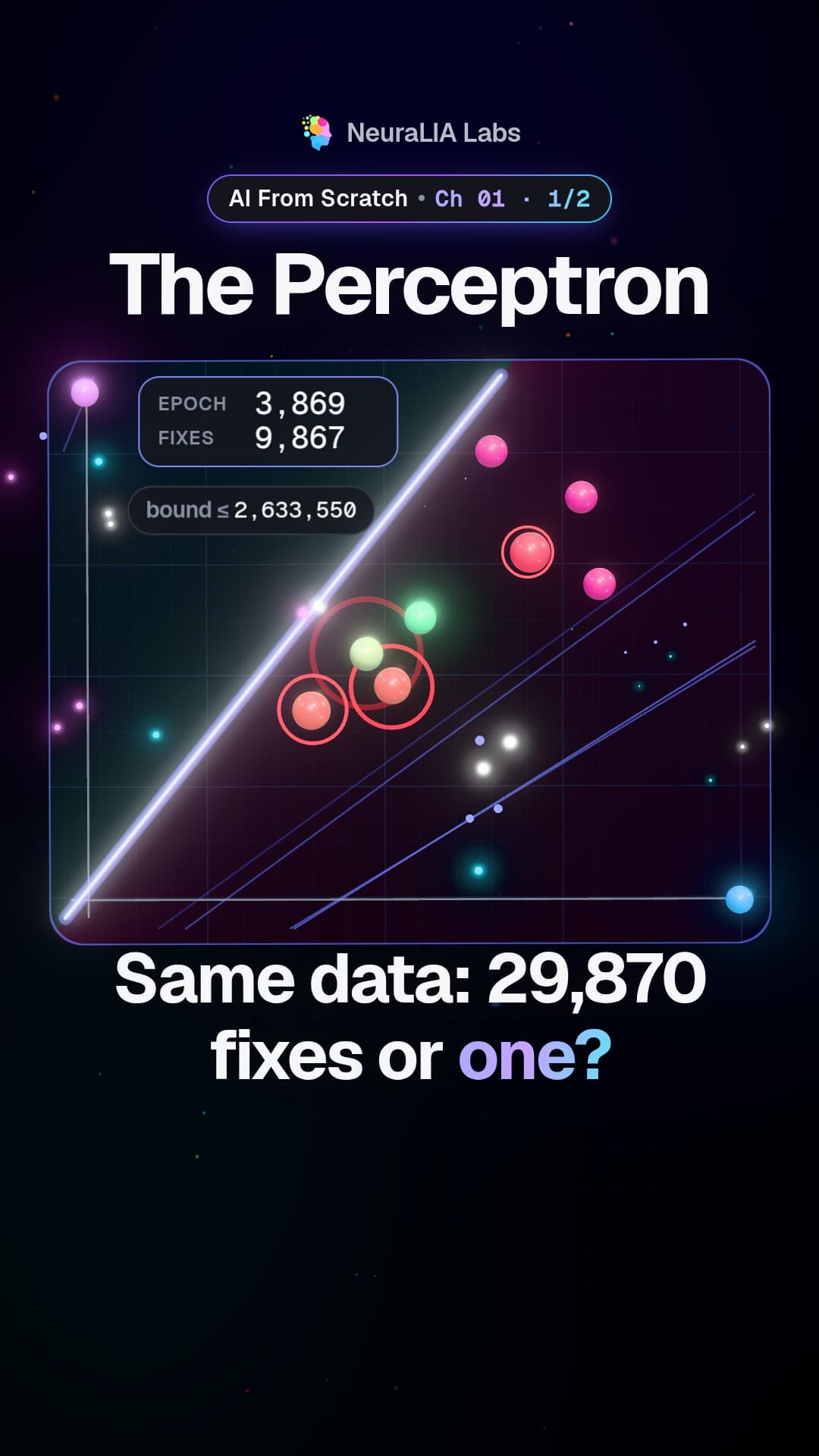
The trick is a swap of jobs. You stop writing the rule itself. You write only its shape, a template with blanks in it, and the examples fill in the blanks. In the course's first chapter that template is as small as it can be: two numbers that say how much the width and the weight each count, plus one cut-off point. The course calls this reversal the entire idea behind machine learning.
A common misconception
"It recognizes things it has never seen" sounds like magic, and it should not be taken on faith. A learned pattern can look perfect on the examples it learned from and still stumble on new ones. That is why the course later teaches you to test a model on examples that were set aside and never used while it was learning. Only that score tells you whether it really copes with the unseen.
Why it matters
This one reversal explains a lot of what you hear about AI. When a system learns from examples, its behaviour comes from the data it was shown, not from a rule someone typed. That is why the examples matter so much, and why checking the result on fresh cases is never optional.
Learn it step by step in Chapter 1 of our free course AI From Scratch: The Perceptron From Scratch: What a Neuron Computes.
اسکرین پر
Regular software follows rules we write. AI learns from examples instead… and finds the patterns itself. Then it recognizes things it has never seen.
یہاں بھی
اس باب سے مزید
- #001
 #02
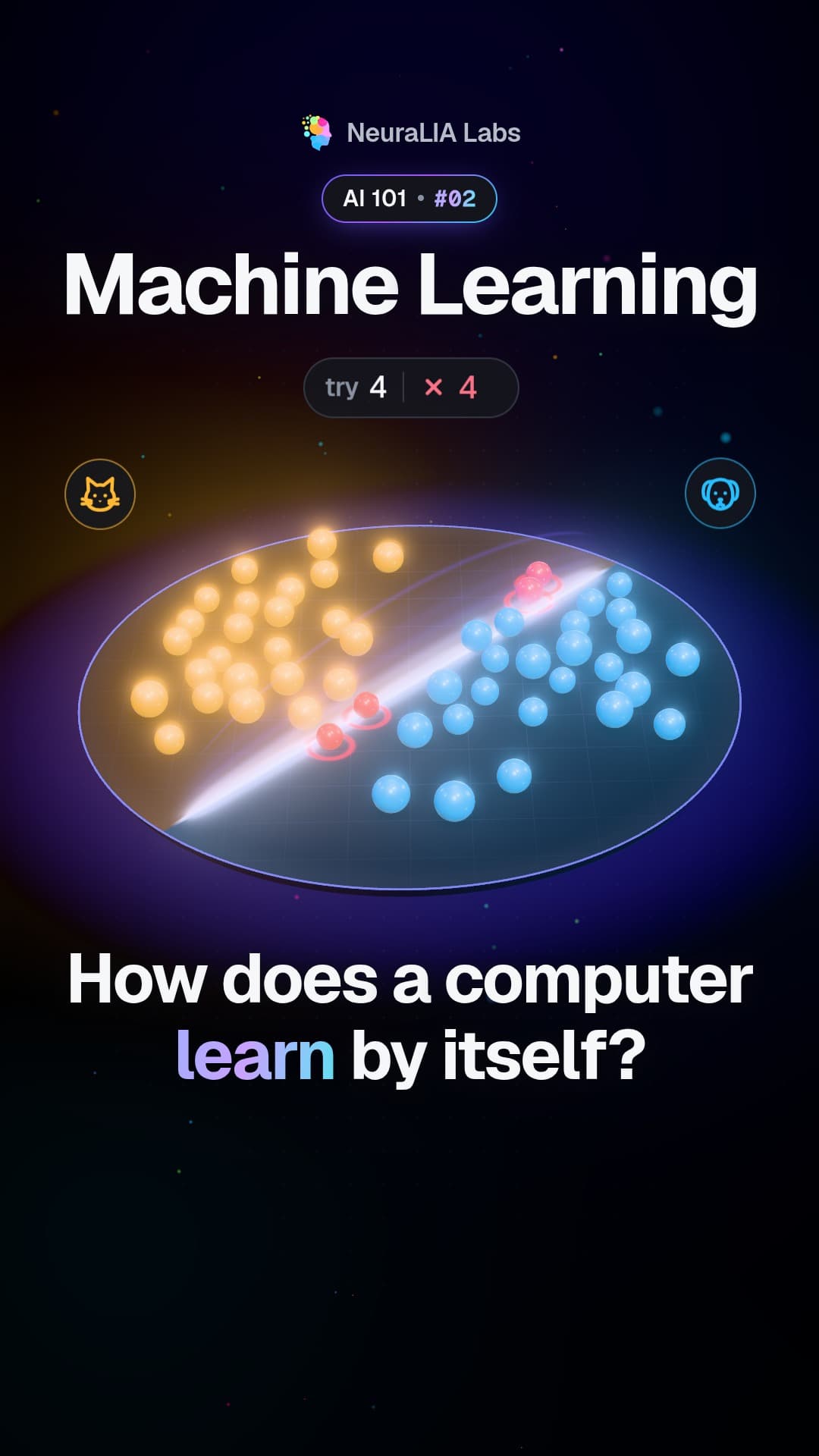
#02Machine learning: how a computer draws its own dividing line
 #002
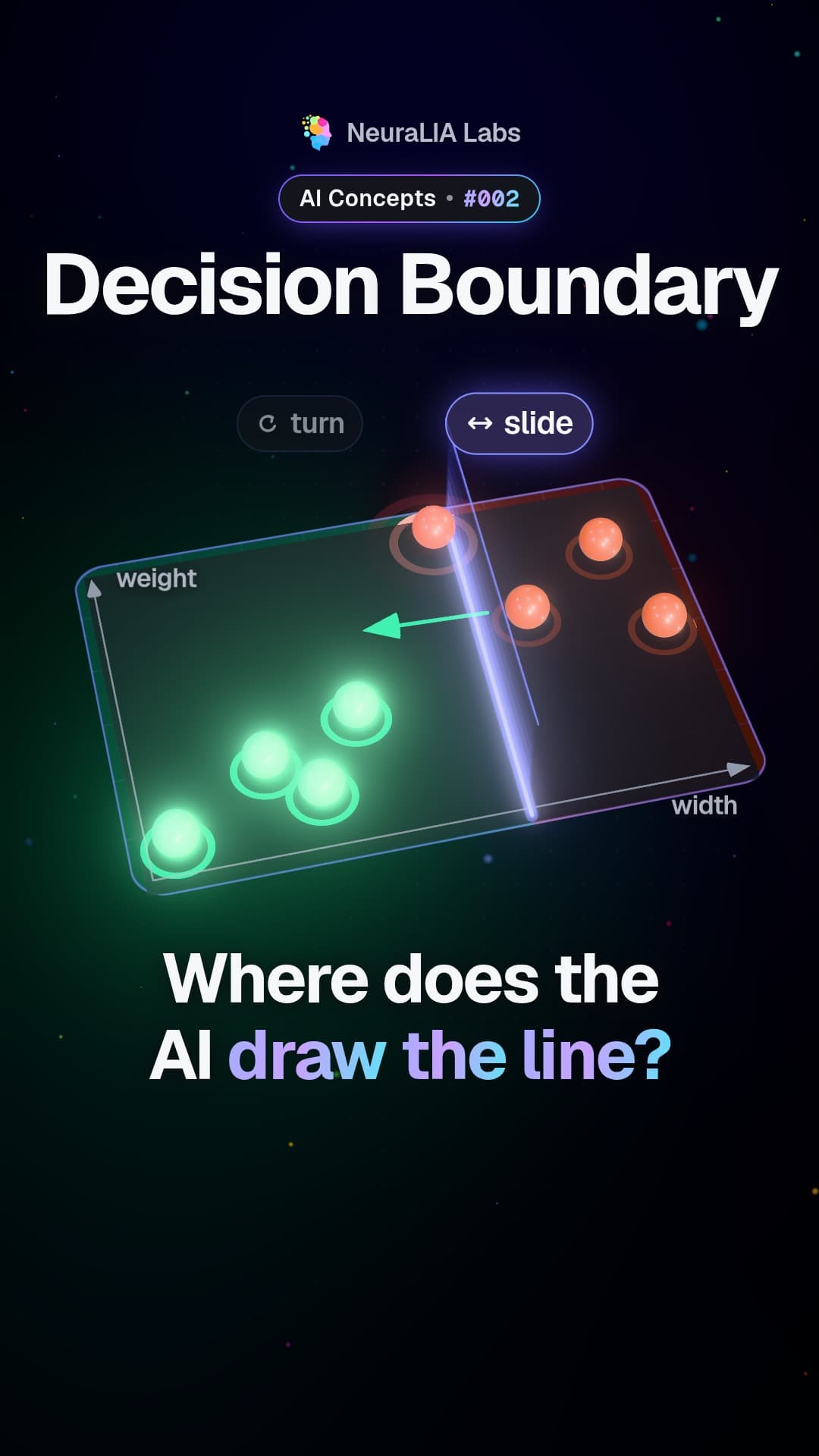
#002Decision boundary: the line a simple model draws between yes and no
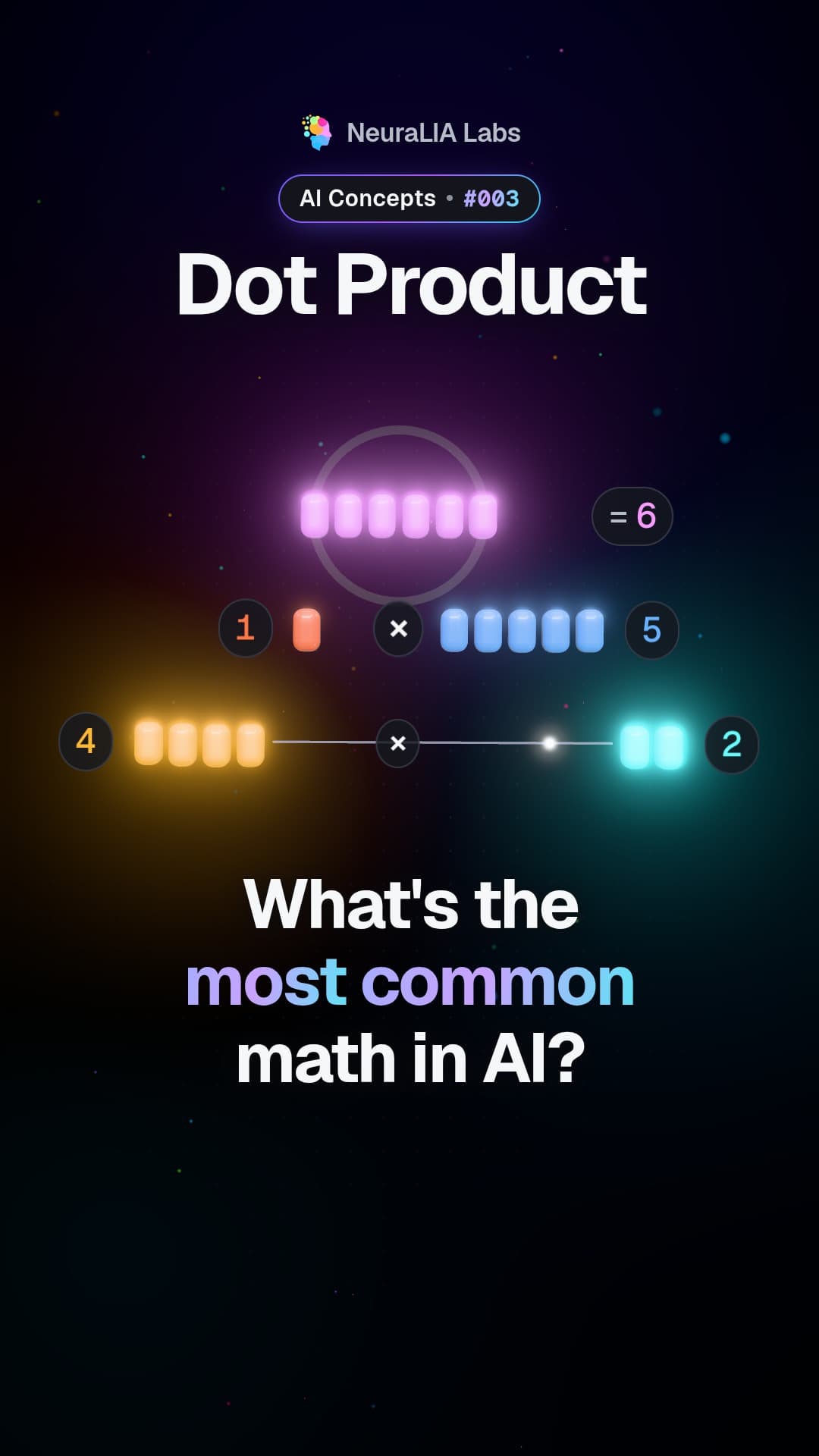 #003
#003Dot product: the multiply-and-add step at the heart of AI's math
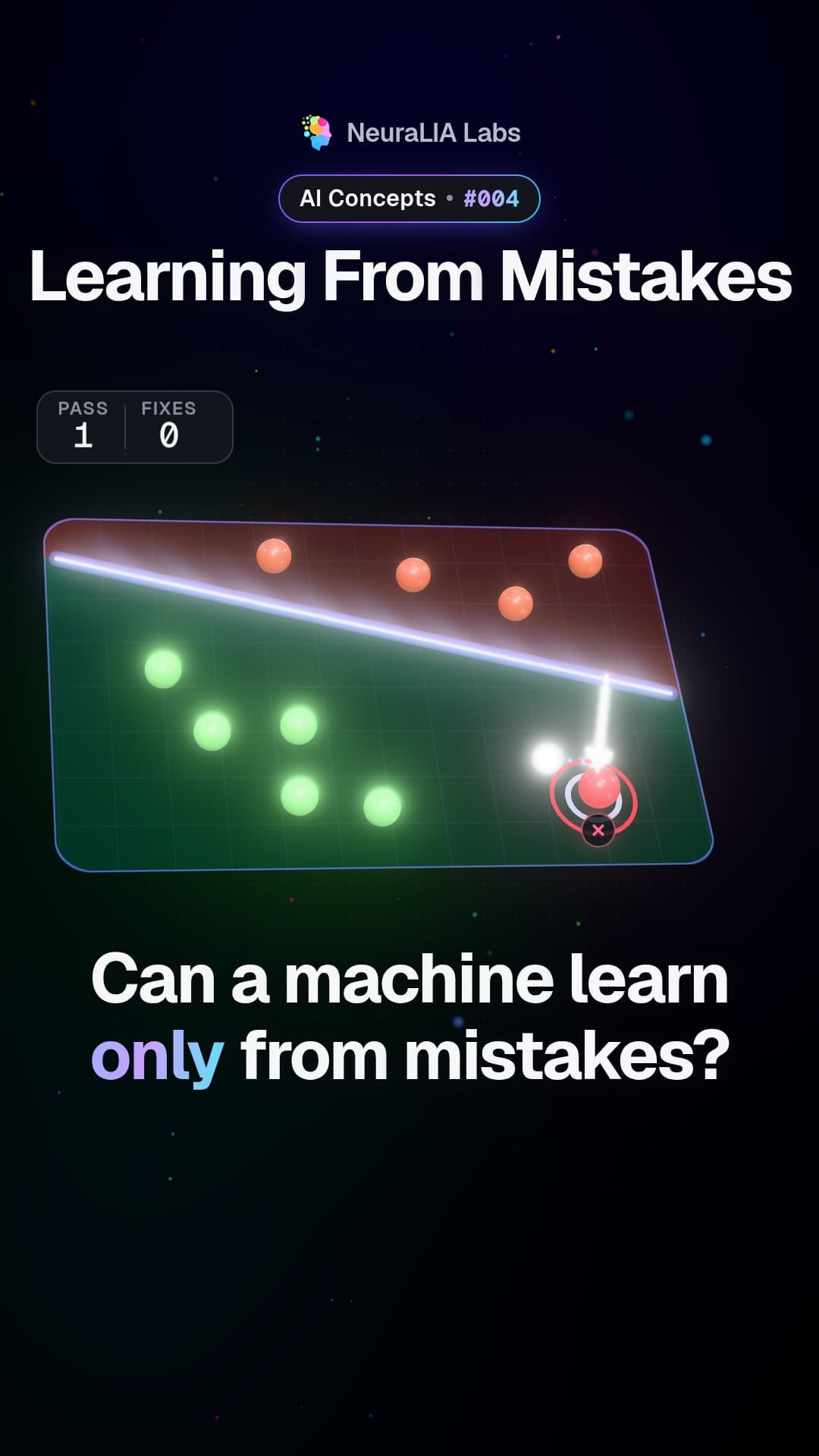 #004
#004Learning from mistakes: the perceptron rule that only moves when wrong
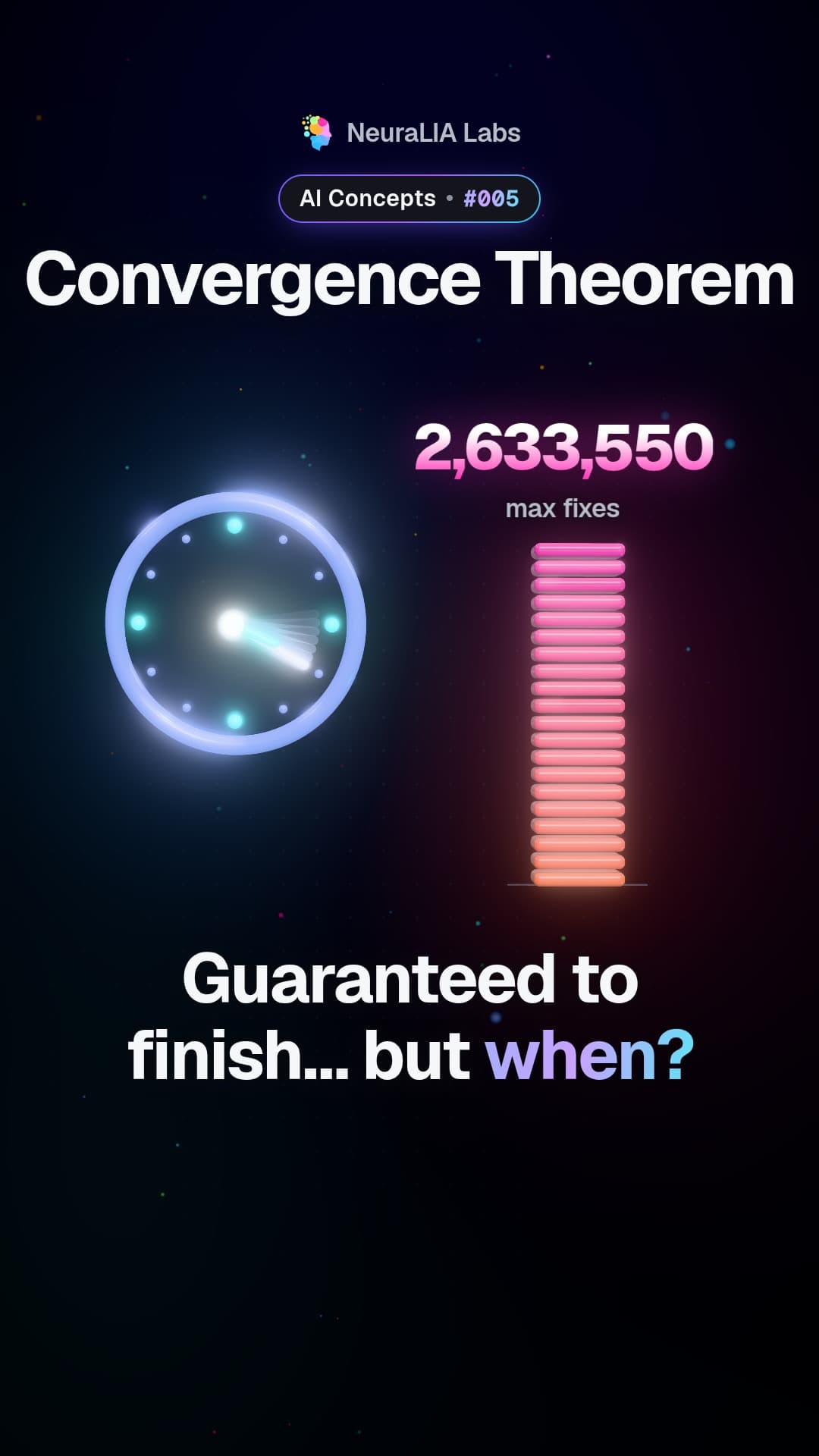 #005
#005Convergence theorem: guaranteed to finish, silent about when
متن ہمارے مفت کورس کے باب 1 سے AI کی مدد سے لکھا گیا ہے۔