
 #065
یہ ویڈیو اور اس کا متن انگریزی میں ہیں۔
Implicit regularization: the simplicity rule hidden inside AI training
Huge AI models can fit their examples in countless ways. Training quietly picks the simplest, so extra size adds choice, not chaos. Here is how that works.
تفصیل میں
What implicit regularization is
Regularization is any technique that stops an AI model from simply memorizing its training examples, usually by nudging it toward simpler answers. The best-known versions are explicit: you write a rule into the model's goal, such as "keep your internal numbers small", and training pays a penalty that grows as those numbers grow.
Implicit regularization is the same effect with no rule written anywhere. It comes from the way training searches for an answer. Nobody asks for simplicity, but the search method leans toward it anyway. The course sums it up neatly: the simplicity is built into the procedure, not into the goal.
What the video shows
The video tackles a puzzle about giant models: why don't they just memorize? A huge AI can fit its training examples in countless different ways. Training does not pick among them at random: it quietly prefers the simplest one. So making the model bigger adds choice, not chaos.
An everyday example
Imagine asking a map app for directions between two towns. Thousands of routes would get you there, some of them absurd detours through the mountains. You only said where you wanted to go, yet the app hands you a short, sensible route, because a preference for short routes is part of how it searches. You never had to ask.
Training a big model works in a similar way. The goal only says "get the training examples right". Among all the combinations of settings that do, the search tends to land on one where the numbers are small, and a model with small numbers behaves calmly.
How it works, in numbers
The course runs an experiment with 40 training examples and models ranging from 2 to 5,000 adjustable settings (parameters). Once a model has more settings than examples, infinitely many combinations fit all 40 examples perfectly. Whenever several fit, the experiment picks the combination whose settings are smallest overall, and it tracks that overall size:
| Settings | Overall size of the chosen settings | |---|---| | 40 | 14.83 | | 60 | 2.78 | | 200 | 0.98 | | 5,000 | 0.18 |
At 40 settings there is exactly one combination that fits, and you are stuck with it, however extreme. Every extra setting adds more combinations to choose from, so the smallest one available keeps shrinking: at 5,000 settings it is about 80 times smaller than at 40. And that model, the biggest in the test but with the calmest settings, did better on new data than every other model in it.
In real networks, nobody writes "pick the smallest" into the code. But the standard training method, gradient descent (nudging all the settings step by step to reduce the error), has a documented tendency to end up on small solutions like these when it starts from small values. That is why the same effect shows up in ordinary networks and not only in this tidy experiment.
A common misconception
"A bigger model has more room to memorize, so it must be riskier." The extra settings do not add complexity by themselves; they add options. Whether those options turn into chaos or simplicity depends on how training chooses among them.
Why it matters
Implicit regularization is the mechanism behind double descent, the pattern where error on new data spikes and then falls again as models grow. It helps explain why today's giant models can work well despite having far more settings than examples. And it is a reminder that how you train a model shapes what it learns, not only what you ask it to learn.
Learn it step by step in Chapter 6 of our free course AI From Scratch: Getting It to Train, and Getting It to Generalise.
یہاں بھی
اس باب سے مزید
- #065
 #066
Weight initialization: the starting numbers that decide if AI learns
 #067
Batch normalization: the AI layer that grades on a curve
 #068
Layer normalization: why chatbots steady each input on its own
 #069
Ablation: change one thing at a time to find what really works
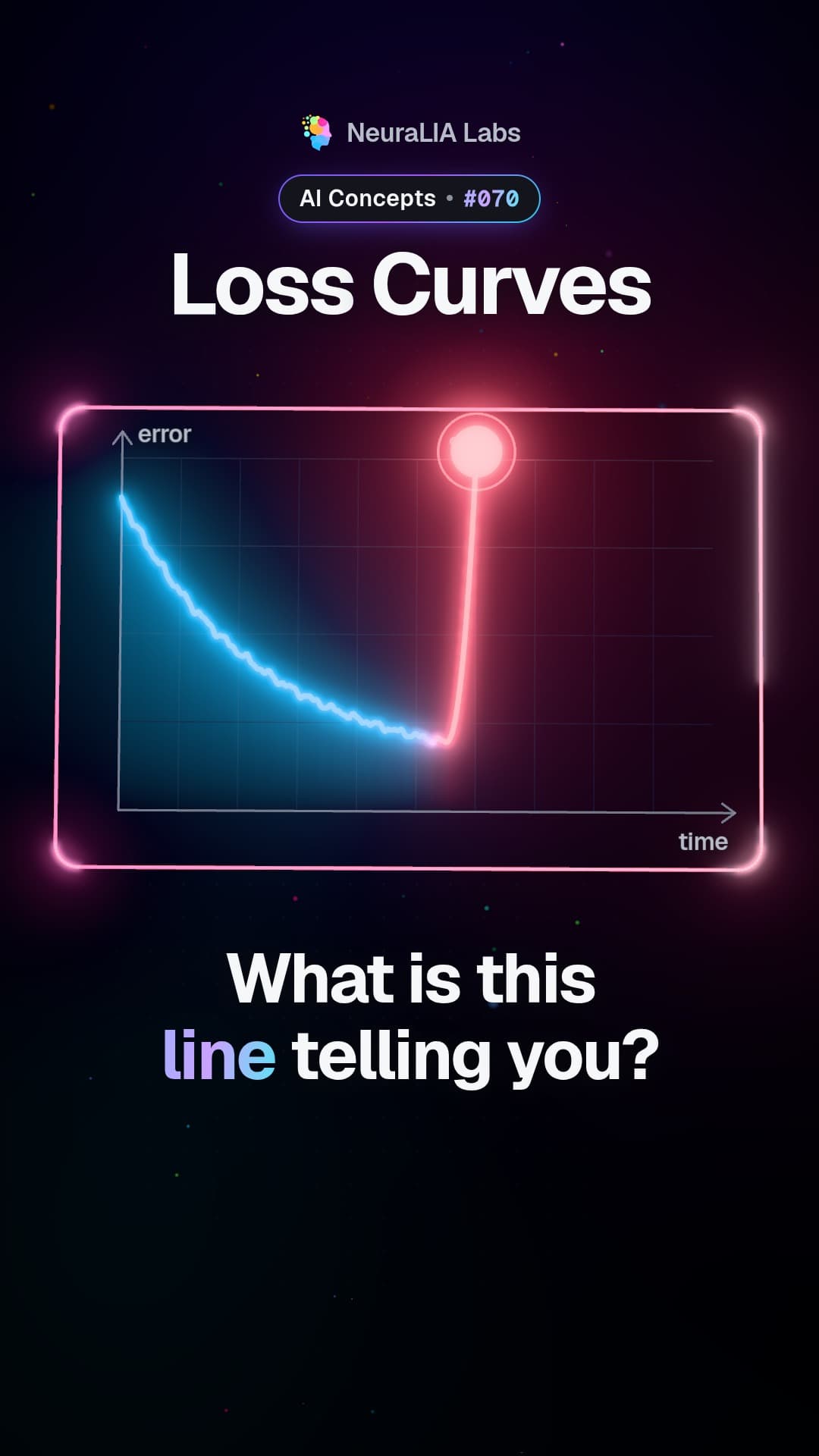 #070
Loss curves: what the shape of a training line tells you
متن ہمارے مفت کورس کے باب 6 سے AI کی مدد سے لکھا گیا ہے۔