
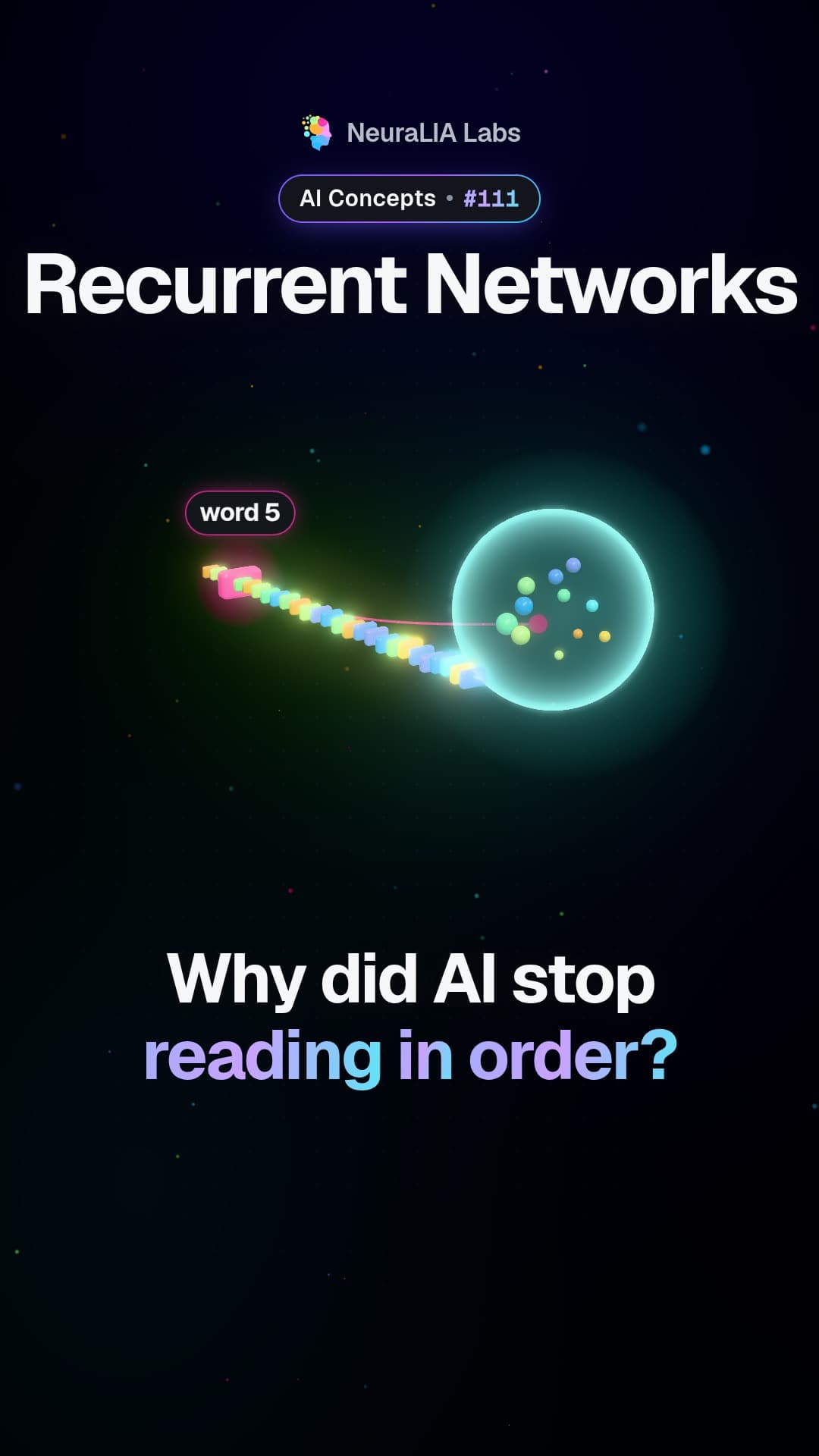
 #111
این ویدیو و متن آن به انگلیسی هستند.
Winograd schemas: the one-word pronoun test AI can pass by cheating
Change one word and "it" points elsewhere. See why a model blind to word order aced the classic test, and what it took to reach 100% once the loophole closed.
با جزئیات
What a Winograd schema is
A Winograd schema is a pair of sentences that are identical except for one word, and that one word changes what a pronoun such as "it" refers to. The classic pair:
- "The animal didn't cross the street because it was too tired." Here "it" is the animal.
- "The animal didn't cross the street because it was too wet." Now "it" is the street.
People get both right without thinking. For a machine, getting pairs like these right looks like evidence that it follows the meaning of a sentence, not just which words are in it. As the course shows, that evidence can be faked.
What the video shows
The short first defines the test: change one word and "it" means something else. Then it makes two points. First, a bag of words, a crude model that only knows which words appear and has no idea of their order, aced the easy version of the test. Second, once that shortcut was removed, only a model with two blocks of attention reached a perfect 100%. (A block is one full layer of a transformer, the design behind modern language models.)
How the classic version gets cheated
In the classic version, one candidate is always an animal and the other is always a place. "Tired" is something animals get; "wet" is something streets get. So the adjective gives the answer away by its category alone, and word order does not matter at all. In the course's test, a plain average of the words scored 100% on sentences it had not seen in training, while a real transformer block scored 91.7%. The simpler model won, which means the test was measuring the shortcut, not understanding.
An everyday example
Imagine a multiple-choice exam where the correct answer is always the longest option. A student who spots that pattern scores full marks and understands nothing. The only fix is to rewrite the exam so that length no longer gives the answer away.
Closing the loophole
The course rewrote the test in the same spirit:
- Both nouns come from one shared pool of sixteen, so either noun can be the one doing the crossing or the one being crossed.
- The adjectives are sorted by role instead of category: tired, scared, slow and weak point to whoever did not cross; wet, wide, busy and steep point to the thing that was not crossed.
- The test sentences use noun pairs the model had only seen in the opposite order during training.
Results on the fair version:
| Model | Correct answers | |---|---| | Plain average of the words | 27.9% | | One attention head | 35.4% | | Four attention heads | 75.0% | | One transformer block | 92.7% | | Two transformer blocks | 100% |
Picking one of the two nouns at random would score 50%. The average did worse than that: it knew which two nouns were in the sentence but not which came first, so half of its answers named the wrong one. Two blocks got everything right because the first brings a candidate noun forward and the second reads the adjective to decide.
Why it matters
A famous test is only as trustworthy as it is hard to cheat. If a model can reach the right answer without doing the thing the test was meant to check, a high score proves nothing. So whenever an AI result looks impressive, ask a simple question: could a much simpler model do just as well? If it can, the test is too easy, and the result tells you less than it seems.
Learn it step by step in Chapter 9 of our free course AI From Scratch: Attention and the Transformer Block, Derived From an Average.
همچنین در
بیشتر از این فصل
- #111
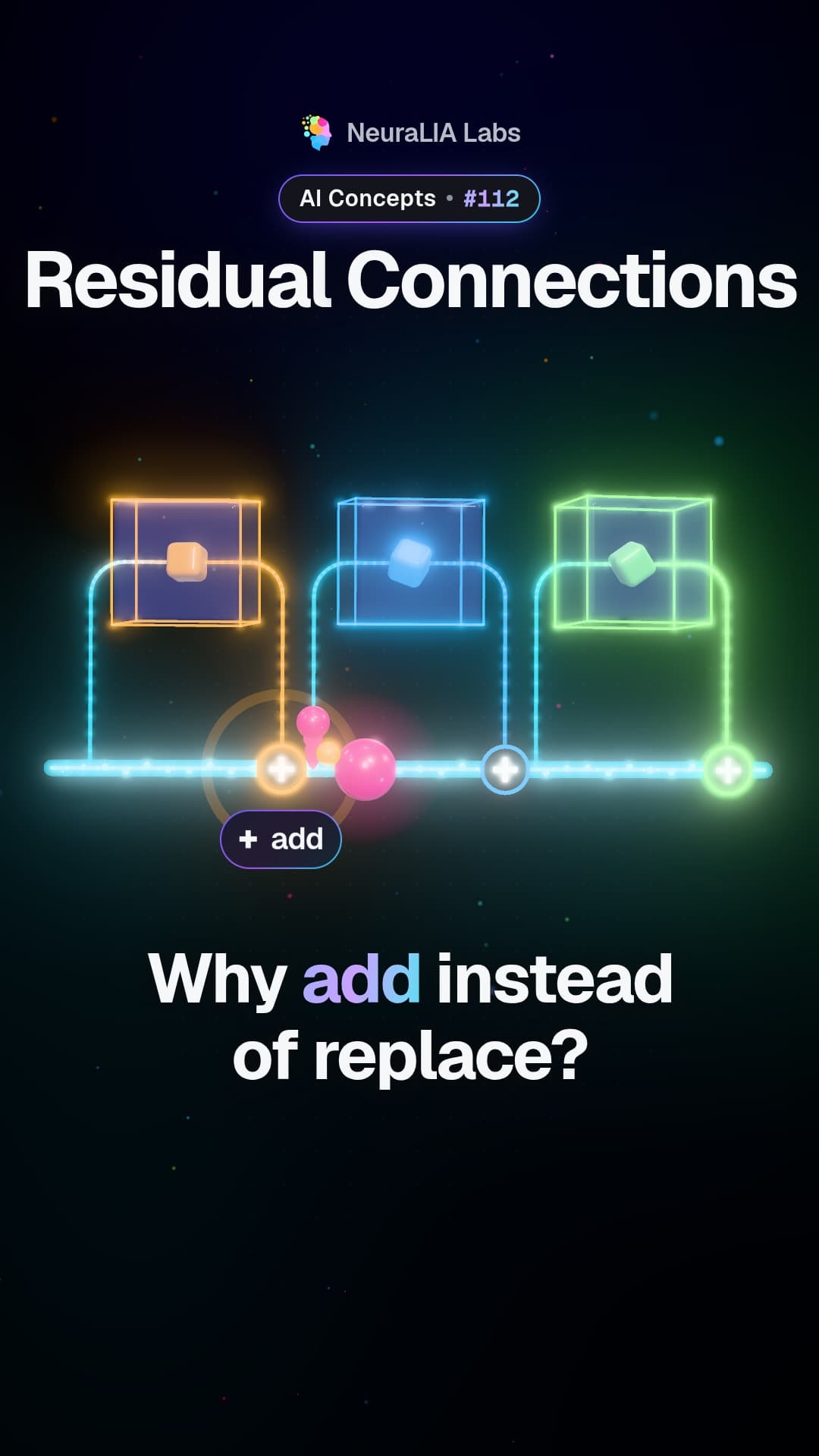 #112
Residual connections: why modern AI adds instead of overwriting
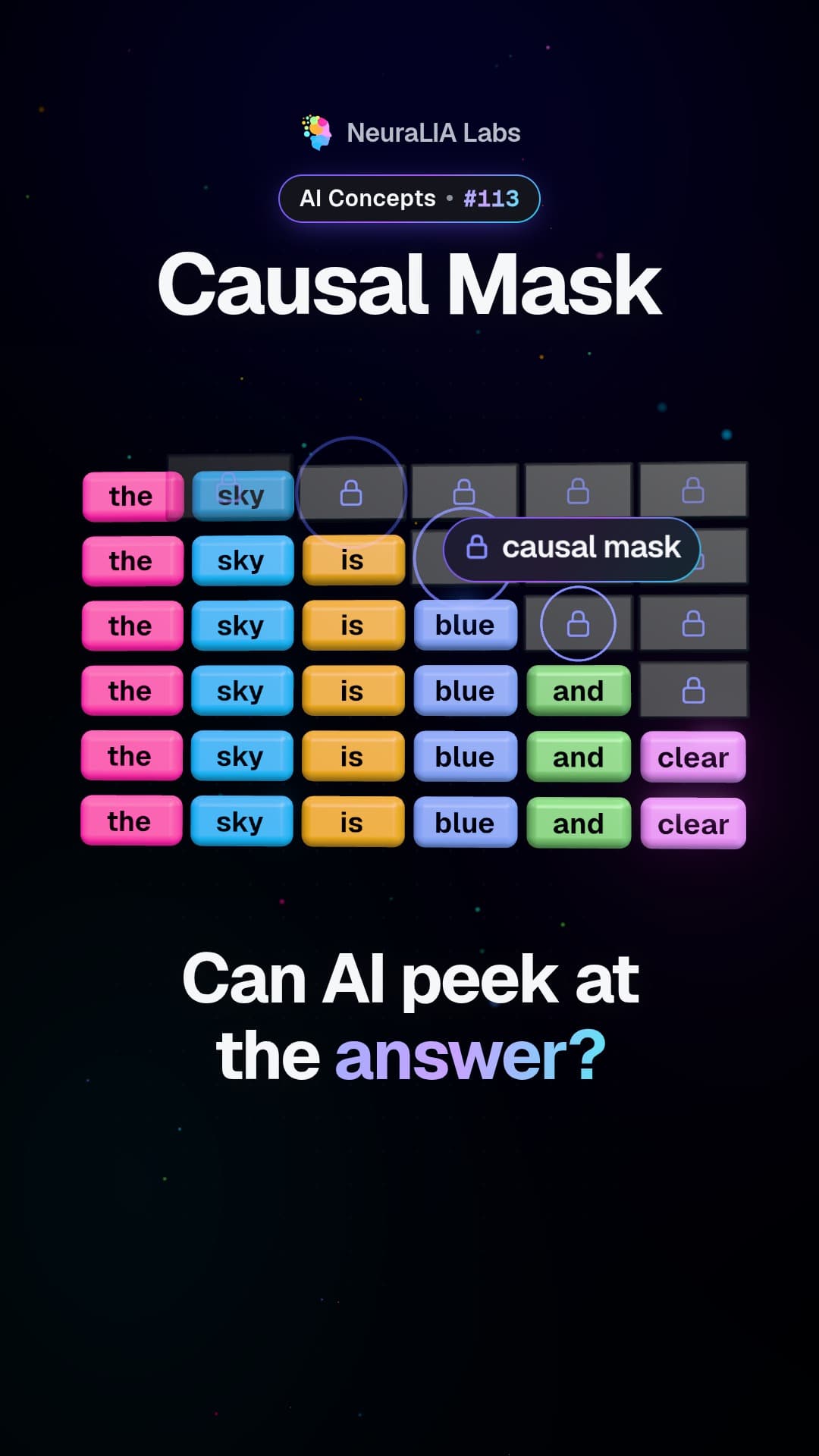 #113
Causal mask: the triangle that keeps a language model from cheating
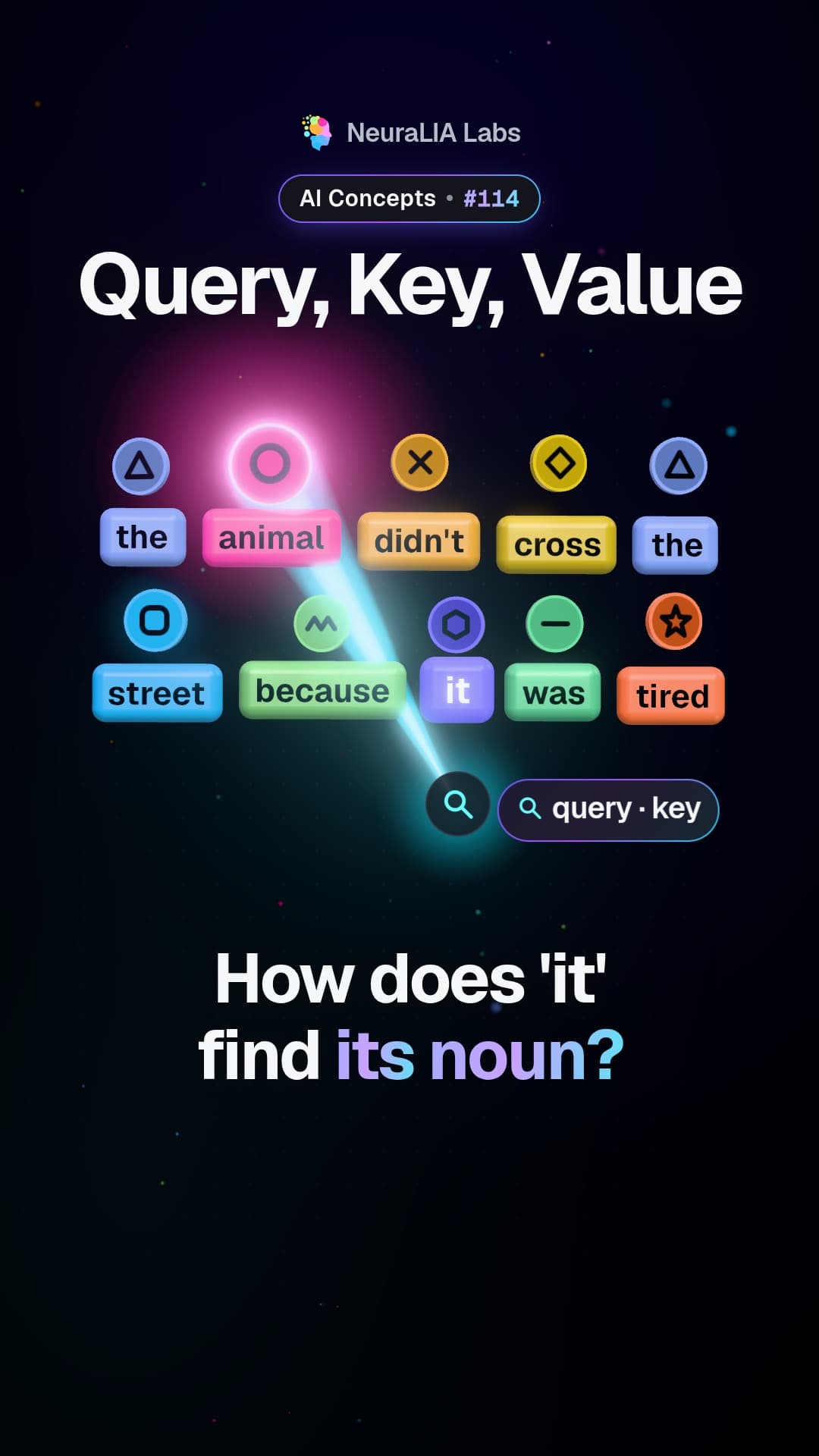 #114
Query, key, value: the three jobs every word does inside attention
 #115
Scaled attention: the small division that keeps big models learning
 #116
Multi-head attention: why AI reads with several spotlights at once
متن با کمک AI و بر اساس فصل 9 از دوره رایگان ما نوشته شده است.