
 #01
#01Ten film i jego tekst są po angielsku.
Decision boundary: the line a simple model draws between yes and no
A decision boundary is where a simple AI model cannot make up its mind. See how the weights set the line's angle, the bias slides it, and training moves it.
Szczegółowo
What a decision boundary is
A decision boundary is the border a model draws between its answers. Everything on one side gets a yes; everything on the other side gets a no.
Take a perceptron, one of the simplest learning models: it multiplies each input by a weight, adds everything up and answers according to whether the total is positive or negative. Its border is made of all the inputs where the total comes out exactly zero. Those are the cases where the model is perfectly undecided, sitting on the fence.
With two measurements, those undecided points line up into a straight line. In our course, a perceptron sorts factory parts by width and weight. Plot each part as a dot on a chart and the line splits it into an accept side and a reject side.
What the video shows
In the video, a simple model sorts things by drawing a single line between yes and no, and learning is nothing more mysterious than turning and sliding that line until every example sits on the correct side.
The hook says every yes/no AI is secretly drawing a line. The honest version is a little narrower. A single straight line is what the simplest models draw, and some patterns cannot be split by one straight line at all (that is the XOR problem, another entry in this series). More complex models can draw bent borders. Even so, a border between answers stays the picture the course returns to.
An everyday example
Imagine a lender who looks at only two numbers for each applicant: monthly income and existing debt. Put every applicant on a chart, with income running across and debt running up. A straight line drawn through the chart could say: on the low-debt, high-income side, approve; on the other side, decline.
An applicant sitting exactly on the line is right on the fence: the model's total for them is zero. That line is the decision boundary: every automatic answer is a question of which side you landed on.
How the line moves
A perceptron controls its line with two kinds of numbers:
- The weights set its angle. Weights say how much each measurement counts. Together they form an arrow that always points straight across the line, toward the accept side, never along it. Turn that arrow and the line turns with it.
- The bias slides it. The bias is one extra number added to every total. Change it and the line shifts sideways without rotating.
The bias matters more than it looks. Without it, the line would be forced to pass through the zero point of the chart. For the factory, that would mean a part with no width and no weight at all lands right on the fence between accept and reject: a silly rule to impose on real parts measured in millimetres and grams.
Training, then, is just turning and sliding this line until the examples fall on their correct sides.
How to read a model this way
Thinking in borders gives you a quick way to reason about any yes/no model:
- A wrong answer is a point on the wrong side of the line.
- A case close to the line can flip with a small change in its inputs.
- A case far from the line would need a big change before its answer flips.
Why it matters
Weights and a bias are hard to picture. A line on a chart is not. Once you see a model as a border, a question like "why did it reject this one?" becomes "which side did it land on, and how close to the line was it?" The course leans on this picture chapter after chapter.
Learn it step by step in Chapter 1 of our free course AI From Scratch: The Perceptron From Scratch: What a Neuron Computes.
Także na
Więcej z tego rozdziału
- #01
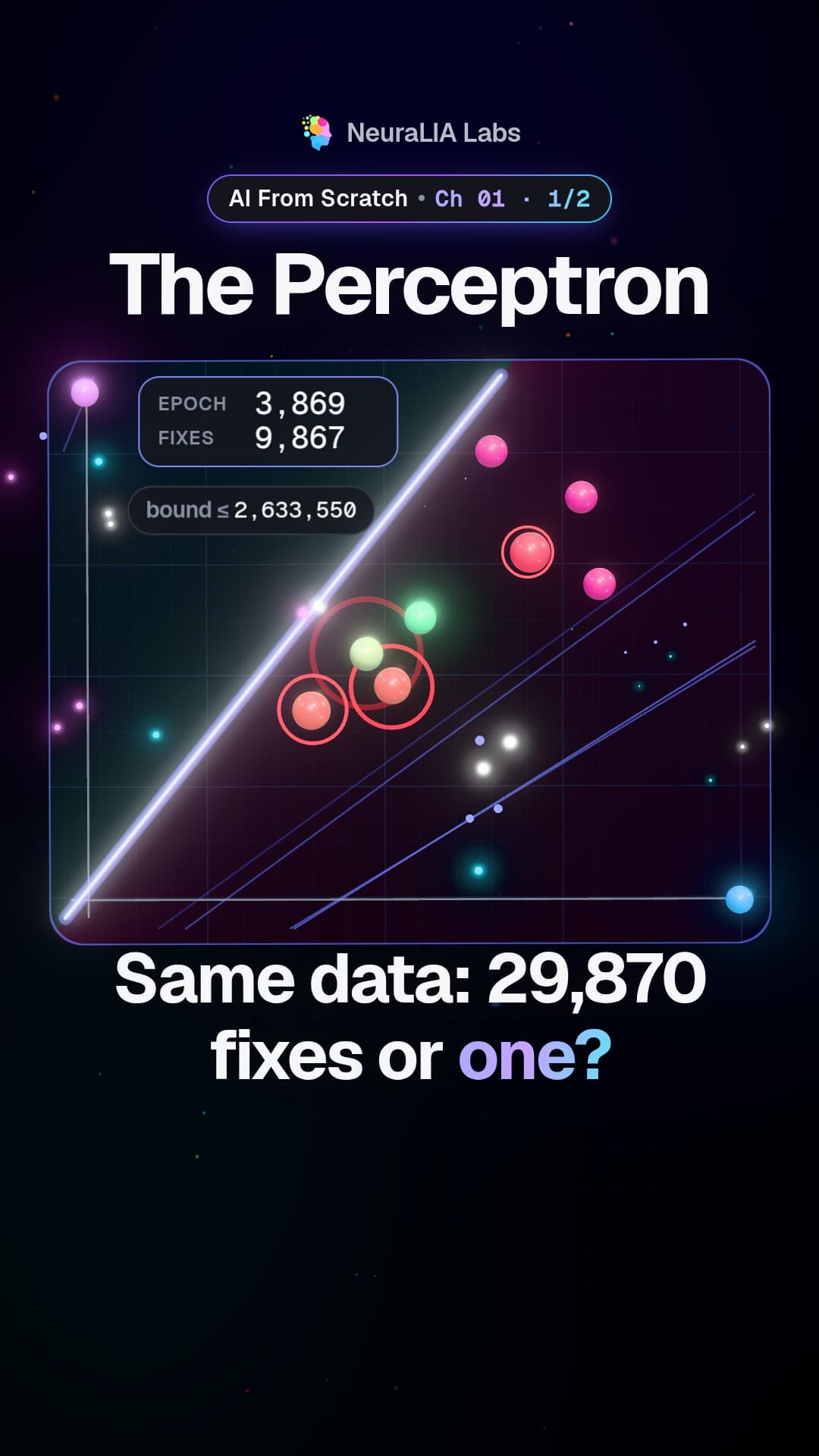 #001
#001Perceptron: the yes-or-no model every neural network grew from
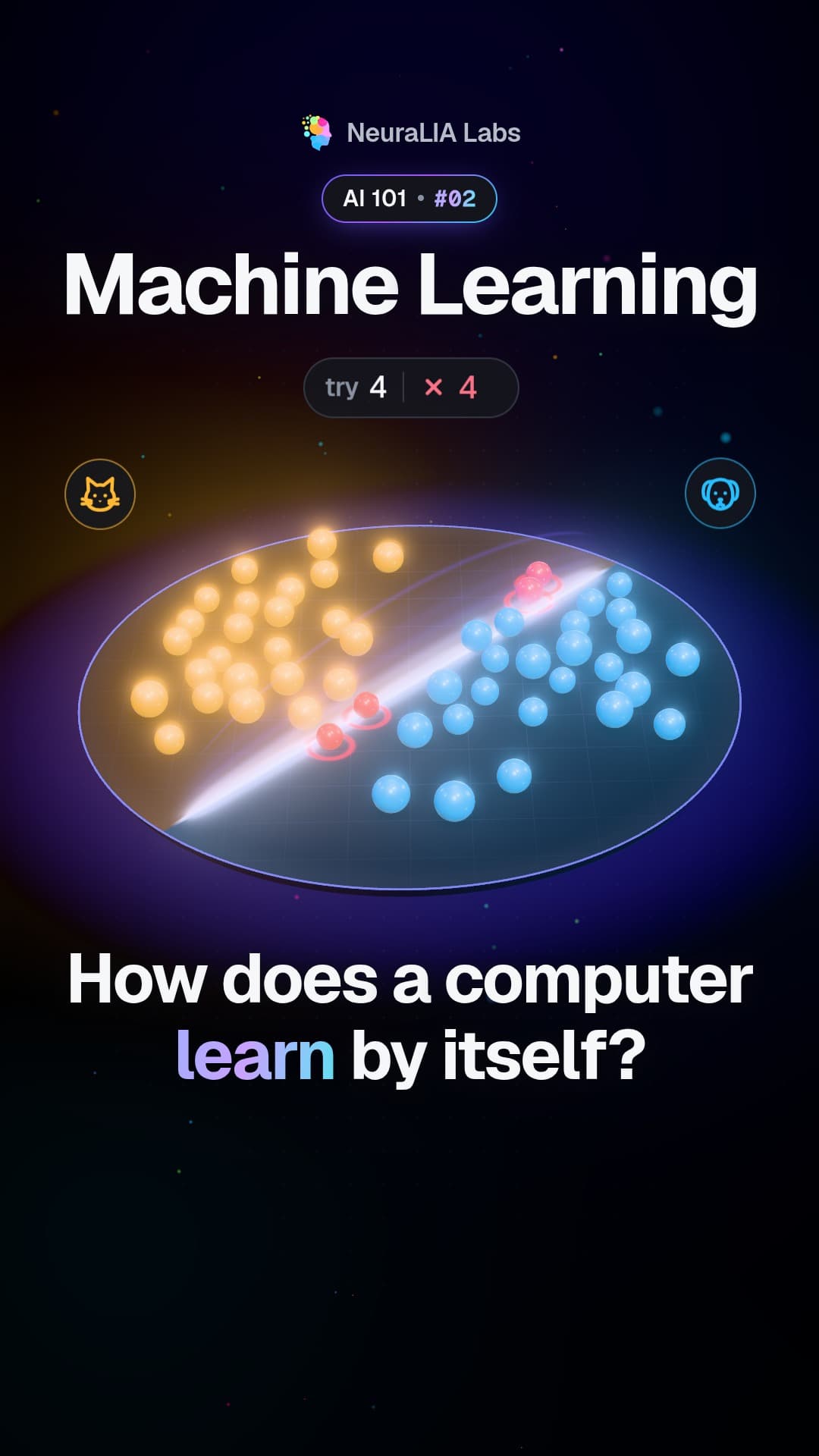 #02
#02Machine learning: how a computer draws its own dividing line
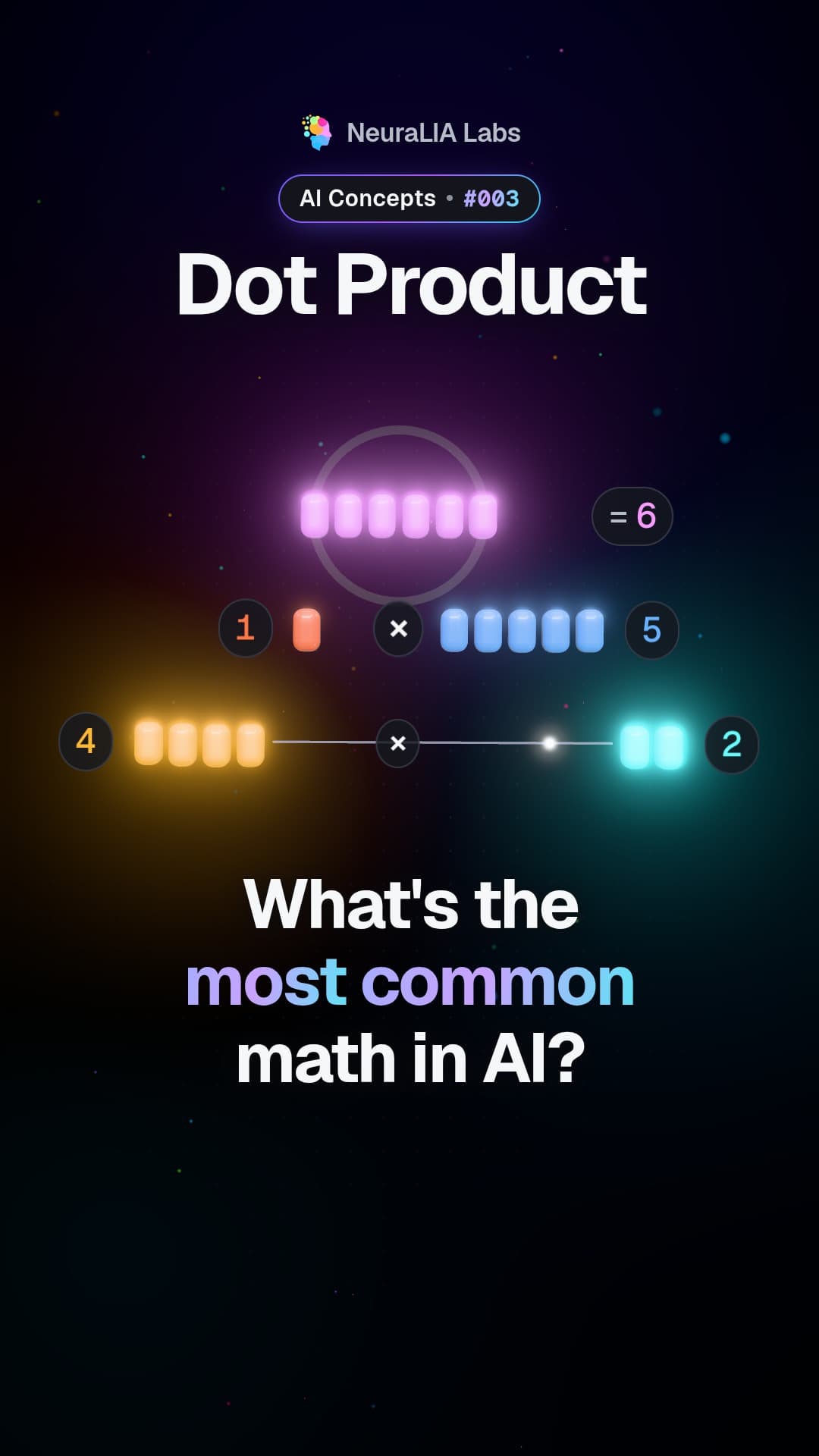 #003
#003Dot product: the multiply-and-add step at the heart of AI's math
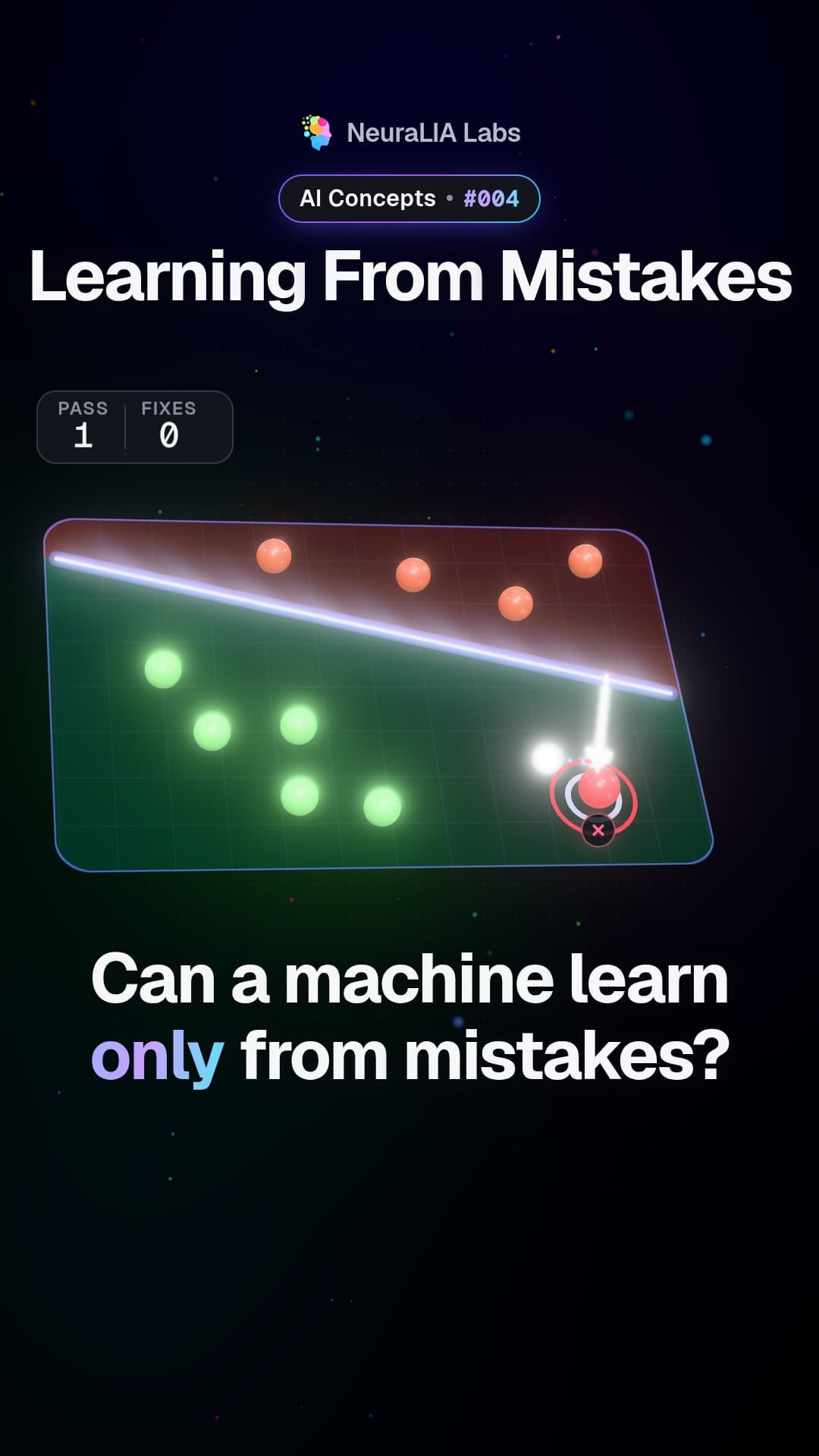 #004
#004Learning from mistakes: the perceptron rule that only moves when wrong
 #005
#005Convergence theorem: guaranteed to finish, silent about when
Tekst napisany z pomocą AI na podstawie rozdziału 1 naszego darmowego kursu.